Orange Co., NC Free Families of Color 1790-1840

In the article, The Jeffreys and Day Families, Cabinetmakers, we discovered that Thomas Day of Caswell County, NC was connected with the Day and Jeffreys families who lived in Orange County, NC, a group of people who were of mixed Native heritage, apparently Occaneechi, who had moved in the early 1800s from Greensville Co., VA.  Thomas himself was born to John and Mourning (Stewart) Day, a mixed race couple.  The Day family was also closely associated with the Jeffreys family whose Indian heritage is documented through court records.  These families would have been listed on the census as free people of color, not as white.

In the census returns, there are many families that include both slaves and free people of color.  The families listed below are the entries that only have free people of color, implying of course that the name listed is the head of household and that person is a free person of color.

Based on the information about the Jeffreys family and from Forest Hazel, among these families are those of Native ancestry.  This is not to imply that ALL of these families “of color” have Native ancestry.  To connect these families, one would have to perform research on marriages, deeds and land records, wills and probate records.

1790 Tax List

There is no 1790 census for Orange Co., NC, unfortunately, but there is an enumeration with a tax list replacing the census.  On that tax list, there is no Guy family but there are 4 Jeffers; Jacob, Evan, Garner and John.

The 1800 Census

The 1800 census classification for people of color was “all others.”  The Hillsborough District of Orange County shows the following in that category.  This census has been alphabetized on the actual returns by district.  It looks like all of Orange County was enumerated under the Hillsborough District.

  • Mary Woods
  • John Arthur
  • Mason Griffies
  • Black Jacob (sic – alphabetized on the tax list under Jacob)
  • Jacob Jeffries
  • Peter Jones
  • Rapes (difficult to read) Stewart
  • Sandy Burnetts
  • Edward Bowman
  • Joseph Bird
  • Thomas Bunch
  • Henry Bunch
  • Benjamin Farrington
  • John Gowing
  • Holladay Heathcock
  • Edward Husk
  • Paul Morgan
  • Paul Morgan
  • (John Moore) Morgan (sic)
  • Thomas Morgan
  • James Tinning
  • Zadock Weaver
  • Penny Weaver
  • Peggy Revels

The 1810 Census

The 1810 census for Orange County shows the Jeffreys family in the Hillsborough District of Orange County.  The 1810 classification for free people of color was “all others.”  People in the Hillsborough District under this classification were as follows:

  • Eliasabeth Williams
  • John Willson
  • Samuel Noe
  • Vines Guy
  • Rob Brook corn (sic) 6 houses from
  • Miles Scott beside
  • William Mize two houses from
  • Thomas Jeffries
  • Kinchin Chavis
  • Aaron Burnet beside
  • Nath Bell 6 houses from
  • Mathew Melton 1 house from
  • Major Brooks
  • L. Jeffreys
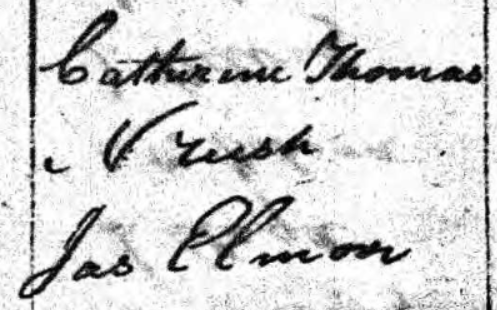
  • e Vrush (name difficult to read, page 51 of 123 at Ancestry, Orange County census records, below)

1810 orange co vrush

  • William Bettyford
  • Paul Morgan
  • M. Hurtgray 13 houses from
  • H. Jones
  • M. Haithcock 2 houses from
  • Isam Goins
  • G. Tatom
  • William Staggs
  • George Hormen or Horner
  • Hezekiah Revill
  • John Horsow?
  • Henry Bunch
  • S. Burnett

1820 Census

The 1820 census for Orange County included the following families who were counted as “free negroes.”

  • Mark Hammons 1 house from
  • Simon White
  • Reuben Day
  • Jacob Johnston
  • George Tatum
  • Henry Bunch
  • Henry Corne
  • Benjamin Day beside
  • Jesse Day 23 houses from
  • Jimmy(?) Corn beside
  • Samuel Craig
  • Thomas Morgan (possibly, difficult to line up with the enumeration)
  • Marmaduke Cole
  • Coy Revell 6 houses from
  • Moses Ratley
  • Cylus Shoecraft 4 houses from
  • James Shoecraft 1 house from
  • Miles Milton 20 houses from Randal Milton (who was enumerated as white but it was struck through) 4 houses from
  • Josiah Robbins (who was enumerated as white but it was struck through) 8 houses from
  • Jesse Fludd beside
  • Judah Griffis
  • Meradeth Chavous 15 houses from
  • Willis Jeffreys one house from
  • John Jeffreys 2 houses from
  • John Jeffreys 8 houses from
  • Drury Jeffreys 7 houses from
  • Littleton Jeffreys 14 houses from
  • Jesse Guy 16 houses from
  • Joshua Jeffreys beside
  • Jinney Jeffreys
  • Cresa Hudson
  • William Guy 2 houses from
  • John Evans 6 houses from
  • Jed Weavans beside
  • Major Brooks beside
  • Thomas Archer beside
  • John Boyd 2 houses from
  • Jonathan Waldin
  • James Bass 10 houses from
  • Susan Robison
  • Samuel Noe
  • Benj Day beside
  • Reuben Jeffreys 12 houses from
  • Aaron Burnett 5 houses from
  • John Artis beside
  • Aaron Wilson
  • James Bird
  • Willice Boon
  • Nathaniel Bayley
  • Major Weavans (Wevans?) 25 houses from
  • Rubin Day
  • Betsey Morgan
  • Joel Mitchell
  • Elias Jeffreys 15 houses from
  • Thomas Jeffreys
  • Fanny Evans
  • Kinchen Chavous 1 house from
  • Simon Jeffreys 3 houses from
  • William Moize beside
  • Hannah Jones 9 houses from
  • Willey Jones 4 houses from
  • Junel (Surrel?) Jones 6 houses from
  • Lewis Jeffreys 2 houses from
  • Chd Whitmore 1 house from
  • John Guy 11 houses from
  • Dixon Corne
  • William Croker?
  • Jesse Archer (started to enumerate as white but struck through)

1830 Census

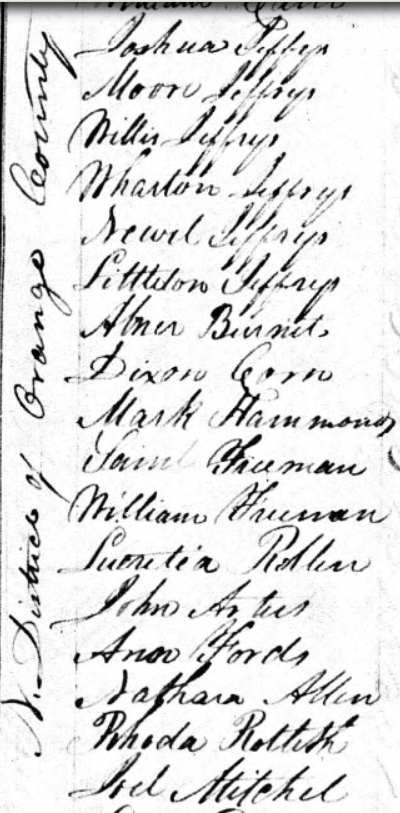
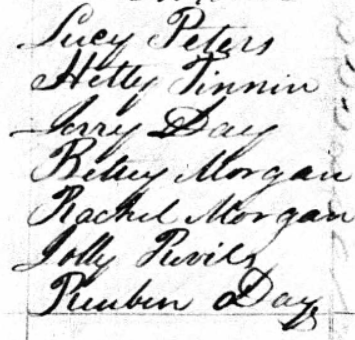
The 1830 census of the North District or Orange County, NC shows an entire group of families, free people of color, enumerated together, possibly living adjacent.  It’s also possible that the enumerator simply listed all of the “free colored” together at the end of the census.  Please note that the writing is difficult to decipher in some cases.

Orange Co NC 1830 census

Orange Co NC 1830 census 2

  • Joshua Jeffreys
  • Miller Jeffreys
  • Wharton Jeffrys
  • Newel Jeffrys
  • Littleton Jeffrys
  • Abner Burnet
  • Dixon Corn
  • Mark Hammonds
  • Sam Truman
  • William Truman
  • Lucretia Rollen
  • John Artus
  • Anor (or Amos) Fords
  • Nathan Allen
  • Rhoda Rotteth(?) or Rottesh
  • Joel Mitchel
  • Lucy Peters
  • Hetty Tinnin
  • Jerry Day
  • Betsey Morgan
  • Rachel Morgan
  • Jolly Revils
  • Reuben Day

If anyone can help with these family names that are difficult to decipher, I would be very appreciative.

The 1840 Census

The 1840 census for the Northern District of Orange County is not enumerated with these families together, but they are listed as follows.

  • Jane Corn enumerated beside
  • Elias Jeffreys
  • Thomas Pettiford
  • Dickson Corn
  • Hawky Wadkins one house from
  • Drury Jeffreys 6 houses from
  • Dickson Corn beside
  • Joshua Jeffreys 15 houses from
  • Richardson Corn beside
  • John Jeffreys beside
  • Willis Jeffreys 16 houses from
  • Andrew Jeffreys one house from
  • Littleton Jeffreys
  • Nat. Rebel
  • Allen Day 14 houses from
  • William Day 3 houses from
  • Neverson Stewart 13 houses from
  • Reuben Day 20 houses from
  • Thomas Jeffreys
  • Elijah Jones beside
  • Sally Heath beside
  • Betsey Guy beside
  • Abner Burnet 13 houses from
  • James Smith
  • Lucretia Rolins
  • Meredith Chaves
  • Enoch Jones
  • Ransom Jeffreys 11 houses from
  • Renico (or Lenica?) Day
  • Rachel Robeson beside
  • Cullen Bass 5 houses from
  • Wilie Chaves 3 houses from
  • Anderson Taburn beside
  • Edmund Taburn beside
  • George Day 13 houses from
  • William Bookman 2 houses from
  • Wilie Johnston beside
  • David Mitchel 16 houses from
  • Chesley Bass
  • Thomas Chaves 4 houses from
  • Benjamin Day
  • Jesse Whitmore

In 1849, this portion of Orange County became Alamance County, Va.

Posted in Census, North Carolina, Ocaneechi | 7 Comments

Call To Action – Native American Veterans Monument in Washington DC

Comanche codetalkers

Steve Bowers, a Native American Seminole tribal member and veteran is spearheading an effort to install a memorial to Native American soldiers in Washington DC.  While thousands of Native Americans have enlisted over the decades, at a much higher rate than any other ethnicity, there are no monuments or statues honoring or including Native Americans along the National Mall in Washington.  Even the iconic Three Soldiers memorial sculpture, located near the Vietnam Memorial doesn’t include a Native American.  The Code Talkers received the Congressional medal of honor, shown below, in 2000 for developing the only unbreakable code during WWII, but they don’t have a memorial.  It’s time to make a change.

Navajo codetalkers medal of honorSteve is in the process of laying the groundwork for the National Museum of the American Indian to raise private funds to erect a memorial.

You can read more about the effort at this link. Let’s make sure this happens!

Photo is of Comanche Codetalkers, 4th Signal Company.

Posted in Comanche, Military, Navajo | 2 Comments

The Jeffreys and Day Families, Cabinetmakers

Thomas Day Pews

In the article about Indian Cabinetmakers in Piedmont, NC, by Dr. Patricia Phillips Marshall, reported recently on Lisa Henderson’s Fourth Generation Inclusive blog, we learn several interesting things.

First, Dr. Marshall shows a map with Greensville County, VA, which borders Northampton Co.,  NC, highlighted and states that the Day and Jeffreys (Jeffries) families moved to NC from Greensville County, VA.

According to Dr. Marshall, Thomas Day was a free African American who, by 1850, had built North Carolina’s largest cabinetmaking shop in Milton, Caswell County, NC.  You can see a photo of a statue of Thomas Day here.  His church pews still grace the inside of the Milton Presbyterian Church where he and his wife, Acquilla were allowed to sit in the pews (shown above) among the white worshipers rather than in the slave gallery.

Thomas was born in 1801 in Greensville County, Virginia, to mixed-race parents, John and Mourning (Stewart) Day, and moved with his family to Warren County, North Carolina, in 1817. When he moved to Hillsborough in the early 1820s, it appears that he became friends with members of the Jeffreys family who, although listed as “mulattos” in official records, were actually of Indian origin. The Jeffreys were part of a larger group of Occaneechi people from Virginia who had settled in the northwest section of Orange County, which became Alamance County in 1849. As with the Day family, the Jeffreys family had originated in Greensville County, Virginia.

In 1830 Uriah Jeffreys served as a bondsman for Thomas Day when he married Aquilla Wilson. A bondsman was usually a close family member (such as a father, brother, or uncle) who assured the court that the couple should be married, and that the groom would not change his mind and leave the bride at the altar. Uriah Jeffreys must have been a close friend of Thomas to agree to be his bondsman. Historic records make it clear that both men were cabinetmakers, and it is possible that Uriah and his brother Nathan worked with Thomas Day for a short time.

In 1828 Uriah Jeffreys decided to move. He advertised in the Hillsborough Recorder that he had a variety of furniture from his cabinetmaking business for sale, including “Bureaus, Bedsteads, Tables.”

Uriah moved to Ohio with two of his brothers, Parker and Augustus. Unfortunately, they experienced the same type of prejudice in the North that they had tried to leave behind. The law required free blacks entering Ohio to pay a bond of $500 to county officials. Whites thought this would guarantee that only free blacks of “good character” would settle and be able to support themselves. Parker Jeffreys refused to pay, insisting that his blood was a mixture of Indian and white, and not black. The case went to the county court, where he lost. Jeffreys persevered, and the Ohio Supreme Court heard his case in 1842. In Parker Jeffreys v. Ankeny et al., the supreme court justices ruled that he was an Indian with no African ancestry and did not have to pay the bond. Members of the Jeffreys family continued to make furniture near Xenia, Ohio, well into the twentieth century.

According to Forest Hazel, in the Parker Jeffreys vs Ankeny case, Jeffreys was proven to be the son of a white man and a “woman of the Indian race.”  Parker’s brother also went to court about the same time to change his name and the court also noted his Indian ancestry.

Ebenezer Lane, a Justice of the Ohio Supreme court wrote the majority opinion in the case in which Parker Jeffreys has been refused the right to vote based on an 1802 law limiting voting to white people only. Jeffrey’s mother was noted as half white and half Indian during the trial.

The majority decision was:

“…That all nearer white than black, or of the grade between the mulattoes and the whites, were entitled to enjoy every political and social privilege of the white citizen; that no other rule could be adopted, so intelligible and so practicable as this; and that further refinements would lead to inconvenience, and to no good result.”

There is no 1790 or 1800 Virginia census.  However, in 1810, Greensville County shown no free people of color, at all, a situation which strongly suggests a problem with the census.  There are no Jeffreys or Guy families listed, by that or any similar spelling.

In the 1810 census for Orange County, NC, there are no “free colored” Day families listed, but by 1820 there were several.

Join us in a future article where we’ll extract the Orange County, NC free families of color from the census records.

Posted in North Carolina, Ocaneechi, Ohio | 1 Comment

Lewis Larsen’s Extensive Native American Reference Library to be Auctioned

From the People of One Fire newsletter, the following:

Lewis Larsen’s Extensive Archaeological Library to Auctioned Off

“Extensive American Indian related reference library from the estate of noted Georgia Archaeologist, Dr. Lewis H. Larson, Jr. over 400 Volumes”   To be auctioned by Charlton Hall Auctioneers in W. Columbia SC on June 21-22, 2013.

A catalog does not seem to be available yet at www.charltonhallauctions.com

Lewis Larsen was one of the pioneers of modern North American archaeology.  Along with Joseph Caldwell and Arthur Kelly, he supervised the archaeological studies at Etowah Mounds National Landmark during the mid-1950s.  He then went on to a highly productive career as a professor and expert on the Mississippian Culture.

It would be very nice if this collection could be preserved intact.

Posted in Archaeology | 2 Comments

Mary Jemison, White Indian of the Genesee

Jemison 1

As I’ve been extracting the surnames of the New York Indian tribes from the Indian census (1888-1893), which consist of the Six Nations, Jemison, Jimerson, Jemerson and variant spellings are found in all of the tribes.  It’s a very unusual name otherwise, but very common within the tribes.

It also has a very unusual genesis – not Native at all.  Mary Jemison, the progenitor of the Jemison lines, was a captive white woman.

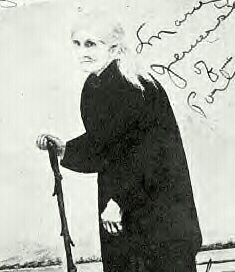
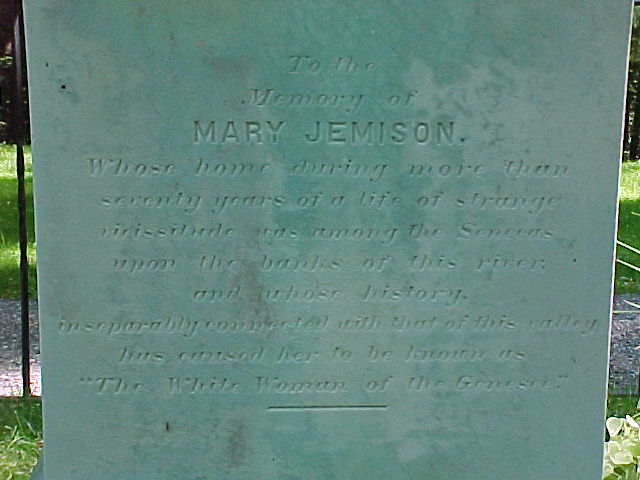
Mary Jemison (Deh-he-wä-mis), was born in 1743 and died September 19, 1833.  She was born to white immigrant parents and died an adopted Seneca. When she was in her teens, she was captured in what is now Adams County, Pennsylvania, from her home along Marsh Creek, and later chose to remain a Seneca.

Mary Jemison was born to Thomas and Jane Jemison aboard the ship William and Mary in the fall of 1743 while en route from what is now Northern Ireland to America. Upon their arrival in America, the couple and their new child joined other Scots-Irish immigrants and headed west from Philadelphia, Pennsylvania, to what was then the western frontier (now central Pennsylvania). They “squatted” on territory that was under the authority of the Iroquois Confederacy.

During the time the Jemisons were establishing their home, the French and Indian War (Seven Years War) was raging. One morning in 1755, a raiding party consisting of six Shawnee Indians and four Frenchmen captured Mary, her family (except two older brothers) and Davy Wheelock, a boy from another family. En route to Fort Duquesne (present-day Pittsburgh), Mary’s mother, father, and siblings were killed and scalped. Mary and the other young boy were spared. Once the party reached the Fort, Mary was given to two Seneca Indians, who took Mary downriver. The Seneca adopted Mary, renaming her Deh-he-wä-mis which she learned meant, “… a pretty girl, a handsome girl, or a pleasant, good thing.”

She married a Delaware named Sheninjee. They had a son whom she named Thomas after her father. Sheninjee took her on a 700-mile (1,100 km) journey to the Sehgahunda Valley along the Genesee River in present-day New York state. Although Jemison and their son reached this destination, her husband did not. Leaving his wife to hunt, he had taken ill and died.  She arrived alone, with her baby, in the dead of winter.  She was received with open arms by her husband’s clan and settled to a happy life among the Seneca in Sehgehunda, or “Vale of the Three Falls”.  She married Seneca chief Hiokatoo, and she had six more children.

During the American Revolutionary War, the Seneca were allies of the British. Jemison’s account of her life includes some observations during this time, as she and others in the Seneca town helped Joseph Brant and Iroquois warriors who fought against the colonists.

After the war, the Seneca sold much of their land at Little Beard’s Town to European-American settlers in 1797. At that time, during negotiations with the Holland Land Company held at Geneseo, New York, Mary Jemison proved to be an able negotiator for the Seneca tribe. She helped win more favorable terms for giving up their rights to the land at the Treaty of Big Tree (1797).

In 1823, the tribe sold most of the remainder of the land, except for a 2-acre (8,100 m2) tract of land reserved for Jemison’s use. Known locally as the “White Woman of the Genesee”, she lived on the tract until she sold it in 1831 and moved to the Buffalo Creek Reservation. Jemison lived the rest of her life with the Seneca Nation. She died on September 19, 1833, aged 90. She was initially buried on the Buffalo Creek Reservation.

Jemison 2

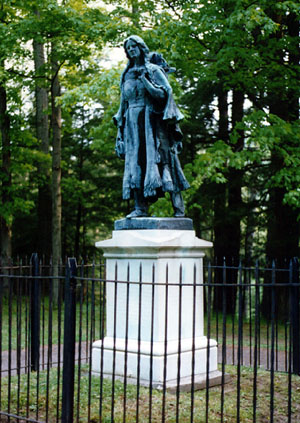
When the reservation was closed and the burial ground there threatened, her grandchildren turned to William Pryor Letchworth, whose estate, Glen Iris, encompassed the land where Sehgehunda had been. He immediately invited them to bring Mary home. Her remains were placed in a new walnut coffin and taken back to the Genesee Valley. A full ceremony was held at the old Seneca council house, and she was laid to rest in March of 1874. Letchworth erected a granite marker, on top of which is a statue which he dedicated in 1910, after his estate had been incorporated into Letchworth State Park in present day Castille, New York.

Jemison 3

A bronze statue of Mary Jemison, created in 1910 by Henry Kirke Bush-Brown, marks her grave. Dr. George F. Kunz helped with the 1910 memorial to Jemison, “The White Indian of the Genesee”, who is buried at “the ancient Indian Council House of the Senecas.” Dr. Kunz always was fascinated by Native Americans, and contributed much to their memorials in New York.

Today, the various Jemison families of New York carry her legacy.

Jemison 4

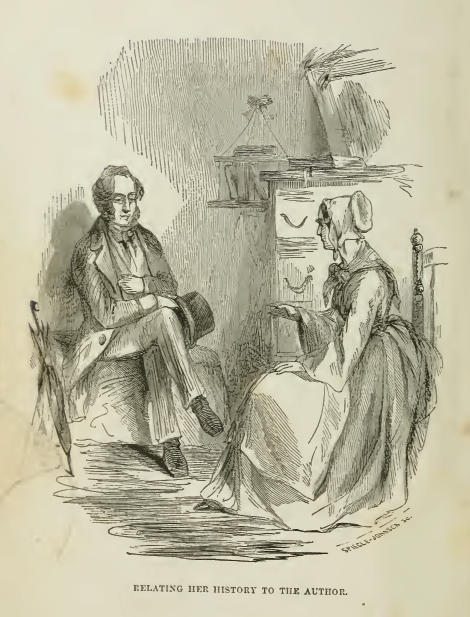
Late in life, she told her story to the minister James E. Seaver, who published it as a classic “captivity narrative”, Narrative of the Life of Mrs. Mary Jemison (1824; latest ed. 1967). Many history scholars consider it to be a reasonably accurate narrative.

jemison 5

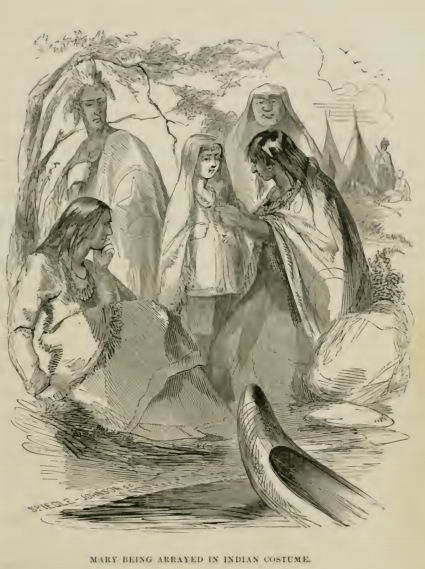
You can read Mary’s life story in the “Narrative of the Life of Mary Jemison.”  The drawings in this article are from this book, published in 1856.

Posted in Delaware, Iroquois, Seneca | 20 Comments

Women of These Hills – Amanda Swimmer, Cherokee

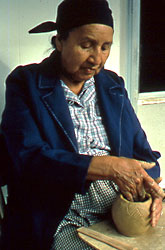
amanda swimmerProduced in 2000, three Appalachian women in their 80’s share their stories of growing up in the rural regions of the Appalachian mountains. Take a glimpse into their lives as they share their memories of growing up not only as mountain women, but also as Cherokee, Scots-Irish and African-American women.

Amanda Sequoyah Swimmer, born in 1921, at right,  lives in Big Cove, adjacent to the Smokey Mountain National Park, a member of the Eastern Cherokee Tribe, and describes her early life.  Amazingly, Amanda’s experiences don’t differ a great deal, with the exception that she speaks Cherokee as well as English, from the early life experiences of the Scotts-Irish and African woman whose ancestors were slaves.  They have more in common than they do differences.

Amanda became a very skilled pottery maker and produced pottery for over 40 years, receiving the Mountain Heritage Award in 2009 for her pottery making and other activities.  Read more and see photos here.

You can read more about her life and see her pottery here.

Information about the Cherokee and Amanda from the North Carolina Arts Council and about visiting the Cherokee can be found at Cherokee Heritage Trails.

Hat tip to Rhonda for this video.

Posted in Cherokee | Leave a comment

Bowen Family of Columbus County, NC

Lisa Y. Henderson on her Fourth Generation Inclusive blog lists the following Indian information:

Catherine Jackson. Died 7 July 1932, Waccamaw, Columbus County. Indian. Widow of David Jackson. Born 12 April 1858 in Columbus County to J.A. Bowen of Columbus County and Susan Lacewell of Bladen County. Buried Holly Ridge NC. Informant, Geo. M. Mitchell.

In the 1860 census of Columbus County: John Bowen, 45, farmer, wife Susan 46, and children John, 23, Frances, 21, Lucy, 20, Anna, 17, Jane, 15, Betsey, 13, James, 10, G., 8, Henry, 5, Lydia, 3, and Caty Bowen, 2. John and Susan were born in Bladen County. They and their oldest three children were described as mulatto; the remainder as black.

John William Mitchell. Died 5 January 1934, Waccamaw, Columbus County. Indian. Married to Colista Mitchell. Farmer. Born 1 November 1858, Waccamaw, to B.F. Mitchell and Mary Frances Bowen. Buried Mitchell cemetery. Informant, Cary Mitchell, Hallsboro NC.

In the 1860 census of Bladen County: B.F. Mitchel, 24, wife Mary F., 21, and children A.E., 3, and John W., 2.

It would appear that the Bowen family is the common link between these two individuals who are both listed as Indian.

To see additional information about family members, please visit Lisa’s blog posting:

http://ncfpc.net/2013/05/15/free-issue-death-certificates-miscellaneous-no-14-2/

Additional North Carolina Bowen family information can be found here.

Find-A-Grave shows that John A. Bowen, buried in the Mitchellfield Cemetery, was born in 1834 and died April 12, 1900.  Also buried in the same cemetery is Lucy Ann Bowen born in 1841, died Sept. 7, 1898.

There is a Bowen Cemetery in Columbus County, but the burials do not appear to be any members of this family.

Columbus County was formed in 1808.  The Bowen family seems to have been from Bladen County.  John was born there in 1815, so in the 1820 county census, his family should be listed and he would have been age 5.

In the 1820 census in Bladen County, the James Bowen family is shown as “free colored people” and they have 2 males to the age of 14, 1 male 26 to 45, 1 male 45 and over, 1 female to age 14 and  female 14 to the age of 26.  They also have 2 slaves.

William Bowen also heads a “free colored” household.  He has 1 male to age 14, 1 male 26 to 45, 1 female to 14 and one female over 14-26.  This family also has a slave.

Judy Bowen, two houses from William has 1 white male 26-45.  The rest of the family is “free colored” and consists of 1 male to age 14, two males 14-26, 1 female to 14 and one female over 45, probably Judy.

The 1790, 1800 and 1810 census shows no Bowen families in Bladen County nor any William, James or Judy who are listed as non-white in any other NC county.  There is a James Bowen in Orange County in 1790 but Ancestry’s system is not currently displaying that particular census page, so I could not discern if James was white or of color.

Posted in Census, North Carolina | 10 Comments

1000 Subscribers, A Milestone

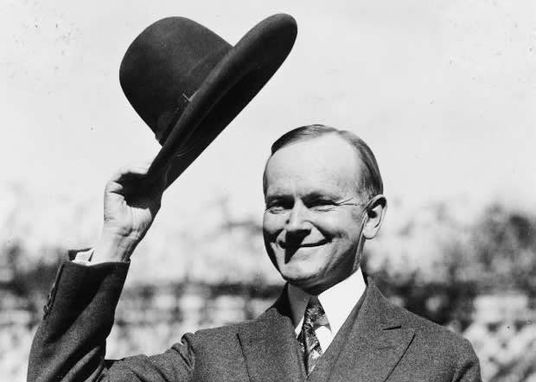
Hat tip - Calvin Coolidge

Over this past weekend, the Native Heritage Project blog hit a milestone, 1000 subscribers.  Thank you one and all.  Not bad for just under 15 months since the blog was created!

You’ve probably noticed thank yous and hat tips to people.  That’s President Calvin Coolidge who signed the Indian Citizenship Act of 1924 into law tipping his hat above.

Many of the records buried in dusty archives and other places come to my attention thanks to all of you.  Breathing life into our hidden and forgotten ancestors is about sharing information – and that’s what we do here.  As you know, this blog is about preserving and publishing records about people of Native heritage, especially those displaced, primarily east of the Mississippi.  However, I don’t restrict the records to those locations.  I publish quality records that come my way.  Recently we had a story about Alaska, for example.

In addition to the 1000 subscribers, we have lots of hits on the website too.  Most of the subscribers read the posts via e-mail or RSS feed.  Hits on the website generally aren’t from subscribers, or they are subscribers looking for something in particular.  To date, we’ve had over 114,000 hits on the website as well.

We have a lot of content.  I’ve published 416 articles, as of today.  Remember, the site is searchable, both by key word in the box at the top right that says “search” and by category, such as a specific tribe.  Categories are listed on the right hand side below “recent posts” and “archives,” so scroll down and then click on the category to see posts that relate to that topic.

Enjoy, and if you see something interesting in terms of documentation of Native people, please send it my way.  Hat tip to everyone!!!!

Posted in Laws | 5 Comments

Using Tax Lists to Identify People of Color

Recently, Ancestry.com put indexed Tennessee tax lists from 1783 to 1895 online.  Tax lists weren’t required to be saved, so these records are sporadic at best, but extremely valuable when they are still available.

http://search.ancestry.com/iexec/?htx=List&dbid=2883

I’ve been using tax lists for a long time, but since they are now becoming more widely available, I thought this might be a good time to talk about innovative ways to use tax lists to find “hidden” people of color.  As we know, if you weren’t white, you were considered to be “of color,” generally to the 4th generation or in some timeframes in Virginia, if you had “one drop” of non-white blood.  So Indian ancestors and mixed race people would have been found in the “people of color” category.

The purpose of tax lists was to determine the appropriate tax for people to pay – all people.

There were primarily two different categories of taxes, and lists.  Sometimes these two types of tax lists were combined into one, but often not.  Landowners could own multiple parcels in different sections of the county, meaning they would be listed more than once on a land tax list.  But only one record of a poll tax would exist for any one person per county, per year.
The first type of tax was on land based either on acres or valuation.

But not everyone owned land, and heaven forbid, someone not pay taxes, so there were other types of taxes too.  These lists were generally called poll tax lists but in some places were called personal property lists.  There were columns of items and people to be taxed.

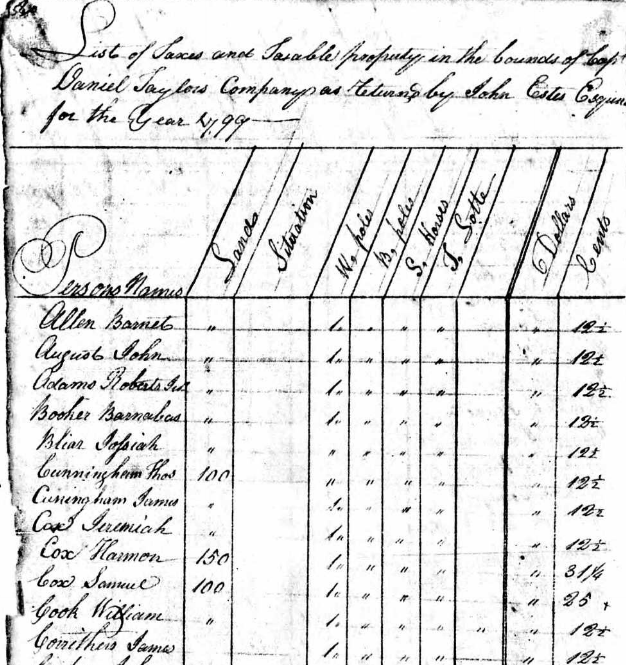
On the example below from 1799 in Grainger Co., Tn., you can see that John Estes, Esquire, took the tax list from within Daniel Taylor’s militia company.  Categories were land, situation, which was used for exceptions, white polls, black polls, stud horses, town lotte, a blank column and then dollars and cents owed by the taxpayer.
tax list 1799 grainger county

White polls – were generally white males living in the household 16 years or older.  The taxpayer, if white (unless exempt), would count as 1 and then any sons, other men, indentured servants, etc., would count too.

Black polls – depending on when and where, could be black males 12 and older or all blacks 12 and older.  Obviously, this generally meant slaves but could also be free people of color who were counted on the land owners list if they did not pay individually.

Horses, cows, mules, etc.  You’ll see various categories depending on the list location and year.  Sometimes the horses are broken down to stud horses, which were money earners, and other horses.  These often were indicators of relative wealth.  I saw one list in Virginia where carriages and clocks were taxed.

Schools – in some regions during some time periods, there were special taxes collected for the school.  The landowner whose land the school sat on was generally exempt from the tax.

Some people didn’t have to pay tax – if you were over a certain age – which varied from place to place and time to time but was generally 45-55 years of age, or if you were infirm and you petitioned the court to be excused from paying taxes, or if you were an ordained minister.  On the list example, this would have been recorded in the situation column.

On later tax lists, there was more than one kind of tax, meaning both a state and a county tax.

Sometimes tax rates varied depending on your ethnicity. If you were a white person, your rates were, let’s say, 10 cents per acre but if you were “of color” they were a different rate, and generally not lower.  Sometimes by comparing your ancestor’s taxes with those of known white neighbors, you can discern that they were considered “of color”.  It goes without saying that the man who took the polls, or the tax list, in this case, John Estes, was white, so compare your ancestors rates with his.  For example the amount of tax paid for a white poll or a black poll should be the same if both taxpayers were white, but if they are paying different amounts for the exact same thing, look for the reason why.

Families “of color” generally had to pay for all family members over the age of 12 (or 16) , including wives and children.  In some locations, petitions were submitted to the legislatures to relieve free people of color of this extra tax burden.  In some cases, men refused to pay poll tax on their mixed race wives and children and were taken to court for “concealing tithables.”  In fact, concealing tithables is one hint that your ancestor may indeed have had a mixed race family.

Lastly, tax lists can be extremely useful sorting out various men of the same name.  If someone owned land in 2 places within a county, especially if they were not adjacent and particularly if they were in 2 different districts, the same person can be on the tax list more than once if it’s a land based tax list.  If it is not a land based list, meaning a personal property or poll tax list, then they would only be listed once.  In some places, there were two lists, one for land and one for personal property.  On those lists, by comparing them, you can tell if there were really 2 John Does or just one who owned land in 2 places.  If there are actually 2 different John Does, their location will be somewhat identified by their tax list district, and their property of course would be located in that district, were you to find their deeds.  By following the tax lists, so to speak, you should, hopefully, be able to tell men by the same name apart.

No one enjoys paying taxes, but for genealogists, these lists can be a goldmine if you know how to utilize the information.

Posted in Tax Lists | Leave a comment

Indians and the Census 1790-2010

Census enumerators had a big influence on our genealogy records.  These people we don’t know decided who was of what race and recorded the family as such.  Most of the time, those records were sacrosanct.  I only know of one example where they were “corrected,” and that appears to be because the enumerator wrote in something that was not a valid choice for the 1880 census.  “Portugee,”  written sideways below, was corrected to “W” for white in Hawkins County, Tennessee.

portugee census

But this raises the question of whose idea of race was recorded.  The answer is, that of the census taker.  The census takers were provided instructions and they recorded the ethnic category of various family members based on their perception of the family when they visited.  In most cases, this wasn’t a problem.  But if you are racially mixed and trying to find and interpret data about your family, these results can be confusing, especially if in one census they are white, in another mulatto and maybe in another black.  In some census years, there was no category at all for Indian.  In others, all free people of color were recorded in one group.  Where your family fell was up to the census taker, not your family members.

Let’s take a look at what the various census instructions to enumerators and census forms said about Indians.

1790 – “Omitting Indians not taxed, distinguishing free persons, including those bound to service, from all others.”  Indians living “wild,” generally meaning plains Indians in the west, or on reservations were not taxed, but those who were enumerated were recorded in the “all other free” column on the census form.

1800 – Indians living off of reservations and not “wild” would have been recorded in the “all other free persons” column on the census form.  Options were free white, slave and “all other free persons.”

1810 – Indians living off of reservations would have been recorded in the “all others” column on the census form.  Options were free white, slave and “all other.”

1820 – Indians living off of reservations would have been recorded in the “free colored persons” categories.  Other options were free whites, slaves and “all others except Indians not taxed.”

1830 – Indians living off of reservations and not “wild” would have been recorded in the “free colored persons” category.  Other options were free whites and slaves.

1840 – Essentially the same as 1830 with the exception that an additional column labeled “pensioners for revolutionary or military services”  with a blank for the pensioner’s name to be included and applies to all individuals.

1850 – 1850 is the first census in which every individual in the household was enumerated.   In prior years, only the name of the head of household was recorded and other household members were recorded by age grouping by category.   In 1850, the instructions say that Indians not taxed (meaning on reservations) were not to be enumerated and the categories for race were white, black, mulatto.  So if your ancestor looked “dark” and was an Indian, chances are they were recorded as M for mulatto.  There was no “Indian” category until 1860.

1860 – Indians not taxed were not enumerated.  However, the categories differed a bit this year.  “The families of Indians who have renounced tribal rule, and who under State or Territorial laws exercise the rights of citizens, are to be enumerated. In all such cases write “Ind.” opposite their names, in column 6, under heading ‘Color.’”

There is a census in Indian Territory, but Indians are not included.

1870 – Instructions said, “”Indians not taxed’ are not to be enumerated on schedule 1. Indians out of their tribal relations, and exercising the rights of citizens under State or Territorial laws, will be included. In all cases write “Ind.” in the column for “Color.” Although no provision is made for the enumeration of “Indians not taxed,” it is highly desirable, for statistical purposes, that the number of such persons not living upon reservations should be known. Assistant marshals are therefore requested, where such persons are found within their subdivisions, to make a separate memorandum of names, with sex and age, and embody the same in a special report to the census office.”

The form gave these race options:  Color – White (W), black (B), mulatto (M), Chinese (C), Indian (I).

There was no census of Indian people in Indian Territory.  However, this National Archives article discusses Indians in the census between 1860 and 1880 and states that in 1870 half-breed people who had assimilated and adopted white ways were to be recorded as white.

1880 – Instructions said, “It is the prime object of the enumeration to obtain the name, and the requisite particulars as to personal description, of every person in the United States, of whatever age, sex, color, race, or condition, with this single exception, viz.: that “Indians not taxed” shall be omitted from the enumeration.

By the phrase “Indians not taxed” is meant Indians living on reservations under the care of Government agents, or roaming individually, or in bands, over settled tracts of country.

Indians, not in tribal relations, whether full-bloods or half-breeds, who are found mingled with the white population, residing in white families, engaged as servants or laborers, or living in huts or wigwams on the outskirts of towns or settlements are to be regarded as a part of the ordinary population of the country for the constitutional purpose of the apportionment of Representatives among the States, and are to be embraced in the enumeration.”

However, the 1880 instructions for “color” are not specific as to how to record Indians or those of mixed heritage.  “Color.-It must not be assumed that, where nothing is written in this column, “white” is to be understood. The column is always to be filled. Be particularly careful in reporting the class mulatto. The word is here generic, and includes quadroons, octoroons, and all persons having any perceptible trace of African blood. Important scientific results depend upon the correct determination of this class in schedules 1 and 5.”

The form gave these options:  Color – White, W; black, B; Mulatto, Mu; Chinese, C; Indian, I.

Beginning in 1885, special Indian Census were taken on reservations.  This continued until 1940.

1890 – The 1890 census was destroyed, but here are the instructions:  “Whether white, black, mulatto. quadroon, octoroon, Chinese, Japanese, or Indian.-Write white, black, mulatto, quadroon, octoroon, Chinese, Japanese, or Indian, according to the color or race of the person enumerated. Be particularly careful to distinguish between blacks, mulattos, quadroons, and octoroons. The word “black” should be used to describe those persons who have three-fourths or more black blood; “mulatto,” those persons who have from three-eighths to five-eighths black blood; “quadroon,” those persons who have one-fourth black blood; and “octoroon,” those persons who have one-eighth or any trace of black blood.”

1900 – In 1900, the instructions become less specific:  Although they don’t say so here, we know that Indians on reservations are still not consistently enumerated.

“Column 5. Color or race.-Write “W” for white; “B” for black (negro or of negro descent); “Ch” for Chinese; “JP” for Japanese, and “In” for Indian, as the case may be.”

The census bureau says that beginning in 1900, Indians on reservations were also enumerated in the general census, but I have not found this to always be the case.  I do find them consistently by 1930.

A special Indian census form with separate instructions was included, although these are often only recorded at the end of the county census roll and sometimes not indexed when indexing occurred.  These were supposed to be for people both on reservations and off who considered themselves to be Indian.  These are particularly valuable records.

1910 instructions:  “Color or race.-Write “W” for white; “B” for black; “Mu” for mulatto; “Ch” for Chinese; “Jp” for Japanese; “In” for Indian. For all persons not falling within one of these classes, write “Ot” (for other), and write on the left-hand margin of the schedule the race of the person so indicated.”

Again a special Indian census form and instructions were included.

1920 instructions:  “Color or race.-Write “W” for white, “B” for black; “Mu” for mulatto; “In” for Indian; “Ch” for Chinese; “Jp” for Japanese; “Fil” for Filipino; “Hin” for Hindu; “Kor” for Korean. for all persons not falling within one of these classes, write “Ot” (for other), and write on the left-hand margin of the schedule the race of the person so indicated.”

Things changed dramatically between 1920 and 1930 for Indians.  In 1924, Indians were made American citizens.  Before 1924, Indians who lived on reservations were considered to be citizens of their tribe and not American citizens.  This harkens back to the 1830s lawsuits about sovereign tribal rights.

Before the 1930 census, Indians living on reservations were not always enumerated on the general census.  There were special Indian census schedules taken, but not on the decade marks like the regular census, and not as detailed, generally lists of families with ages.  But in 1930, all Indians were included in the census, and the instructions became much more robust as well.  Some Indians were included in the 1900-1920 census schedules, but not all, although according to the instructions, they were all supposed to be included.  Mixed race people and Indians living off of the reservation were included.  Indians living on reservations are the people missing from the census prior to 1930.  Fortunately for genealogists, if your ancestor was living on a reservation in the 1900s, you likely know about it.

1930 instructions:

“150. Column 12. Color or race.-Write “W” for white, “B” for black; “Mus” for mulatto; “In” for Indian; “Ch” for Chinese; “Jp” for Japanese; “Fil” for Filipino; “Hin” for Hindu; “Kor” for Korean. For a person of any other race, write the race in full.

“151. Negroes.-A person of mixed white and Negro blood should be returned as a Negro, no matter how small the percentage of Negro blood. Both black and mulatto persons are to be returned as Negroes, without distinction. A person of mixed Indian and Negro blood should be returned a Negro, unless the Indian blood predominates and the status as an Indian is generally accepted in the community.

152. Indians.-A person of mixed white and Indian blood should be returned as Indian, except where the percentage of Indian blood is very small, or where he is regarded as a white person by those in the community where he lives. (See par. 151 for mixed Indian and Negro.)

153. For a person reported as Indian in column 12, report is to be made in column 19 as to whether “full blood” or “mixed blood,” and in column 20 the name of the tribe is to be reported. For Indians, columns 19 and 20 are thus to be used to indicate the degree of Indian blood and the tribe, instead of the birthplace of father and mother.

154. Mexicans.-Practically all Mexican laborers are of a racial mixture difficult to classify, though usually well recognized in the localities where they are found. In order to obtain separate figures for this racial group, it has been decided that all person born in Mexico, or having parents born in Mexico, who are not definitely white, Negro, Indian, Chinese, or Japanese, should be returned as Mexican (“Mex”).

155. Other mixed races.-Any mixture of white and nonwhite should be reported according to the nonwhite parent. Mixtures of colored races should be reported according to the race of the father, except Negro-Indian (see par. 151).”

In the “place of birth” section, we find these instructions for Indians:

“174a. For the Indian population, which is practically all of native parentage, these columns are to be used for a different purpose. In column 19 is to be entered, in place of the country of birth of the father, the degree of Indian blood, as, “full blood” or “mixed blood.” In column 20 is to be entered, in place of the country of birth of the mother, the tribe to which the Indian belongs.’

1940 – The 1940 census is the last census that has been released, and the instructions that year were:

“453. Column 10. Color or Race.-Write “W” for white; “Neg” for Negro; “In” for Indian; “Chi” for Chinese; “Jp” for Japanese; “Fil” for Filipino; “Hi” for Hindu; and “Kor” for Korean. For a person of any other race, write the race in full.

454. Mexicans.-Mexicans are to be regarded as white unless definitely of Indian or other nonwhite race.

455. Negroes.-A person of mixed white and Negro blood should be returned as Negro, no matter how small a percentage of Negro blood. Both black and mulatto persons are to be returned as Negroes, without distinction. A person of mixed Indian and Negro blood should be returned as a Negro, unless the Indian blood very definitely predominates and he is universally accepted in the community as an Indian.

456. Indians.-A person of mixed white and Indian blood should be returned as an Indian, if enrolled on an Indian agency or reservation roll, or if not so enrolled, if the proportion of Indian blood is one-fourth or more, or if the person is regarded as an Indian in the community where he lives.

457. Mixed Races.-Any mixture of white and nonwhite should be reported according to the nonwhite parent. Mixtures of nonwhite races should be reported according to the race of the father, except that Negro-Indian should be reported as Negro.”

In addition, the “mother tongue” recorded was to be the tribal language.

1950 – Although the 1950 census has not been released, the categories are quite interesting and the 1950 census should help genealogists who are attempting to sort through their family history.  This census took into consideration special mixed communities.  The instructions for “Race” are as follows.

“114. Item 9. Determining and entering race.-Write “W” for white; “Neg” for Negro; “Ind” for American Indian; “Chi” for Chinese; “Jap” for Japanese; “Fil” for Filipino. For a person of any other race, write the race in full. Assume that the race of related persons living in the household is the same as the race of your respondent, unless you learn otherwise. For unrelated persons (employees, hired hands, lodgers, etc.) you must ask the race, because knowledge of the housewife’s race (for example) tells nothing f the maid’s race.

115. Mexicans.-Report “white” (W) for Mexicans unless they are definitely of Indian or other nonwhite race.

116. Negroes.-Report “Negro” (Neg) for Negroes and for persons of mixed white and Negro parentage. A person of mixed Indian and Negro blood should be returned as a Negro, unless the Indian blood very definitely predominates and he is accepted in the community as an Indian. (Note, however, the exceptions described in par. l18 below.)

117. American Indians.-Report “American Indian” (Ind) for persons of mixed white and Indian blood if enrolled on an Indian Agency or Reservation roll; if not so enrolled, they should still be reported as Indian if the proportion of Indian blood is one-fourth or more, or if they are regarded as Indians in the community where they live. (See par. 116 for persons of mixed Indian and Negro blood and also exceptions noted in par. 118.) In those counties where there are many Indians living outside of reservations, special care should be taken to obtain accurate answers to item 9.

118. Special communities.-Report persons of mixed white, Negro, and Indian ancestry living in certain communities in the Eastern United States in terms of the name by which they are locally known.

The communities in question are of long standing and are locally recognized by special names, such as ‘”Croatian,” “Jackson White,” “We-sort,” etc. Persons of mixed Indian and Negro ancestry and mulattoes not living in such communities should be returned as “Negro” (see par. 116). When in doubt, describe the situation in a footnote.

119. Mixed parentage.-Report race of nonwhite parent for persons of mixed white and nonwhite races. Mixtures of nonwhite races should be reported according to the race of the father. (Note, however, exceptions detailed in pars. 116 and 118 above.)

120. India.-Persons originating in India should be reported as ‘Asiatic Indians.’”

The 1960 census is unremarkable and includes Indian as a category with no specific instructions.

Then came 1970 and the census changed dramatically.  People were asked about their race and race was no longer recorded based on the interpretation of the census taker.  For Indian, there was a blank beside the category with the word “tribe” that was to be filled in.  As of the 2010 census, this tribal question remains on the forms.

Between 1980 and 2000, the Native American population inthe US increased 110%.  Now clearly, this was not a matter of actual population growth, but the difference between what the previous census takers saw and the self-identification of individuals.  There seems to be quite a chasm between perception and identity.

How to identify an Indian or an Indian mixed race person, especially one not living on a reservation, seems to have been a problem that has plagued census takers and therefore the government, and now genealogists, since the beginning of the census records more than 200 years ago.

You can read more about how the statistics about and individual perception of race in American has changed due to census changes here.

Posted in Census, History | 12 Comments