The Tuscarora and the Revolutionary War

Wherever the Tuscarora found themselves, it seems that trouble was just around the corner.  Not long after many of the Tuscarora had relocated from North Carolina to New York, sponsored by the Oneida tribe, the Revolutionary War was upon them by 1780.  The British attempted to recruit the Native tribes, generally relatively successfully, by promising them that if they won, they would stop the tide of European settlement.

Lyman Draper (1815-1891), a historian, interviewed a great number of people across the country about the Revolutionary War.  He also collected and preserved letters and other papers dealing with that event and the surrounding people and timeframes.

Among the documents he found was a transcript of a document drawn up in November and December of 1794 relating the losses of the Oneidas and Tuscaroras during the “late war”.

The Oneidas in the document were divided into 3 clans: Wolf, Bear and Turtle.  The Tuscarora were not noted as such.  There were only 8 Tuscaroras, so perhaps they didn’t need to be listed by clan.

There were a total of 79 Oneida claims, 8 Tuscarora claims and 8 “additional claims paid” that list no tribal affiliation.

This document differs somewhat from the War of 1812 veterans list, because in this case, sometimes both the Native name and the European name of the claimant were listed.  Of the 79 Oneida claims, 53 listed Native names, 31 listed European or at least Anglicized names.  Twelve listed both and of those 12, 6 or 7 listed literal translations that may have become surnames.

One listed a translated name, but I’m sure the specific translation did not become a surname.  In this case, the literal translation was given as “Let us go and bathe.”

Only 16 men had fully developed anglicized names, meaning both a first and last name that were clearly recognizable as that, such as Henry Smith.  The man named Silversmith clearly had an anglicized name, and I counted it as a surname, but it not a fully developed name, as no first name is given.

The names with translations include:

  • Cornelius Augh-ne-onh/Big Bear
  • Hlau-istany/Silversmith
  • Paulus Onons-honty/Flying Arm
  • Cornelius tow-ce-ny/Otter
  • Thomas Sauhetaugeaulaus/Whitebeans
  • Mary Da-wau-taw-wangh-hau/Let us go and Bathe
  • This last name may not be a translation, but a description – Paulus Tegaug-swe-aun-gau-lolis (a young hereditary sachem)

There were only 8 Tuscarora in total.  Five had Native names, 2 had fully developed English names, and one I couldn’t tell for sure.

Some people were listed by their translated names only, such as the Widow Grasshopper, Beech Tree’s widow, Leah Whitebeans, Elizabeth of Oriska, Mary, widow of Pine Splitter, Widow Warmweather, Big Bear and John Frenchman.

Following this list of individuals who sustained losses were individualized accounts of those losses which tell us a great deal about how these people were living during this transitional period in their history.

Very popular among the items lost were horses and items relating to horses, then livestock such as cattle and hogs.  We also find many claims for things like axes, kettles, guns, hoes, traps, ammunition and such.

Surprisingly, of the 91 people making claims, 71 people lost at least one house or dwelling.  Some lost more than 1.  These weren’t vacation homes.  People tended to live in nuclear family groups.  Looking at the rest of these lists for the people who lost homes, they look to have lost just about everything else they had too.  This suggests that their village was burned and it’s confirmed that at least some structures burned by a couple of notes within the document.  Later interviews by Lyman Draper confirm that the Indian village of Oriskany was burned.

  • Of the 71 people who lost homes, a total of 79 structures were lost.  Of those we find the following breakdown:
  • Log homes:  1 large, 1 small, 1 with 2 floors, 1 with 3 fireplaces and one noted as “poor” for a total of 5.
  • Bark or Indian houses:  2 large, 5 small and the rest not further described for a total of 46.
  • Framed houses: 5 large and 20 not further described for a total of 25.
  • Barns: 2, one described as large.  These barns were valued about the same as bark homes.
  • One wigwam.

Looking at their list of belongings, the loss of 4 brass sugar kettles tells us that they made maple syrup.  A few people reported the loss of sleighs.  One man noted that he lost 60 dollars in silver armbands “as they buy them of the traders.”  This was a great amount of money at that time.  A hewed log house was only valued at 20 dollars.  One man noted that he had a bark house, but that it was roofed, framed and sealed inside with board nails which cost him 5 dollars.  That house was only worth 8 dollars altogether, even with his $5 worth of nails.  One bark house had 2 plank beds and 2 fireplaces.

One lady, Good Peter’s widow listed 4 sitting chairs, 2 large brass kettles and 30 table pewter spoons, a set of knives and a fork.  This lady was very well to do, comparatively speaking.

John Sken-en-do had a very large framed house with a chimney at each end, painted windows and a large framed barn that was not yet finished.  This house was worth $44 and the barn, $15.  He also lists 2 large pewter dishes, a pewter basin, 2 rugs and a large looking glass.  Also noted on his list as National Property were half a peck of wampum given at Philadelphia.  On the bottom of his list it was also noted that the large meeting house was burnt.  In the Draper interviews, he is noted as a Tuscarora Chief.

Hon-ye-ry’s widow complained of losing 4 pieces of calico and 1 piece of linen, 6 coverlets and 6 blankets.  She was the only person listing sugar, and she lost 200 pounds of it.  We know this property burned because it says that the corn was burnt in the house.  Interestingly, this list also included 10 pair of leggings and 10 pair ear-bobs.  Were those earbobs worn by men or women?

Losses noted by other people include a framed house “made by white people about 18 or 20 feet square – gave a horse and a cow for the frame and outside work.”  One “pole house” was noted as having “plained beems.”

Many lived in houses noted as bark or Indian houses. One noted that their bark house had “good door things.”  Some “Indian houses” were noted as being small, but some apparently were not.  One Indian house had 3 fireplaces.

Peter S-hau-lu-tau-gau-wau’s children note that he lost  a pewter teapot and 6 cups and saucers.  Not hardly the picture of Native people from that time period we carry around in our minds.

Christian, Senior lived in a small bark house that was “well furnished” and the most remarkable item he lost was a large brass kettle.  Aside from that, his only possessions were a small brass kettle, a broad axe, 2 small axes, 2 hoes, a bake pan and a hand saw.  His presumed son, Christian, the Younger, is listed next and is the only person living in a wigwam.  However, in his wigwam, he had a large brass kettle, 4 hoes, 3 axes, 2 pewter basins and 2 swine.  I’m thinking that the swine might not have lived in the wigwam with him.  Whoever heard of pewter in a wigwam?  There has to be a story in here someplace yearning to be told.

One man who didn’t lose his house lost instead 6 silver breastplates, 5 armbands and 2 pair of leggings, one of which was scarlet, along with 2 new blankets and 3 shirts.

The Oneida Chief in 1780 was Lodwick Gaghsaweda and his list was quite interesting.  He too lost his frame house and household items such as kettles and tongs.  However, he also lost a pleasure sleigh in addition to a burden sleigh.  He is the only person to have listed 2 candlesticks and those were valued at $8 so I’m presuming that they were pewter.  He also listed a brass headed shovel and tongs, probably for the fireplace.  Some other households listed tongs, but none were brass.

Another man says that his house was well furnished, partly in the English manner. Only one person listed a prayer book.  Two people, both women, each listed half of a framed house, which makes me wonder if they were co-owners.  They are not listed together.

One man listed his set of door hinges.  Another man apparently forgot a few things the first time, like his red leggings and his 15 pairs of door hinges when he filed a second lit.

The widdow of Peter Thanyentayen notes that she had a “well finished frame house and store with a cellar walled with stone.”  Another widow who also had a framed house listed separately 10 panes of window glass.

Paul Tehonwatase notes the things he lost and then demands compensation for his “part and activity in the late war,’ stating he has a “wife and 3 children whom expects to be clothed.”

Opportunists apparently existed then as well.  A note exists that one claimant was a “young fellow who could have had no property” and that he “came here 2 years before the war ended.”  His list of claimed losses is then shown and is extensive, including 100 broaches and 15 ear bobs.  He also claims to have lost 3 belts of black wampum, 3 fingers wide and very long.

Other information emerging from this list is also interesting.  There is an entry that says “Sken-en-do – money borrowed by Col. Pickering.”  There are two very interesting pieces of information here.  First, that Col. Pickering was borrowing money from an Indian and secondly, it appears that the later surname Shenandoah, Skenandoah, Scando and even Canada began as a Native name, Sken-en-do, and was never translated, simply smoothed out to something that would easily roll of English tongues.

Naming patterns are not yet evident for the most part.  Beech Tree’s Widow mentions her son Cornelius Shagoratharse and another son, Joseph Kagh-nyonaughque.  We do find Christian, Senior, followed by Christian, the Younger, living in his wigwam.  One might infer that “the Younger” is the son of “Senior,” but that’s surely not a given understanding that these tribes were maternal.  We do know, thanks to the Draper interviews, that the sons of Jacob Doxtator, an Oneida Chief who was born about 1764, did take their father’s surnames.

This list of items lost gives us a rare glimpse of their life on the reservation in 1780, just a few years after the majority of the Tuscarora tribe left North Carolina.  Surprisingly, none of the Tuscarora noted in this document share surnames with the Tuscarora who signed deeds before leaving North Carolina in the 1770s.
Posted in Tuscarora | 5 Comments

1869 Cherokee West Census Interesting Transitional Names

I have, finally, finished my work with the 1869 Cherokee Census West.  As I worked with these records for so many weeks, I felt like in many ways I came to know the people, to recognize their family members.

I’ve gone off on several side journeys, the internet equivalent of seeing an interesting roadsign on the interstate and exiting to take the back roads for awhile.  Yes, it takes a little longer, but generally, it’s well worth it…and when all is said and done in this life it’s the memories that make it all worthwhile.  You’ve shared these journeys via this blog.

This census was particularly relevant because it showed us a tribe or a group of Native people in transition between Native ways and more Europeanized ones, including name adoption, selection or assignment.  Given this transition state, we see some names that we never see again….and when you see some of them, you’ll understand why I’m sure.

The literal translation may have had unintended consequences or simply didn’t translate well.  I laugh every time I think of the Buzzard Flapper family who indeed, did change their surname and took their ancestor’s first name, Martin, instead.  Personally, I’ve grown fond of Buzzard Flapper and like the unique name, but they weren’t quite so fond it seems.

I’ve listed some of the more interesting names below.  On some of these, I just have to bite my tongue to keep myself from commenting.  Some of these will make you wonder, some will make you laugh and a few, I guarantee, with both surprise you and make you say “ewwwww” as my granddaughter so succinctly put it!!

Enjoy this little journey to the past.  I certainly have.

  • Little Bird (first and last name in this case, and it others, a surname)
  • Bear Paw (surname)
  • Catcher Coon (first and last name)
  • Drunkard (no first name, and there were several different men with this name)
  • Dick Fool
  • Five Killer (surname)
  • Snake Girty
  • Halfbreed (surname)
  • Ice Nits
  • Split Nose (first and last name – here’s the first ewwwww)
  • Jack Post-Oak (a post oak was generally a property marker)
  • Pumpkin-Pile (surname)
  • Sookey Scrapeshin
  • Twist (only name)
  • Walkingstick (surname)
  • Warspeaker (surname)
  • Redbird (used as a first, a last and an only name for different people)
  • John Big-Leg
  • Blacksnake (only name)
  • Blanket (surname)
  • Clinging (surname)
  • Dirt-Pot (both as a surname and as an only name)
  • Dick Duck
  • Evilsizer (surname)
  • Fish Egg (first and last name)
  • Gal-Catcher (both as surname and as only name)
  • Horsefly (only name)
  • John Leaning-Up
  • Dread (first name)
  • Looking (surname)
  • Pathkiller (only name)
  • Rat (surname)
  • Rotten-Man (only name – I just can’t comment on this, so many things come to mind)
  • Run-About (surname)
  • Shotpouch (surname)
  • Dick Six
  • Stealer (surname and only name)
  • Sunday (surname)
  • Swan (surname)
  • David Tadpole
  • Tick-Eater (only name – see, there’s the second ewwww)
  • Lewis Whale
  • Trotting Wolf (first and last name)
  • Bat (surname)
  • Beaver (surname)
  • Little Buffalo (first and last name)
  • Bull-Frog (surname)
  • Joe Coming-Deer
  • Corn Silk (surname)
  • Curlyhead (only name)
  • Day-Light (only name)
  • Dirt-Seller (only name – I can’t for the life of me figure this one out)
  • Big Field (first and last name)
  • Lewis Forked-Tail (like a dragon?)
  • Cutter Frog (first and last name)
  • Half-Moon (surname)
  • Going Snake (surname)
  • Going Star (surname)
  • Elk Hare (first and last name)
  • Hog Shooter (surname for several families)
  • Hog Toater (surname – I wonder if Hog Shooter and Hog Toater work as a team)
  • Johnny-Cake (surname)
  • King-Pot (surname)
  • Longbow (surname)
  • Long-Tail (surname)
  • Mistake (surname)
  • Pig (only name)
  • Go-About Prince (first and last name)
  • Rainy Raven (first and surname – I really like this one)
  • Harry Shavehead
  • Six-Killer (surname)
  • Young Snail (first and last name)
  • Stop (surname)
  • Riddle Sweetcorn (first and last name)
  • Loony Tiger (first and last name – we don’t have tigers in this country)
  • James Tin-Cup
  • Darky Tread-About (first and last name, this person was not listed as colored)
  • Young Turkey (first and last name)
  • David Turn-Over
  • Whirlwind (surname)
  • One-Eye Wilson
  • Tame Wilson (As opposed to One-Eye??)
  • Runabout Wolf (first and last name)
  • Stand Backwater (first and last name)
  • Beanstick (surname – I always think of Jack and the beanstalk when I see this surname)
  • Fall Bendabout (first and last name)
  • Squirrel Bill (first and last name)
  • Watta Birdchopper (first and last name)
  • Big Bullet (first and last name)
  • Rabbit Bunch (first and last name)
  • Lassy Canoe (first and last name)
  • Big Catcher (first and last name)
  • Flying Christie (first and last name)
  • Guts Diver (first and last name – Ok, let’s hear it, a resounding EWWWWWW)
  • Rose Diver
  • Dirt-Thrower (only name)
  • Double-Tooth (only name)
  • Double-Head (only name)
  • Getting Down (first and last name)
  • John Fall-Down
  • Cloud, Old and Runabout Feather
  • Little Fog (first and last name)
  • Frog-Thrower (only name – I wonder why someone would throw frogs.)
  • Darky Goodwoman (first and last name – not noted as colored)
  • John Gunhead
  • Cooking Head (first and last name)
  • Long John (first and last name)
  • Man-Killer (surname)
  • Naked Head (only name)
  • Robin No-Fire
  • John Otter-Lifter
  • Sleeping Paw (first and last name)
  • Polecat (only name)
  • Poorbear (surname)
  • And Rabbit (first and last name)
  • Climbing Rabbit (first and last name – rabbits where I live don’t climb)
  • Dollar Redbird (first and last name)
  • Chicken Rooster (first and last name)
  • Saddle-Blanket (only name)
  • Liver Scott
  • Shooter (surname)
  • Stop Sitting-Down (first and last name – I’d love to hear the story of how this person go this name.)
  • Snaketail (surname)
  • Soap (surname)
  • Spring Frog (only name)
  • Squirrel Swimmer (first and last name)
  • Runabout Tale (first and last name)
  • Pap Thrower (first and last name)
  • Tree-Frog (only name)
  • Mix Water (first and last name)
  • Water-Hunter (only name)
  • Wild Tom (only name)
  • Hawk Wolf (first and last name)
  • Bark (surname)
  • Bee-Hunter (surname)
  • Bull-Frog (surname)
  • Coffee-Water (only name)
  • Corn Tassell (surname)
  • Standing and Young Deer (first and last names)
  • Little Dick
  • Dollar Return (first and last name)
  • Six Downing (first and last name)
  • Skull Fodder (first and last name)
  • Four Killer (surname)
  • Setting Hen (first and last name)
  • Young Hider  (first and last name)
  • Big Drum Jay-Bird (first and last name)
  • Peach-Eater (only name)
  • Frog Six-Killer (first and last name)
  • Soap (surname)
  • Chik-killer Spade (first and last name)
  • Jumper Stealer (first and last name)
  • Twish B Stick (first and last name)
  • Three-Y-Bird (surname)
  • JD Tooth
  • Yellow Hammer (only name)
  • Black Bat (first and last name)
  • Wild Cat (first and last name)
  • John Deer-in-the-Water
  • Lewis Deer-Head
  • Walker Dry-Head
  • Fox and Rock Fields
  • Water Killer (first and last name)
  • Jumper Lizard (first and last name)
  • Lucy No-Wife
  • Sleeping Rabbit (first and last name)
  • Raincrow (surname)
  • Rock-Thrower (only name)
  • Betsy Stooping-Tree
  • Aky Walker
  • White-Killer (surname)
  • Yellow Jacket (only name)
  • Thomas Big-Meat
  • Bony-Face (only name)
  • Cabbage (surname)
  • Rape Campbell
  • Dirt-Eater (surname)
  • Berry Dreadful (first and last name)
  • George Eater
  • Good-Money (only name)
  • Jumper (only name)
  • Kate Moccasin
  • Nakey (only name)
  • Young Pigeon (first and last name)
  • Falling Pot (first and last name)
  • Wat Squirrel (first and last name)
  • Snow-Maker (only name)
  • Dirt T Tiger (first and last name)
  • Back Water (first and last name)
  • Standing Water (first and last name)
  • Trim Bush (first and last name)
  • Killy Cow-Eater (first and last name)
  • Crying-Deer (surname)
  • Crying-Bear (only name)
  • Big Elk (first and last name)
  • Jumper Empty (first and last name)
  • Fawn Head (first and last name)
  • Middle-Striker (only name)
  • Ned Mole
  • Money-Crier (only name)
  • Celia Naked
  • Left-Out Rain-Crow (first and last name)
  • Sam Sick
  • Sitting-Down (surname)
  • John Standstill
  • Spade Sunshine
  • Tough (only name)
  • Mink Wrinklesides
  • Backbone (surname)
  • Push Flying (first and last name)
  • Flute Foreskin (first and last name)
  • Alex Get-Up
  • Johnson Good-Money
  • Looney Guess
  • Dog Guts (first and last name – I warned you about the eewwwww factor)
  • Hominy Hanging (first and last name)
  • Belted Heaven (first and last name)
  • Money Hunter (first and last name)
  • Hawk Jug (first and last name)
  • Good Money (first and last name)
  • Chicken Moving (first and last name)
  • Jack Pack
  • Young Pig (first and last name)
  • Dry Water (first and last name)
  • Fallen Water (first and last name)
  • Woman-Killer (surname)
Posted in Cherokee, Names | 11 Comments

Eastern and Western Siouian Tribes and the White Buffalo Legend

These past several days, as I’ve been working with the western Siouian tribes and the White Buffalo (Calf) Legend, it occurred to me that during my work with the history of the Eastern Siouian tribes, that I had never heard of any White Buffalo stories or legends.  Many traders and historians, John Lawson in 1701, the first among them, wrote of the various tribes they came in contact with, and not once have I seen any reference to any buffalo legend, let alone a White Buffalo legend.  I certainly would have noticed this, as would ethnologists during the past hundred years or so.

Therefore, this would seem to suggest that the Eastern and Western Siouian tribes divided before the appearance of the White Buffalo Woman, generally thought to have been about 2000 years ago.

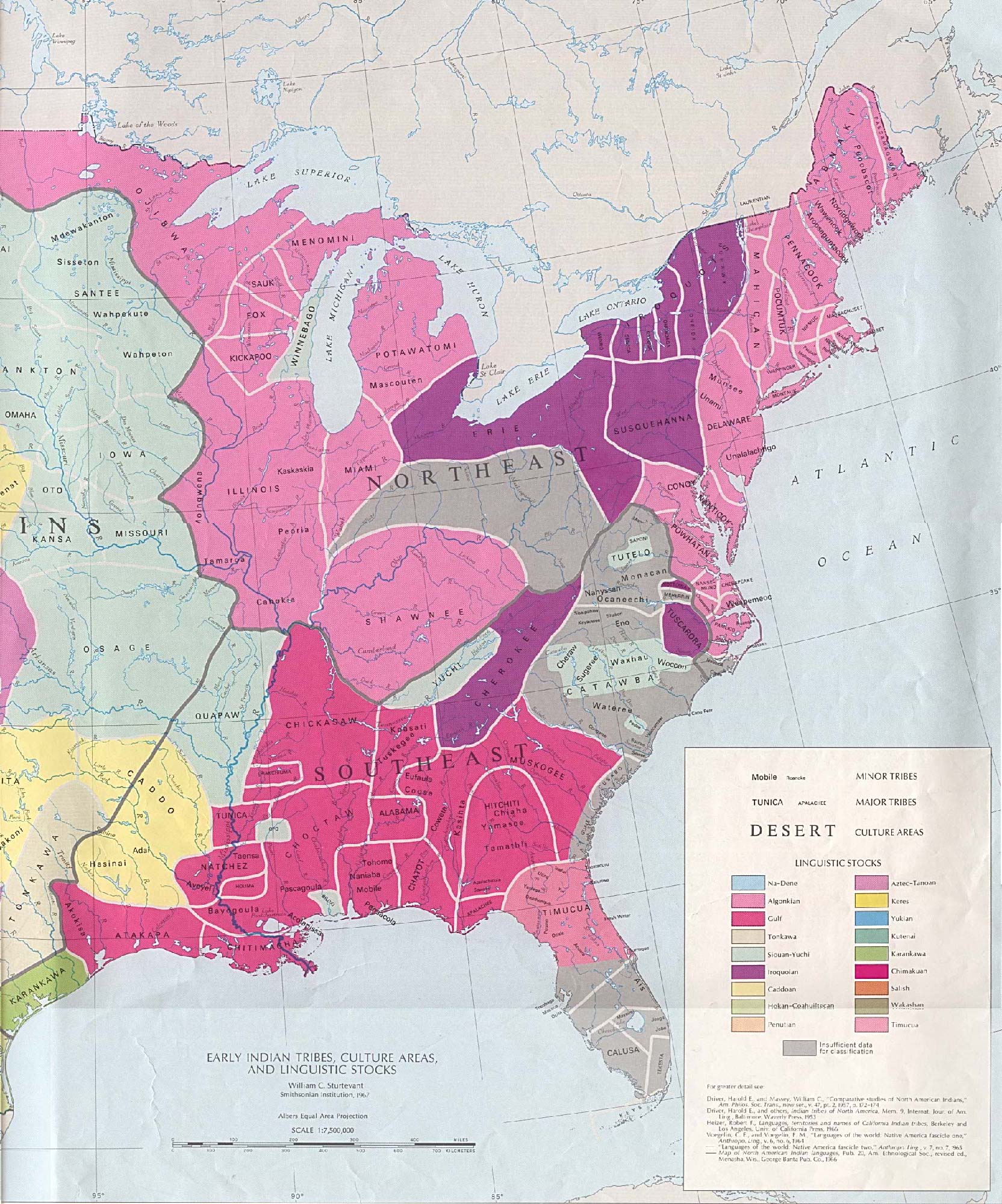
On the map below published by the Smithsonian, the Eastern Siouian tribes are shown.  They are surrounded by other tribes which are not classified on this map, but which are now also believed to be Siouian as well, such as the Wateree and the Monacan.

Posted in Siouian, White Buffalo | 1 Comment

The Associated Press Reports on Melungeons: A Multi-Ethnic People

In its own way, the Melungeon paper has gone viral, something very unusual for an academic paper.  We’ve received notes today from as far away as Australia and someone told us they say it on Fox News today. 

The AP picked up on the paper and set about to write their own article.  They did a pretty good job, all things considered, except for a typo or two (death years pertaining to photos should have been in the 1900s, not 1800s) and one slight error (the Melungeon male lines who tested were both African and European).  The academic paper itself is correct.

You can share in the excitement here:  http://news.yahoo.com/dna-study-seeks-origin-appalachias-melungeons-201144041.html

The good news is that this article has generated a huge amount of interest in the DNA project.  We’ve received lots of e-mails, and if we are lucky, people from lines previously untested will now test.

If you haven’t seen the original paper that the AP article refers to, you can see it at www.dnaexplain.com under the Publications tab.

Posted in Melungeon | 3 Comments

Chief Pontiac

Did you grow up thinking of a car when you heard the word Pontiac?  I surely did.  We had several.  However, I vividly remember the profile on the logo on the car of an Indian.

I came across the Pontiac name, as a surname, when working with the Carlisle Indian School student names.  One was Samuel Pontiac, a Chippewa and another was James Pontiac, an Ottawa, both from Michigan.

Michigan also sports a rather large city, Pontiac, and I was certainly aware of Pontiac’s Rebellion, which was led by Chief Pontiac, who was certainly the namesake of these two students.  But who was Chief Pontiac?

Pontiac or by his native name, Obwandiyag (c. 1720 – April 20, 1769), was an Ottawa leader who became famous for his role in Pontiac’s Rebellion (1763–1766), an American Indian struggle against the British military occupation of the Great Lakes region following the British victory in the French and Indian War.

Little reliable information has been documented about Pontiac before the war of 1763. He was probably born between 1712 and 1725, perhaps at an Odowa village on the Detroit or Maumee Rivers. The tribal affiliation of his parents is uncertain. According to an 18th-century Odowa tradition, Pontiac’s father was an Odowa and his mother an Ojibwa, although other traditions maintained that one of his parents was a Miami. Pontiac was always identified as an Odowa by his contemporaries.

By 1747, Pontiac had become an Odawa (Ottawa) war leader, when he allied with New France against a resistance movement led by Nicholas Orontony, a Huron leader. Pontiac continued to support the French during the French and Indian War (1754–1763) (also known as the Seven Years War).  Although there is no direct evidence, he possibly took part in the famous French and Indian victory over the Braddock expedition on July 9, 1755.

By 1755, Pontiac was a Chief of a confederacy which included the Ottawa, the Potawatomi and the Ojibwa tribes.

In one of the earliest accounts of Pontiac, the famous British frontier soldier Robert Rogers claimed to have met with Pontiac in 1760. Historians now consider Rogers’s story to be unreliable. Rogers wrote a play about Pontiac in 1765 called “Ponteach: or the Savages of America,” which helped to make Pontiac famous and began the myths about the Ottawa leader.

Historians disagree about Pontiac’s importance in the war that bears his name. Nineteenth-century accounts portrayed him as the mastermind and leader of the revolt, while some subsequent interpretations have depicted him as a local leader with limited overall influence.

Pontiac, like other Indian leaders, was unhappy with the new British policies that were put in to effect after the French and Indian War. Taking advantage of this dissatisfaction, as well as a religious revival inspired by a Lenape prophet named Neolin, Pontiac planned a resistance. He hoped to drive British soldiers and settlers away, and to revive the valued French alliance. On April 27, 1763, he held a large council about 10 miles below Fort Detroit (present-day Council Point Park in Lincoln Park, Michigan). Pontiac urged the listeners to join him in a surprise attack on Fort Detroit. On May 1, Pontiac visited the fort with 50 Ottawa in order to assess the strength of the garrison.

According to a French chronicler, in a council meeting, portrayed below (with some amount of artistic license, as there are no mountains in lower Michigan), Pontiac proclaimed:

“It is important for us, my brothers, that we exterminate from our lands this nation which seeks only to destroy us. You see as well as I that we can no longer supply our needs, as we have done from our brothers, the French…. Therefore, my brothers, we must all swear their destruction and wait no longer. Nothing prevents us; they are few in numbers, and we can accomplish it.”

Although Pontiac’s influence had declined around Detroit because of the unsuccessful siege, he gained stature in the Illinois and Wabash country as he continued to encourage resistance to the British who wanted to take the land of the Indians and displace them. Seeking to end the war, British officials made Pontiac the focus of their diplomatic efforts. In July 1766, Pontiac made peace with British Superintendent of Indian Affairs Sir William Johnson.

By the British Crown’s attention to Pontiac, he asserted more power among the Indians of the region than he possessed by tradition.  This created resentment and local rivalries flared up, and in 1768 he was forced to leave his Ottawa village on the Maumee River. Returning to the Illinois Country, Pontiac was murdered on April 20, 1769, at the French village of Cahokia (nearly opposite St. Louis, Missouri) by a Peoria Indian, perhaps in retaliation for an earlier attack by Pontiac.  Various rumors quickly spread about the circumstances of Pontiac’s death, including one that the British had hired his assassin. According to a story recorded by historian Francis Parkman in “The Conspiracy of Pontiac” (1851), a terrible war of retaliation against the Peoria resulted from Pontiac’s murder. Although this legend is still sometimes repeated, there is no evidence that there were any reprisals for Pontiac’s murder.

Pontiac is buried in St Louis, Mo., across the Mississippi River from Cahokia.  His gravesite, although disputed, is thought to be at the location of Broadway and Walnut in the city of St. Louis today, although at the time, it was on the outskirts of the small village of St. Louis.  A plaque commemorates Pontiac and his life and serves as a tombstone and is today affixed to the side of a parking garage.  If Chief Pontiac was interred in that location, he is either under the garage or other structures nearby, or his grave was inadvertently disturbed during construction.  A second memorial to Pontiac exists at the Livingston County courthouse in Pontiac, Illinois.

Current historians generally agree that Pontiac’s actions at Detroit were the spark that instigated the widespread uprising, and that he helped to spread the resistance by sending emissaries urging others to join it, but he did not command it as a whole. Native leaders around Fort Pitt and Fort Niagara, for example, had long been calling for resistance to the British and were not led by Pontiac. According to the historian John Sugden, Pontiac “was neither the originator nor the strategist of the rebellion, but he kindled it by daring to act, and his early successes, ambition, and determination won him a temporary prominence not enjoyed by any of the other Indian leaders.”

No authentic paintings or likenesses of Pontiac are known to exist.

Posted in Chippewa, Ojibwa, Ottawa, Peoria, Potawatomi | 4 Comments

1869 Cherokee West Census Native Language Names

I wasn’t quite certain what to do with the list of Native language names in the 1869 Cherokee West census.  I have not included them in the Native Names project because they are not a surname that someone would hunt for.  Someone commented recently that they were looking for a Native name found in some family correspondence.  I realized that even though these names don’t fit the criteria for the Native Names project, indeed, they need to be available someplace, so I have decided to post them here. 

These are the names that are entirely Native.  As European names were introduced, these names were either abandoned or assimilated somehow, often as either a literal translation to English by making the Native word into something that sounded less Native and more European. 

1869 Cherokee Nation West Census

http://archiver.rootsweb.ancestry.com/th/read/MD-AfricaAmer/2002-04/1018152204

Dist # Name1 Name2 Womn Male Childrn Fem Childrn Notes          
Sa 236   A-cheh-naw-ski-tee 1 1 1            
Ta 388   Ah-ha-dar-skie                  
Sa 190   Ah-le-teh-skir 1 1 2            
Il 562   Ah-na-tee-na-kee 1 1 3            
GS 149 Nelly Ah-ner-wee-sky 1                
De 727   Ah-tah-cah-pow-eigh-que 1 Delaware Citizens of the Cherokee Nation    
Il 564   Ah-tah-wan-skie 1                
Ta 480   Ah-tow-la-lee 1 3 1            
Il 551 Ummer Ah-yar-her 1 2              
Il 331   Ah-yun-ta-kee 1 1 1            
Ta 386   Ak-tee-yer 1 2 2            
Ta 170   A-me-kie 1 1 1            
Ta 150   Amer-soo-yah 1 3              
Ta 369   A-nee-kee                  
Il 593   Ar-bi-cah-lo-yo-hola 1 1 Creeks, not citizens        
GS 189   Ar-kil-lau-he 1                
FL 25   Arly-oo-le-ner-wee 1                
Ta 5   Arna-tes-ke 1 2 4            
Ta 144   Ar-ne-wa-ke 1 2              
FL 271   Ar-quar-sah 1 1 2            
Ta 146   Ar-qur-le 1 2 1            
De 626   Ar-see-nee 1 1 Delaware Citizens of the Cherokee Nation  
Il 549   A-tuu-hee 1 2              
Ca 23   Cah-hah-koo-yer 1 1 3            
De 336   Cah-law-nee-ha-skie 1 2 4            
Sa 49   Cah-leh-chu                  
Sa 282   Cah-na-saw-he 1 1              
Co 101   Cah-sah-he-leu 1 1              
Ca 29   Cah-su-tau-tee                  
SE 38   Ca-na-he 1 2              
FL 248   Car-nar-loo-ky 1                
De 321   Car-sut-te-sky 1 1 2            
GS 211   Cau-di-che 1 3              
FL 181   Cha-cow-wa-Liver 1 1 1            
Sa 271   Cha-la-ka-te-he 1 2 2            
Sa 256   Che-aw-ka 1 2              
FL 198   Che-ca-le 1 1              
SE 36   Che-cheo 1 2 2            
De 59   Chee-stoo-ty 1 1 3            
FL 299   Che-gou-nun-tah 1                
Ta 76   Che-lar-cey                  
FL 277   Che-ne-lus-ky                  
Ta 241   Che-ne-que 1 3              
Ta 496   Che-noo-qua 1 3 1            
SE 133   Che-now-ee 1 1              
Sa 182   Che-see 1 1 4            
Sa 277   Che-ti-a-ga 3 1              
FL 242   Chin-nar-cee 1 2              
De 590   Chi-poo-she 1 2 1 Delaware Citizens of the Cherokee Nation
Ta 172   Cho-all-lu-chee 1 2 1            
Il 594   Chock-ta-ton-ne-hee 1 1 1 Creeks, not citizens      
Sa 206   Choo-na-lah-he-skie                  
Ta 25   Choo-naw-yoo-ski 1 1              
Ta 168   Choo-now-you-kee 1 2 1            
Ta 167   Choo-squa-loo-ter 1 3              
Ta 494   Choo-stoo-ter 1 3 2            
SE 117   Chow-cu-ee 1 1 2            
FL 237   Chow-e-yo-kah 1 1              
De 316   Chow-e-you-ca 2 1              
Il 554   Chow-e-you-ca 2 2              
FL 7   Chow-e-you-koh 1 1              
Sa 27   Chu-he-sut-ta 1 1 2            
Ta 201   Chu-ho-sti 1 3 2            
De 297   Chu-la-er-lake 1 1              
Sa 252   Chu-le-ow-wah 1 2 1            
FL 231   Chu-noo-le-hus-ski 1                
FL 24   Chu-nu-lucky 1 6 1            
De 345   Chu-skah 1                
Il 302   Chu-stu-too 1 1 2            
FL 80   Chu-te-law-mun-tah 1 2              
Il 394   Chu-wa-loo-ky 1 2 1            
De 99   Chu-war-nos-kee 1 1 1            
Il 548   Chu-wa-stu-ta 1 1              
De 315   Clar-noo-sey 1                
Ta 215   Clar-sto-noi 1 1 2            
Sa 87   Clew-wee 1 2              
Sa 232   Con-na-no-lee-skie 1 4 1            
Sa 48   Con-ne-tie 1 2              
FL 186   Cul-le-sk-wa 1 1              
Ta 236   Cullow-noo-ski 1 1 1            
Sa 19   Cul-ste-na-ske 1 2 1            
De 330   Cul-stie-yah 3 1              
Sa 42   Cul-sti-ha-skie 1 1 2            
Ca 103   Cul-sti-yah 1                
GS 174   Cun-now-ee 1 2              
GS 131   Cur-sow-low-ee 1 1 2            
Ta 97   Dark-sa-hai-gu 1 2 2            
Ta 421   Dee-gar-noo-hee-lee 1 2 1            
Ta 499   De-gar-nees-kie 1 1 3            
Ta 348   Di-ter-las-kie? 1 1 1            
Ta 420   Doo-now-who-las-nee 1 3 2            
Sa 263   Elow-y 1                
Sa 52   Enaw-le                  
Sa 71   Enaw-li 1 1              
Ta 398   Enow-lee 1 2              
FL 252 En-ta-se-na En-ta-se-na                  
Co 20   Ew-seeis-red 1                
Ta 491   Gar-lar-no-der 1 3 4            
Ta 375   Gar-na-hie 3 2              
Ta 445   Gaw-les-tee 1 2 2            
De 606   Goo-he-ti-se 1 1 2 Delaware Citizens of the Cherokee Nation
Ta 457   He-sar-tes-ske 1 2              
Sa 186   He-su-tus-kee 1 3 1            
Ta 24   Hoo-loo-da-kee 1                
De 14   Ice-yer-ho-ler 1 2 2            
Sa 273   Jack-en-na 1 4 1            
De 619 Top-pat-tah Joah-wee-hy 1 2 Delaware Citizens of the Cherokee Nation  
Sa 21   Jo-chu-he 1 1 1            
Ta 148   Ka-hee-ger 3 2              
Sa 221   Ka-le-chee 2 2              
Sa 33   Ka-na-su-taw 1 1 2            
Ta 227   Ka-noo-ka 1 2              
Ta 501   Kar-hee-der 1 2              
Ta 326   Kar-soo-ton-die 1 1 3            
Ta 475   Kar-toy-yer 1 1 1            
Ta 497   Ka-skau-ne-hee 1 3 2            
GS 163   Ka-sku-ni 1 1 1            
Sa 72   Kee-lee 1 2              
Sa 257   Keh-we-se-ta 1 1 1            
Sa 216   Ke-na-ka-na 1 1 1            
Sa 79   Kie-lee                  
SE 176   Kil-low-bee 1                
Ta 200   Ko-haw-hie 2 3              
Ta 28   Kool-ah-noo-skie 1 1 2            
Ta 158   Koo-luf-ski 1 3 2            
Ta 153   Kos-tee 3 1              
Ta 169   Kullow-nes-kie 1 1              
Ta 391   Kullow-nus-tes-skie 1 1 1            
Ta 21   Kun-se-nee 1 1 4            
Sa 119   Ma-chi-net 1 1 1            
Il 638   May-krau-shu-ber 1 White Citizens            
De 729   Che-yo-hus-kie Mexican Indians              
Il 608   Mico-war-mee 1 4 Creeks, not citizens        
Il 602   Muck-nah 1 1 5 Creeks, not citizens      
Ta 69   Nar-hoo-nee 1 1              
De 333   Naw-hawl 1 1              
Ta 390   Nee-koo-die 1 2 1            
Sa 265   Ne-gah-wa 1 1 2            
De 69   Nick-kar-car-char 1 4 2            
De 670   Nigh-ne-we-aught-qua 1 1 1 Delaware Citizens of the Cherokee Nation
Ta 235   Noo-doo-wee-you 1 2 1            
Sa 63   Noo-neh 1 1 2            
De 647   Oh-yea 1 1 2 Delaware Citizens of the Cherokee Nation
Sa 55   Oo-cha-lee 1 2              
Sa 274   Oo-do-le-ta-ny 1                
Ta 393   Oo-how-dlew-hee 1                
Sa 132   Ook-si-ah                  
De 225   Oo-lar-ne-yun-ter 1 2              
GS 143   Oo-le-sto 1 2 3            
Sa 266   Ool-skah-nu 5 1              
De 339   Oo-nau-la 1 2 1            
FL 247   Oo-ne-na-tee-mit 1 1 1            
Ta 136   Oo-nor-ley 1                
De 328 Ooo-nee-culler Ooo-che-loo-hi                  
Ta 98   Oo-qua-ya-sta 1 4 2            
FL 171   Oo-root-wole 1 1 1            
Ta 379   Oos-kel-a-teter 1 3 1            
FL 106   Oo-squr-loo-kah 1 1 2            
Sa 201   Oo-ta-la-tee 2                
Ta 23   Oo-too-cor-ton 1 2 1            
De 596   Oo-wah-le-ner 1 3 1 Delaware Citizens of the Cherokee Nation
Ca 68   Oo-wa-loo-ky 1 2              
FL 147   Oo-wa-loo-ste-steler 1 2              
Ta 72   Oo-war-ga                  
Ta 353   Oo-water 1 2              
Ta 134   Oo-wee-you 1 1 2            
Sa 136   Oo-ya-tee 2 3              
Sa 281   Oo-yu-sah-ta 1 2              
GS 247   Otuck-too-noo-wee 1                
Ta 467 Kar-de O-you-tow-tse 1 3 3            
De 631   Pet-se-pough-ke-se 1 3 Delaware Citizens of the Cherokee Nation  
De 605   Puck-wah 3 1 Delaware Citizens of the Cherokee Nation  
De 628   Qua-ne-show 1 1 Delaware Citizens of the Cherokee Nation  
De 247   Quar-la-ter-gee-skie 1 1 1            
De 640   Sah-ka-tie 1 1 3 Delaware Citizens of the Cherokee Nation
FL 204   San-ta-ke 1 1 2            
Ta 366   Sar-how-ie                  
Ta 152   Sar-me-yos-kee 1 1 1            
De 636   Sea-que-noh 1 1 Delaware Citizens of the Cherokee Nation  
Il 550   See-tee-ler 1 2 2            
Il 341   Sil-iw-wa-ke 1                
Co 12   Skah-yah-too-her 1 3              
De 589   Son-o-ve-ster 1 3 2 Delaware Citizens of the Cherokee Nation
SE 168 Saw-nee Soo-mor-nu 1 2              
FL 257   Sop-sucker-soap 1                
Sa 28   So-wa-kee 1 1              
Sa 215   Squa-ta-leech 1 3 2            
Ta 394   Squll-les-ske 1 1 2            
Sa 43   Squl-ta-kee 1 2              
Sa 51   Squt-a-le-chu 1 1 2            
Sa 56   Ste-nee 1 2              
Il 610   Su-char-luc-tee 1 1 Creeks, not citizens        
Co 211   Sul-tee-skie 1 4              
GS 167   Sul-tee-sky 1 1 1            
Il 496   Sul-tee-sky 1 3              
FL 105   Sultie-skee 1 2 2            
Ta 95   Sul-tul-ske 1 1              
Co 119   Sun-ne-cow-ie 1 2 2            
FL 253   Sus-tus-sky 1 2              
De 627   Sut-cul-lah-nah 1 2 3 Delaware Citizens of the Cherokee Nation
Ta 365   Sutta-wa-kee 1 4 2            
De 325   Sut-te-yee 1                
SE 180 Su-wa-kee Su-wa-kee                  
Sa 207   Su-ya-tah 1 1              
De 685   Tah-pee-can 1 1 Delaware Citizens of the Cherokee Nation  
Il 597   Tah-see-yee 1 Creeks, not citizens          
GS 194   Tah-yer-lu-sky 1 2 3            
Sa 68   Ta-ka-naw-he-le 1 2 1            
GS 168   Tal-lau-lee 1 1              
Ta 99   Tar-che-che 1 1 1            
Sa 172   Tar-ka-naw-yu-ka 1 2 1            
Ta 137   Tar-lar-la 1                
Ta 155   Tar-li 1 2              
GS 228   Tar-ta-tse 1 1 1            
De 244   Tau-you-nee-see 1 1 1            
Il 566   Tau-you-nee-sie 1                
Sa 285   Te-aw-le                  
Sa 36   Te-cha-we-skie 1 1 3            
De 163   Tee-cah-nee-yee-sky 1 1              
De 269   Tee-cah-nee-yee-sky 1                
De 305   Tee-cah-too-ni 1 2 3            
De 68   Tee-ear-hoo-yugs-ky 1 1              
Il 606   Tee-mah 1 3 2 Creeks, not citizens      
Il 316   Tee-saw-sky 1 1 1            
De 153   Tee-se-you-kee 1 3              
Ta 27   Tee-soo-yor-ge 1 2 1            
De 167   Tee-squa-nee 1                
De 124   Tee-tur-kee-yur-ske 1                
Sa 209   Te-ka-na-ga-wa-ske 2 1              
Il 521   Tel-sah-tee-sky 1 2              
Sa 279   Te-ne-naw-le 1 2 2            
Sa 250   Te-ta-us-kee 1                
Ta 370   Tik-lum-nie 1 2 2            
Il 601   Tim-cah 1 1 Creeks, not citizens        
FL 73   Tog-sener 1 1 2            
Ta 461   To-les-ski 1 2 1            
Co 21   Tolt-se-kee-see 1 2              
GS 290   Too-elis-ter 1 3 2            
Ta 430   Too-na-sa-lee 1 4 2            
Ta 74   Too-qua-da 1                
Sa 204   Too-stoo 3 1              
De 637   Tot-scio 1 2 2 Delaware Citizens of the Cherokee Nation
Sa 194   To-yu-ne-se 1                
Ta 151   Tu-coo-tos-kie 1                
Ta 18   Tul-cha-la 1 1 2            
De 624   Tup-pe-sick-o 1 2 Delaware Citizens of the Cherokee Nation  
Sa 220   Tu-se-wa-le-ta 1 2 1            
Sa 260   U-chea 1 2 1            
Il 555   Ue-te-yer 2 1              
De 307   Un-sour-yer 1 2 2            
Sa 259   U-sti-eh 1 1              
Sa 268   Ut-a-chu-tle 1 3 3            
Sa 53   Wah-coo-le                  
De 335   Wah-las-kie 1 1              
Sa 118   Wah-le-see 2                
Sa 302   Wal-la 1 3              
Sa 75   Wa-loo-kee 1 1              
Sa 208   Wa-na-tah 1                
De 298   War-hook 1 2 2            
Ta 138   War-lee-see 2 3              
FL 219   War-le-ne-tah 1 1 1            
Ta 412   War-le-yer 2 1              
Il 604   War-loo-gee 1 1 1 Creeks, not citizens      
FL 263   War-lu-nee-ta 1 1 1            
De 334 War-hi-ee-ske War-u-kee 1 1              
Ta 165   Wee-koo-die 1                
Sa 18   We-law-see 1                
Co 85   We-yar-ter 2 1              
Il 592   We-ye-wola 1 3 1 Creeks, not citizens      
Sa 278   Ya-kin-na 1 1 1            
Posted in Cherokee, Names | 2 Comments

Mi’kmaq Portraits Collection from the Nova Scotia Museum

Thousands of years before the arrival of European settlers, the Mi’kmaq of Nova Scotia called themselves L’nu’k, which simply means ‘the people,’ ‘human beings.’ Their present name, Mi’kmaq, derives from nikmaq, meaning ‘my kin-friends.’ Their descendants are still living in the area now known as the Atlantic Provinces and the Southern Gaspe Bay Peninsula in Canada. This area is known to Mi’kmaw people as Mi’kma’ki. Many also make their homes in New England in the United States, particularly in Maine and Massachusetts.

We often think of the Mi’kmaq as Canadian, but they are Algonquian, as were many of the New England and coastal tribes as far south as North Carolina.  The Powhatan at Jamestown and the Hatteras (original Croatoan) Indians in North Carolina were both Algonquian tribes.

The Nova Scotia Museum’s Mi’kmaq Portraits Collection is a database of more than 700 portraits and illustrations that provides a glimpse into the history of the Mi’kmaq of Atlantic Canada. The collection results from research by the Museum over many years, often with the participation of Mi’kmaq individuals and other institutions. While the collection does not list all of the historical Mi’kmaq portraits still in existence, it is a beginning and is a tool for educators and students to learn about Mi’kmaq heritage, while offering researchers access to a comprehensive collection of images.

http://museum.gov.ns.ca/mikmaq/

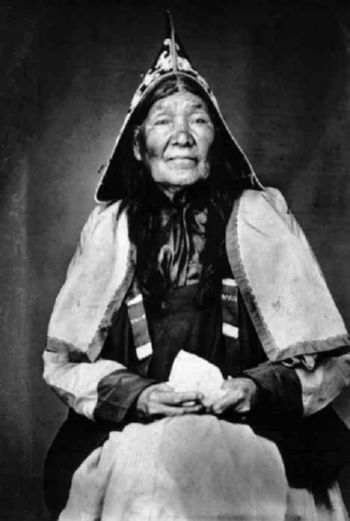
This picture, taken in the mid 1800s in Annapolis Royal is of Molly Muise who lived to a great age and was so much respected by her white neighbors that they erected a tombstone to her memory.  Her dates of birth and death are not known. This may be the earliest portrait of a Mi’kmaq by a photographic process. Molly Muise (the name was originally the French ‘Mius’ and is now spelled Meuse and Muse as well) is wearing a peaked cap with double-curve beadwork, a dark shirt, a short jacket with darker cuffs, over which she apparently has draped a second short jacket, its sleeves pulled inside, as a capelet. Her traditional dress with the large fold at the top is held up by suspenders with ornamental tabs. In her hands she seems to be clutching a white handkerchief.

Hat tip to Elaine for this site.

Posted in Micmac | 8 Comments

John Two Guns White Calf

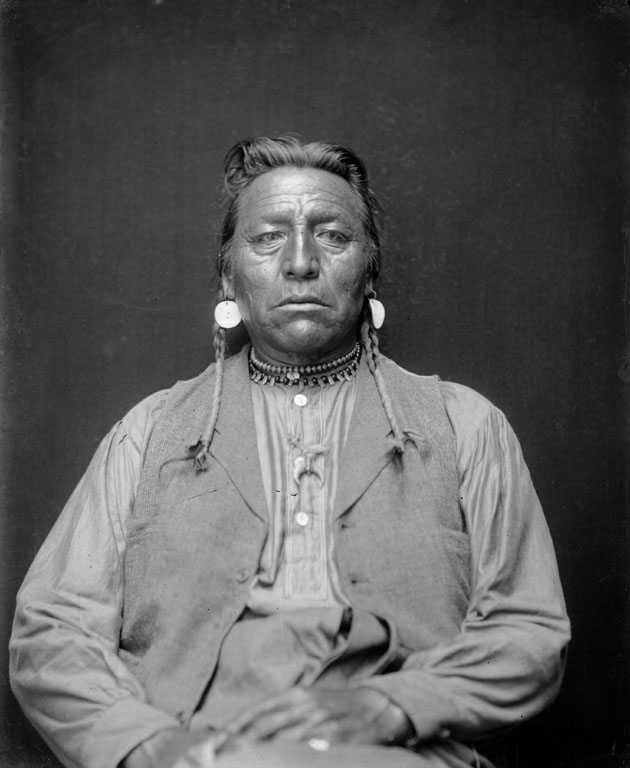
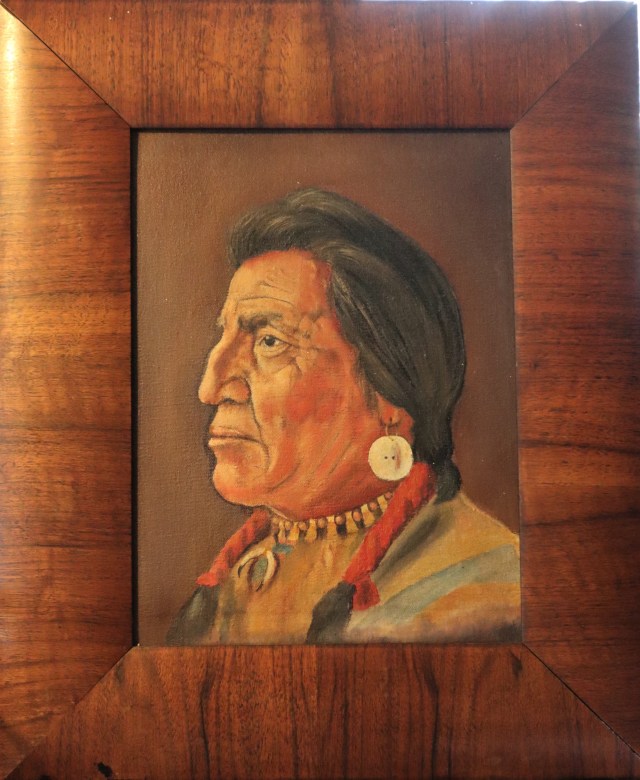
John Two Guns White Calf (1872-1934), shown above, may indeed be memorialized in a way few other Native Americans have been – on a piece of American money – the buffalo nickel to be specific.  But then again….maybe not….there is a very interesting mystery.  So sit down and pull up a mug of something to drink….

Two Guns White Calf was born near Fort Benton, Montana, son of White Calf who was known as the last chief of the Pikuni Blackfoot.

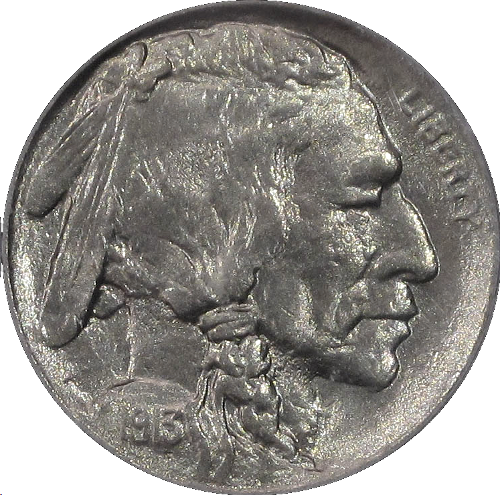
Two Guns White Calf, also known as John Two Guns and John Whitecalf Two Guns, was also, in time, a Blackfoot chief.  He provides one of the most readily recognizable images of a Native American in the world as impression of his portrait appears to appear on a coin, the Indian head nickel.

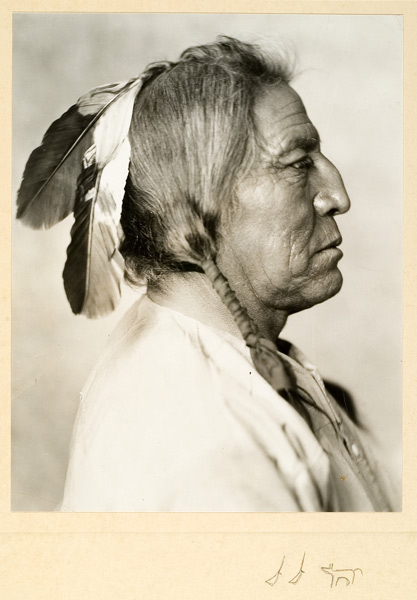
His visage was reportedly used along with those of John Big Tree (Seneca) and Iron Tail (Sioux) in James Earl Fraser’s composite design for the nickel.  Notice the chief’s signature in the photo below taken by T.J. Hileman.

After the coin’s release around the turn of the century, Two Guns White Calf became a fixture at Glacier National Park, where he posed with tourists. He also acted as a publicity spokesman for the Northern Pacific Railroad*, whose public relations staff came up with the name “Two Guns White Calf.”  He died of pneumonia at the age of 63 and was buried at Browning, Montana in a Catholic cemetery.

Chief Two Guns White Calf and the Indian-Head Nickel Story, below, was summarized from “Twisted Tails,” by numismatist Robert R. Van Ryzin, Krause Publications, 1995.

“John Two Guns was born in 1871 and adopted at an early age by White Calf, a prominent warrior chief who was responsible for many of the Blackfoot Tribe’s treaties. After the death of White Calf in 1902, Two Guns became a tribal leader. When Two Guns first saw the buffalo/indian-head nickel (released in 1913) he was convinced that it was his own likeness on the coin. However, the sculptor, James Earle Fraser, always insisted that the head was a composite of several models. He specifically named Two Moons (a Cheyenne) and Iron Tail (a Lakota Sioux) and “one or two others” (in his later years, he mostly said, “one other”).

The Great Northern Railroad, always interested in promoting tourism to its Glacier Park Hotels and passenger traffic on its trains, sought to encourage the idea that Two Guns was the model. The argument raged from 1913 to the death of both figures in 1934 and continues to resurface even now.

The question would seem to have been put to rest by a letter from Fraser to the Commissioner of Indian Affairs in 1931, in which he denied ever having seen Two Guns.

But Charles Bevard, an auctioneer who had come into possession of a number of Two Guns’ personal effects which led him into extensive historical research on the subject, suspected that the US Government wanted Fraser to “discredit” Two Guns as a coin model because they were afraid of the great influence he had on the tribes.

The Chief headed a secret organization known as the Mad Dog Society which was attempting to preserve Blackfoot Heritage. Traditional Indian dances such as the Sun Dance and the Ghost Dance, which had been banned, were again being performed after American Indians received blanket citizenship in 1924. Bevard believed that the US Government feared that Chief Two Guns, like his father, might again take the fierce Blackfoot warriors on the warpath in an attempt to regain their land.

Others pointed out that if Fraser had never been able to remember the third model, how could he be certain that it wasn’t Two Guns Whitecalf? “If he wasn’t a model for the Buffalo nickel, he was [still] the most famous Indian in the 20th century,” Bevard said, “….He had a relationship with non-indians, anyone from presidents on down, and he did a lot of great things for Indians and he was quite the statesman, and, if nothing else, he should be remembered for that.”

Although he is widely remembered for his appearance on the buffalo head nickel, he was an emissary for his people as their Chief, in particular regarding the government’s unmet treaty agreements.

Chief White Calf (son of the first Chief White Calf) also went to Washington DC to collect monies owed to the Indians.  Here’s what he had to say about the government’s delinquent payments:

“In the old days, when we made war on the other tribes, and conquered the land you [whites] later took away from us, our warriors carried a bow and two quivers full of arrows. In the old days my quivers held arrows, because in those times we fought with arrows. But nowadays one can no longer fight with arrows; nowadays one must fight with money, and you can clearly see that the quivers which should hold the money with which to fight for my people are empty.”

The Chief pulled his pants pockets inside out to show they were empty.

“If you want me to be able to fight then fill my empty quivers. Fill my empty quivers with money, and then I will be able to fight.”

Chief White Calf went to Washington D.C. and met with the Commissioner of Indian Affairs to get the money due the Blackfeet people, but the commissioner John Collier told him to go home and the check would be sent in due time. The Chief refused and told Collier he was “going to stay until he got the claim money due his people even if he had to die like his father Chief White Calf died in 1903 in the Presidents private chamber, fighting for tribal claims.”

Chief White Calf, the son, told Collier he would “take an old blanket and sleep in the streets and eat garbage” if he had to, but he would not leave without that money.

Then he said, “The whole world will know that two Chief White Calf’s died in Washington D.C. fighting for the rights of their people. The whole world will know that the old Chief White Calf and his son, the new Chief White Calf, both died right here in Washington D.C. I will do the same [as my father]. I will die here before I will turn around like a whipped dog and go home without the check.”

Commissioner Collier relented the next day and called the Chief to his office and handed him the check due the Blackfeet Indians.

*Another historian has indicated that the railway was the Great Northern Railway, but I cannot verify if only one or both were involved.

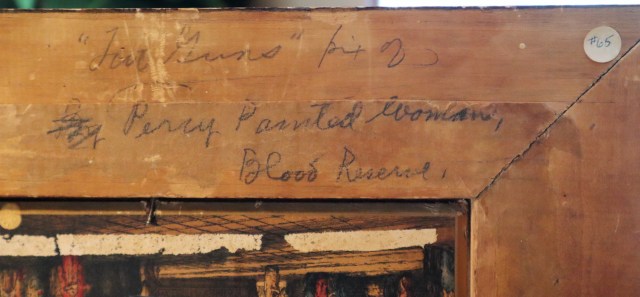
Update: Marilynn, the owner of this painting of Two Guns, originally owned by her father who lived in Lethbridge, Alberta, Canada and loaned to the Galt Museum for years has provided permission to include it in this article. This painting is believed to have been originally owned by Harold and Marie long, of Lethbridge, located in the Porcuppine Hills about 30 miles west of Fort Macleod, the same road as Head Smashed in Buffalo Jump.

Two Guns from Marilynn.jpg

Two Guns back.JPG

Posted in Blackfoot, History | 77 Comments

Chief White Calf – Blackfoot – Died in Washington DC in 1903

Chief White Calf – 1873

While working with the Carlisle student records, I came across Helen White Calf, an Arickara from North Dakota.  Having spent many years on the powwow circuit, I was certainly aware of the White Buffalo story, and thought that maybe White Calf was connected to the White Buffalo story.

This is a series of three blogs that will discuss this topic.  This entry will discuss the original Chief White Calf, another will tell the story of the White Buffalo and a third will tell the story of Chief Two Guns White Calf, son of White Calf.

The original Chief White Calf lived near Benton, Montana.  He was considered the last chief of the Pikuni Blackfoot.  He died in Washington DC, and an article published in the New York Times on January 31 1903, titled “Chief White Calf’s Defiance of Washington Weather Fatal – His BattleScarred Body,” told of his demise , as follows:

White Calf, a leading chief of the Blackfoot tribe of Montana, died at midnight last night at Providence Hospital of pneumonia.  He had come to Washington 10 days ago with a delegation of head men in charge of Dr. George Bird Grinnell, the editor of Forest and Stream, who for many years lived among the Blackfeet and is one of the tribe by adoption.  The Indian office proposed to lease the lands of the Blackfeet to the cattle men, and the Indians objected, as they are themselves raising cattle.  Dr. Grinnell was commissioned to bring the Indians here to plead their case.

White Calf while here went about the town a good deal and refused to clothe as to withstand the damp air, dressing much as he would in his native dry mountain country.  In consequence he was taken fatally sick.  His associates went back to Montana and there was no Indian as his death-bed.  It is believed the though that the other chiefs had gone and he was alone so preyed on his mind as to hasten the end.

The old chief fought the whites many years to hold his country against them.  The physicians at the hospital marveled a the numerous scars of wounds which they found all over the old man’s body.  His breasts was literally covered with evidences of wounds.  The old man was well-known to Gen. Miles and had his confidence and respect. 

It is understood that the visit of the old chief to Washington will not be fruitless. The tribe wants to keep possession of a million acres they have in Montana, where they have 16,000 head of cattle.  Indian Commissioner Jones is credited with having agreed that they shall not be molested.  The lands are rich and much coveted by white men.

http://query.nytimes.com/mem/archive-free/pdf?res=F10712F63F5F117088DDA80B94D9405B838CF1D3

Posted in Blackfoot | 1 Comment

White Buffalo (Calf) Prophecy

The white buffalo calf holds special significance to American Indians- especially the Oceti Sakowin (The People of the Seven Council Fires, also known as the Lakota, Dakota and Nakota, or  the ‘Sioux’).  As it is a crucial part of the teachings and prophecy of White Buffalo Calf Woman, the white buffalo calf is considered a sacred omen of change.

According to legend, the White Buffalo Calf Woman was a holy entity that visited the Oceti Sakowin over a four-day period about 2000 years ago.  White Buffalo Woman, or Ptesan­Wi, as she is called in the Lakota language, taught them sacred ceremonies, songs, and dances.  She gifted the people with a sacred bundle containing the White Buffalo Calf Pipe, which still exists to this day and is kept by Chief Arvol Looking Horse of the Cheyenne River Sioux Tribe.

There are several iterations of the story, but in essence, they all match except for a few details.

The oral tradition says she first appeared to them in the form of a wakan (holy) woman who “floated” above the ground. She stayed among them for a period of time and taught them how to use the buffalo to sustain them, and gave them instruction in seven sacred rites they were to incorporate into their daily lives and preserve and pass down to future generations.

One version of the story from John Lame Deer in 1967 tells us that two young men went out to hunt. Along the way, the two men met a beautiful young woman dressed in white who floated as she walked. One man had bad desires for the woman and tried to touch her, but was consumed by a cloud and turned into a pile of bones.

The woman spoke to the second young man and said, “Return to your people and tell them I am coming.” This holy woman brought a wrapped bundle to the people. She unwrapped the bundle giving to the people a sacred pipe and teaching them how to use it to pray. “With this holy pipe, you will walk like a living prayer,” she said. The holy woman told the Sioux about the value of the buffalo, the women and the children. “You are from Mother Earth,” she told the women, “What you are doing is as great as the warriors do.”

Before she left, she told the people she would return. As she walked away, she rolled over four times, turning into a white female buffalo calf. It is said after that day the Lakota honored their pipe, and buffalo were plentiful. (From John Lame Deer’s telling in 1967).

A slightly different variant says that when White Buffalo Woman left the Lakota people, the people saw her walking off in the same direction from which she had come, outlined against the setting sun. As she went, she stopped and rolled over four times. The first time, she turned into a black buffalo; the second into a brown one; the third into a red one; and finally, the fourth time she rolled over, she turned into a white female buffalo calf before disappearing.

White Buffalo Woman promised to return to restore the Earth to harmony if the necessary preparations were made.

She said she would send a sign her return was near in the form of four unusual buffalo, which would be born white, then during their lifetime, they would cycle through the four colors of the medicine wheel which, among other things, represent the races of the world: red, yellow, black, and white. Some people say the prophesy said they would do this in reverse order from the way she took her leave from the Earth as she traced her way back to our spiritual realm.

White Buffalo Woman warned that several other white buffalo would be born around this time, who would not live to complete the full color change cycle, before the true sacred buffalo were all born. She said when all four sacred white buffalo had returned, the people would be at a crossroads and if they took the right path, there would be a renewal of the Earth. If they chose the wrong path, the Earth would be destroyed, and there would be no hope of restoring harmony beyond that point.

If these sacred white buffalo signs were recognized and heeded, a period of peace and harmony in the world would be restored before her return, when the Mother Earth would heal herself and men would live in harmony with each other, nature, and the natural world, but only if the right choices were chosen. If the wrong choices were made in these days, and man chose to ignore these signs, the Earth would be destroyed.

Several white buffalo have been born, documented from 1833.  You can see an extensive list here:  http://en.wikipedia.org/wiki/White_buffalo

Many have undergone color changes, including the calf, Miracle, born in Janesville, Wisconsin in  1994.  Miracle was believed by many to be the prophesied Sacred White Buffalo.  Miracle died in 2004 but not before giving birth to other white buffalo calves.

You can visit Miracle’s webpage here.  http://whitebuffalomiracle.homestead.com/

The Heider family who owned Miracle and own the farm where she, and other white buffalo born since, have lived, have always been very careful not to allow commercialization of Miracle or the other calves.  They opened their farm for visitors free of charge for years, and now people visit Miracle’s grave as they visited her in life.

Posted in Dakota, Lakota, Nakota, Sioux, White Buffalo | 8 Comments