Chief Kokomo, The Ornriest Man I Knew

Kokomo, Indiana is named for a Miami Indian named Kokomo.  That much, everyone agrees about, but that’s the extent of the agreement.  Beyond that, legend reaches in both directions.  One version of the legend of Chief Kokomo states that he was kind and was venerated by the selection of Kokomo as the name of the town where he lived.  More legends, in fact, most legends tell a different story – one less venerating, of a hard-drinking, rabble-rousing, trouble-making, wife-beating malcontent who was expelled from the Miami tribe in Miami County, and took up residence with a few followers in what would become Kokomo.

Reaching back in the records, we find that David Foster, the man who founded and plotted the city of Kokomo said of the place, “”It was the ornriest town on earth, so I named it for the ornriest man I knew — called it Kokomo.”  Was that said in jest?  We have no way of knowing –  but given the number of similar stories – likely not.

One story tells that Kokomo, in addition to being quite fearless and outspoken, was an extremely large man, towering over everyone else in town.  In fact, when (unmarked) Indian burials were disturbed in 1848 when a sawmill was being built near the old location of the Indian village, one was identified as that of Chief Kokomo because of the extremely large size of the bones.  Apparently Kokomo was then reburied, along with all of the other Indian bones that had been inadvertently disturbed, together in a pine box, in the old pioneer cemetery, a couple of blocks away.
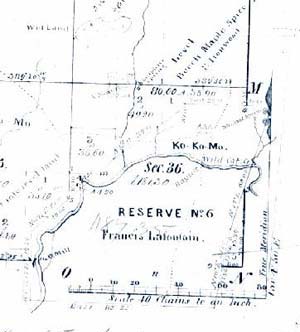
kokomo Lafontaine trace

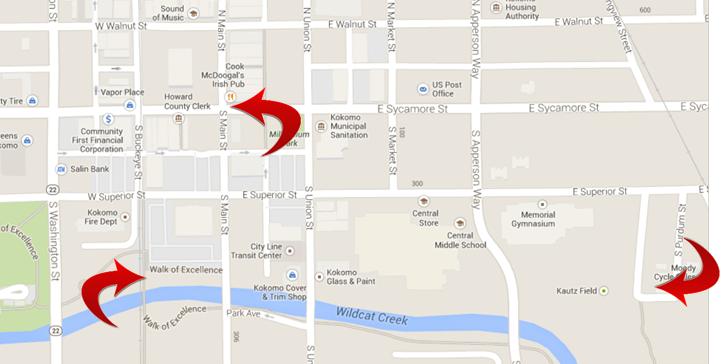
In the late 1840s, this tract was awarded to Miami Indian Chief Francis LaFontaine.  In fact, there is a street in this area of Kokomo today named LaFountain street.  You can see the word “Ko Ko Mo” where the village was located.  The village is near present day Main and Sycamore Streets.  Buckeye south of Superior, on the banks of the Wildcat Creek, where the burials were discovered, is a block or two away, on the other side of the courthouse and slightly south.  Today, this is all downtown area of Kokomo.
Kokomo Indian locations

On the contemporary map above, the Indian village is the top arrow, the original location of the Indian burials is the bottom left arrow and the Old Pioneer Cemetery where Kokomo’s remains were reburied is at far right.

Kokomo, whether chief or rogue, or both, lived in the 1830s and was probably dead by the time this land was granted to Francis LaFontaine in the later 1840s.  We know that Kokomo was alive in 1840 when a gunsmith was repairing his gun and Kokomo decided he wanted to kill the man because he was a Kentuckian and Kokomo has been cheated previously by a Kentuckian.

The only actual record we have of Kokomo is a record from a trading post.

Chief Francis Godfroy maintained a trading post at the mouth of the Mississinewa River back in the 1830s.  One entry in his store ledger on Wednesday, June 27, 1838, when “Koh Koh maw” and a squaw were billed $12 for a barrel of flour and a few yards of Calico. Most Indians also bought Whiskey which sold at .25 a quart, but Koh Koh Maw has no record there of buying whiskey. This does not support the reputation as a drinking man, although clearly, it is only one record.

There were other Miami Villages in this general region as well, based on the 1877 Howard County Historical Atlas.  Nip Po Wah lived at Vermont and Shoc Co To Quaw at Greentown. Pete Cornstalk lived at Indian Suck (the southeast corner of Ervin Twp.) and Ma Shock O Mo south of Greentown a mile and a half; Shap Pau Do Sho which meant “Through and Through,” was at Cassville.

The Ervin township location is shown on this 1877 map.  I believe it is the pink tract shown below.

http://www.historicmapworks.com/Map/US/22645/
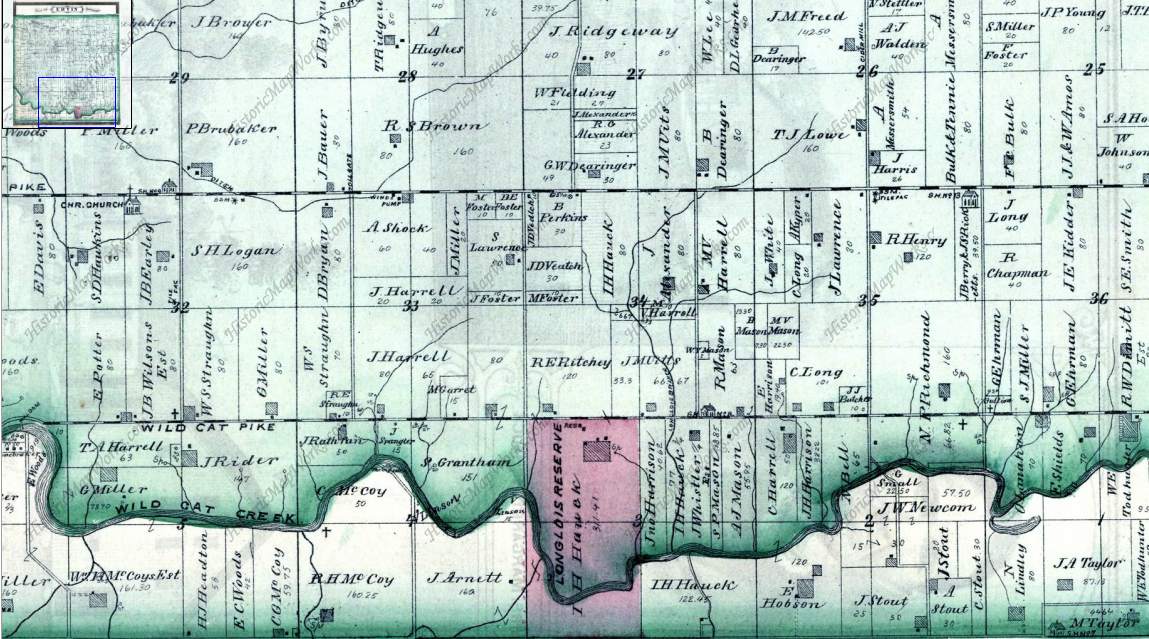
ervin two location

However, only Kokomo had the honor of having a town, now a city, named after him.

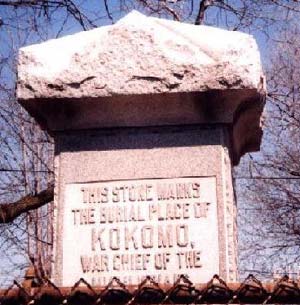
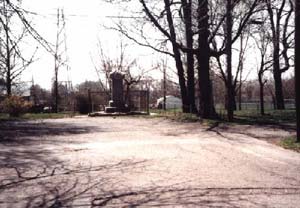
Kokomo’s reburial location is marked today in the old Pioneer cemetery.
chief kokomo marker

This old photo shows the location in the 1900s with a memorial honoring both the old pioneers and Chief Kokomo who is buried along with them.  I surely wish they would mark the location of the Native cemetery along the riverbank of the Wildcat Creek.
kokomo pioneer cemetery

You can read more about Kokomo, the Indian, at these links.
http://www.howardcountymemory.net/default.aspx?id=12816

http://www.howardcountymemory.net/default.aspx?id=12880

Posted in Miami | 12 Comments

Rebels and King’s Men: Bertie County in the Revolutionary War by Gerald Thomas

Gerald Thomas has provided in index to his new book that includes information on three men of Native heritage.

http://www.ncpublications.com/bertie.html/Appendix%201.pdf

APPENDIX 1 – PUTATIVE ROSTER OF BERTIE COUNTY CONTINENTAL LINE SOLDIERS, NORTH CAROLINA CONTINENTAL LINE

Fifth North Carolina Regiment

Braveboy, Jacob, private: A free mulatto, likely of Tuscarora Indian descent,

who resided in Bertie County and enlisted for two and one-half years on

May 9, 1776. Served in Capt. John Pugh Williams’s company. Discharged

on Nov. 10, 1778. Footnote199

Footnote 199: Saunders, Colonial Records, 10:286; Charles Rhodes, declaration dated February 18, 1833, Revolutionary War pension file for Charles Rhodes (S7386). Rhodes stated that he served under Lieutenant Pugh, a subordinate officer under Capt. John Pugh Williams.

Footnote 203:  203. Clark, State Records, 116:1013; Weynette Parks Haun, Bertie County, North Carolina Court Minutes, 1772–1780, Book IV (Durham: the compiler, 1979), 23. During the May 1774 session of Bertie County’s Court of Pleas and Quarter Sessions, Jacob Braveboy, “Bastard Mulatoe aged about fifteen years,” was bound as an apprentice to Charles Powers to learn the

art of a bricklayer. Other researchers have determined that “Braveboy” is a Tuscarora Indian name, possibly originating in Bertie County.

Hicks, James, private: A Tuscarora Indian who resided in Bertie County and

enlisted in 1777 for two and one-half years. Served in Capt. John Pugh

Williams’s company. Omitted in Feb. 1778.  Footnote 207

Hicks, John, private: A Tuscarora Indian who resided in Bertie County and

enlisted in 1777 for two and one-half years. Served in Capt. John Pugh

Williams’s company until “Slain in Battle.” Specific battle and date not

disclosed.  Footnote 208

207. Clark, State Records, 16:1042; Frederick James, declaration dated October 4, 1814, in Bertie County, State Military Papers, folder 296.2; Raymond A. Winslow Jr., “North Carolina Apprentice Indentures through 1850,” North Carolina Genealogical Society Journal 13 (August 1987): 168–170. Squire Dempsey and Frederick James were free African American (mulattoes) who resided in Bertie County. James stated in his declaration that “he all ways

[always] was acquainted with . . . Squire Demsy dec’d, before he [Dempsey] went into the Service.” James was a member of the Bertie County militia who was captured at the fall of Charleston, May 12, 1780, and subsequently paroled by the British. See service history for James in appendix 2. See also Heinegg, Free African Americans, regarding information on the Dempsey, James, and other free African American families of Bertie County in the 1700s.

208. Clark, State Records, 16:1056; William Farmer, declaration dated August 24, 1818, Revolutionary War pension file for William Farmer (S35919).

211. Clark, State Records, 16:1075; State Military Papers, folder 1265.1. The name is also shown as “Hix.” James Hicks is listed as an Indian (grantor) in Bertie County deeds dated December 2, 1775: Bertie County deeds, M-298 and M-316. Hicks’s brother John Hicks is likewise listed as a grantor in the deed.

212. Clark, State Records, 16:1075; State Military Papers, folders 1265.1, 1267.1. The name is also shown as “Hix.” John Hicks is listed as an Indian (grantor) in Bertie County deeds dated December 2, 1775: Bertie County deeds, M-298 and M-316. Hicks’s brother, James Hicks, is likewise listed as a grantor in the deed.

Rebels and King’s Men: Bertie County in the Revolutionary War by Gerald Thomas is available for purchase from the North Carolina Department of Cultural Resources, Historical Publications Section. It can be ordered on-line ORDER Price is $15 (plus tax, S&H).

Hat tip to Elaine for this information.

Posted in Military, Tuscarora | Leave a comment

Edward Fuller, “Son of an Indian Woman”

indian boy from Sharron cropped indian son  from sharron cropped

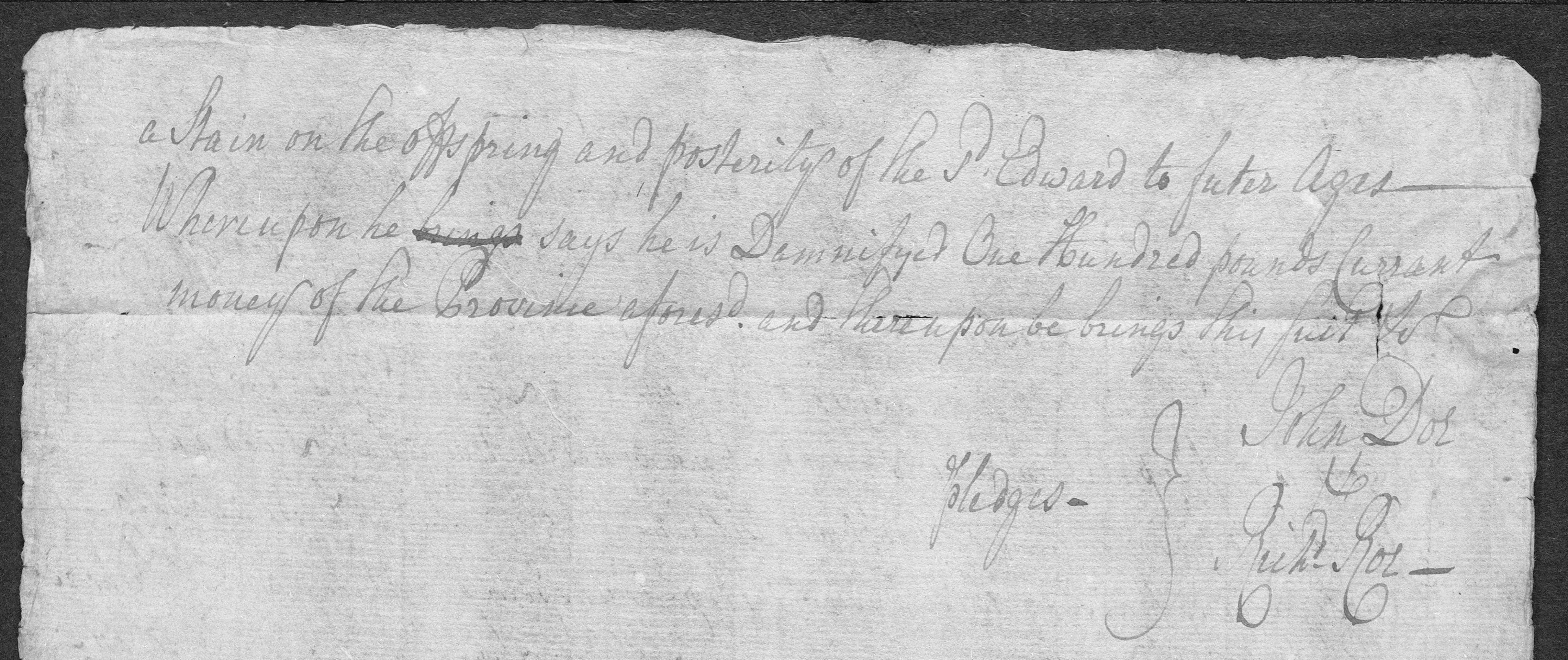
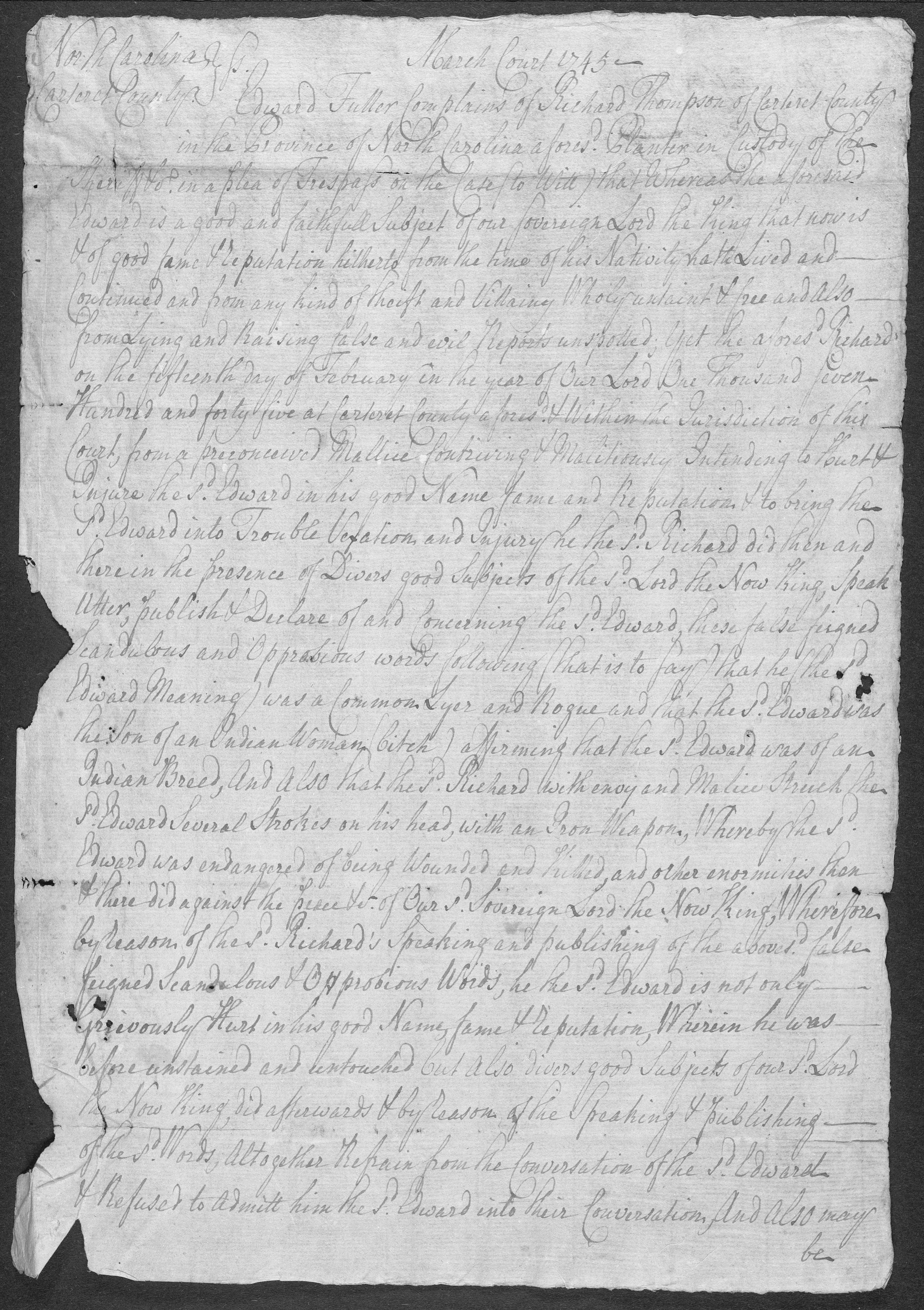
Apparently name calling is nothing new.  In Carteret County, NC at the March court of 1745, Edward Fuller, mariner, filed papers against Richard Thompson.  Apparently, judging from this and Richard’s reply, the men, both working on a sloop riding in Port Beaufort, quarreled on February 15th.  A fight ensued, apparently a pretty severe one including swords and fists, and so did character assassination.

In Edward’s filing, he claims that Richard said of him the following “scandalous and opprobrious words,” as follows:  that he (Edward) was “a common lyer and Rogue and that the said Edward was the son of an Indian Woman (bitch) affirming that the said Edward was of an Indian Breed.”

Edward claims, in essence, that Richard refused to retract what he said and that his reputation is now tarnished, where it was not before, and that he is concerned about it being a “stain on his offspring and posterity…to future ages.”

https://familysearch.org/pal:/MM9.3.1/TH-1971-26513-29729-44?cc=1930242&wc=M9QR-R1D:n730229327

I don’t know if Edward was in reality of mixed heritage, but sometimes, where there is smoke, there is fire.

Richard, however, countersued and claimed, among other things, that Edward called him a “half-negro.”  Hmmm.  Maybe all of this happened as a result of Edward stomping on Richard’s head with his boots.

https://familysearch.org/pal:/MM9.3.1/TH-1971-26513-29696-20?cc=1930242&wc=M9QR-R1D:n730229327

We don’t know the outcome of this case, but I’m betting that the sloop where they were working wasn’t nearly large enough for both of them.

Hat tip to Sharron for this information.

Posted in North Carolina | 2 Comments

The Amis Store Account Book 1782-1789, Hawkins County, TN

Before Tennessee became a state in 1796 and before the State of Franklin was formed in 1785, the area that would become Hawkins County, Tennessee was the frontier and was known generally as Watauga.

In 1775, the grandparents of Davy Crockett, a future member of the United States Congress from Tennessee and hero of the Alamo, settled in the Watauga colony in the area in what is today Rogersville near the spring that today bears their name. After an Indian attack and massacre, the remaining Crocketts sold the property to a Huguenot named Colonel Thomas Amis.

In 1780/1781, Colonel Amis built a fort at Big Creek, on the outskirts of the present-day Rogersville which was then in Sullivan County, NC.

That same year, about three and one-half miles above downtown Rogersville, Amis erected a fortress-like stone house around which he built a palisade for protection against Indian attack.  This is known as the Amis Stone House, shown below and with directions and other photos here.

Amis house

The next year, Amis opened a store; erected a blacksmith shop; and built a distillery.  He also eventually established a sawmill and a gristmill. From the beginning, he kept a house of entertainment which was also a stage-coach stop, a place for travelers to rest and spend the night as well as locals to gather.  Of course, it was a tavern too.

Built as a defensive garrison in addition to a trading post, the upper part of the house originally had rifleports instead of windows.  In later years Amis’ daughter Mary said that she frequently wakened to hear Indians grinding their knives and tomahawks on her father’s grindstone.

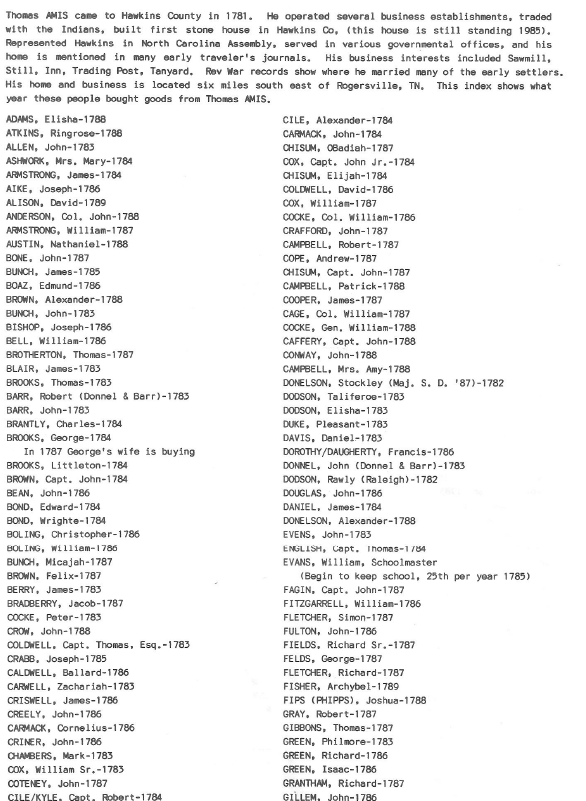
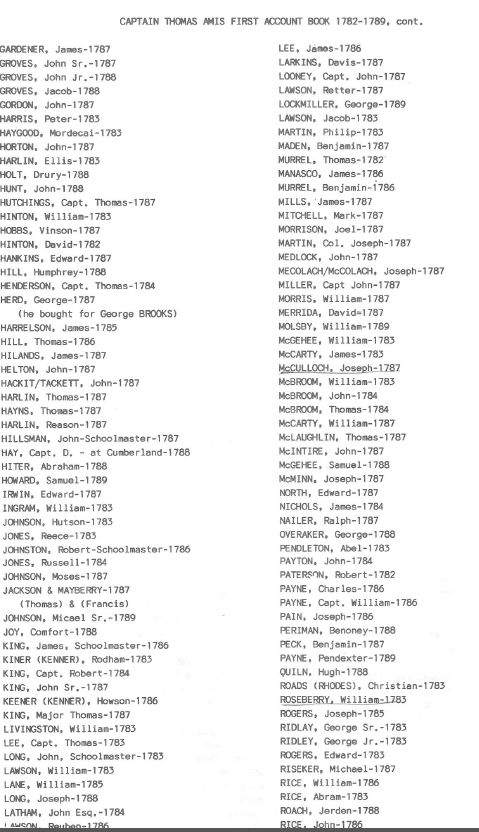
Thomas Amis also kept an account ledger book which is, thankfully, still in existance.  This is one of the only documents that shows who lived in this area in the early years.

A big thank you to Hawkins County archivist, Jack Goins, for allowing Thomas Amis’ customer list to be included here.  Melungeon researchers will notice two Melungeon family names, Bunch and Boling.

amis 1

amis 2

amis 3

Posted in Melungeon, North Carolina, Tennessee | 5 Comments

Robert McGee and The Cherokee Disturbance

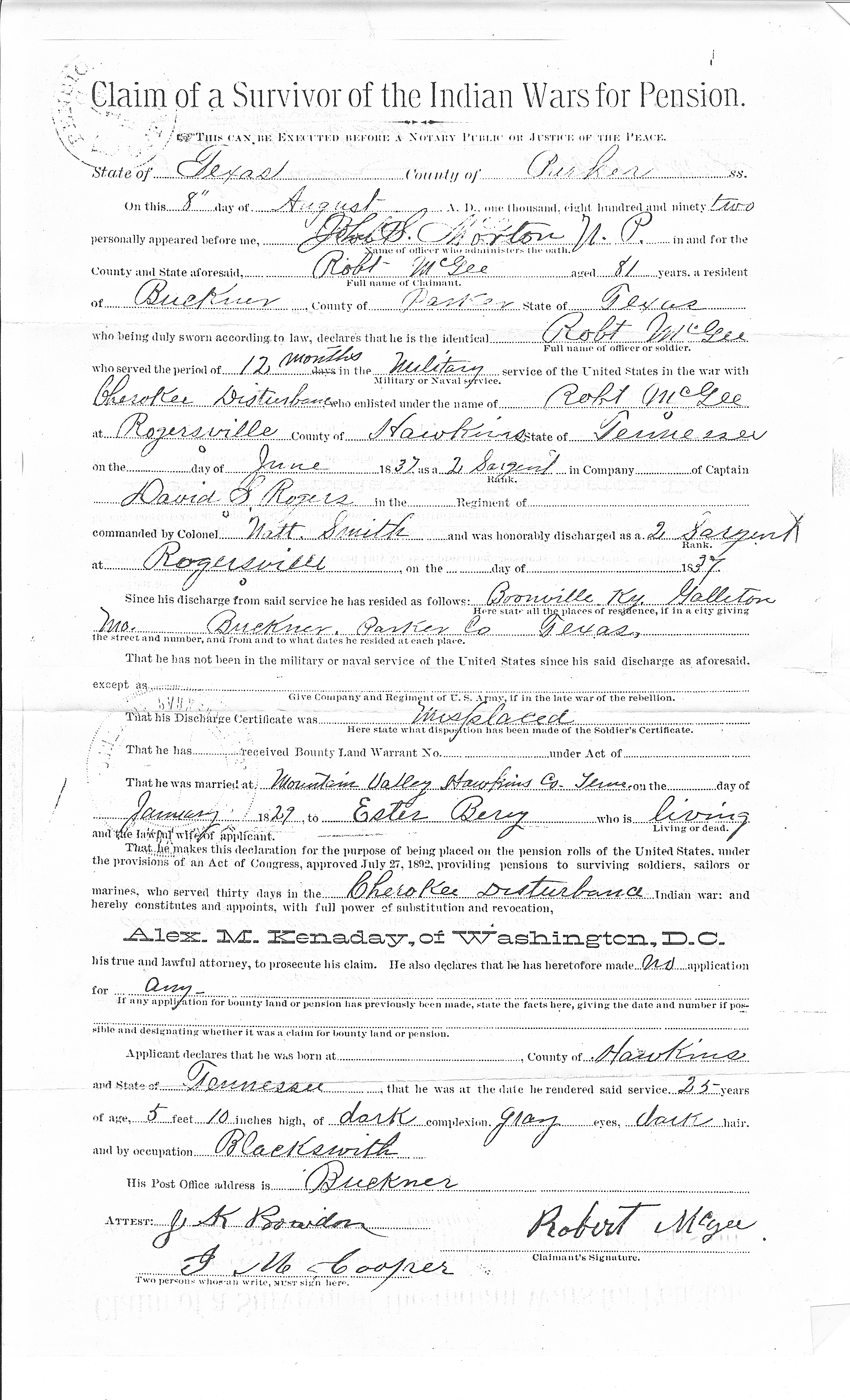
Someone was cleaning out their files and offered a pension application to anyone interested.  Since it related to the “Cherokee Disturbance” and since no one else stepped up, I asked for the application.  I didn’t know what was there, and you never know what you might receive.

It’s a one page form completed by Robert McGee, age 81 who lived in Buckner, Parker County, Texas in August 1892 when he applied for a pension.  On July 27, 1892, Congress provided pensions to surviving soldiers who served 30 days or more in the “Indian Wars.”

McGee pension app0001

Robert McGee served for 12 months in the military, enlisting in Hawkins County, Tn. in June of 1837 as a sergeant in the “Cherokee Disturbance.”  Other than personal information about Robert, that he was 5 feet 10 inches tall, of dark complexion, grey eyes and dark hair and by trade, a blacksmith, and that he was married to Ester Bery in Mountain Valley, Hawkins County in January 1829, there is nothing more here about the Cherokee Disturbance.  It does tell us that he moved to Boonville, KY, then Galleton, MO, then finally to Parker Co., TX.  It’s somehow ironic that in an odd sort of way that his migrations, and those of many other families, paralleled the path of the Indian removal.  Of course, the difference was that Robert chose that path, could leave, or not, when he chose, and was permitted to take his belongings or dispose of them as he saw fit and no one starved him.  The Indians did not have that opportunity.

If Robert was 81 in 1892, he was born in about 1811.  He married in 1829, so in 1837 when he served for a year, he was age 26 or so and probably had 3 or 4 children.  If he was a blacksmith, he was likely also a farmer, and going to serve in the military was not something he probably wanted to do.  However, all able-bodied men served in the local militia and military service at some level wasn’t optional.  Trouble was forseen, so provisions were made in advance for militia.

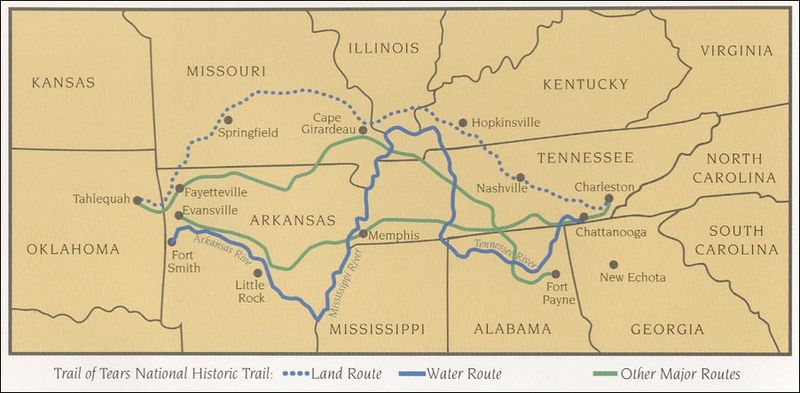
The Cherokee has been ordered removed to what is now Oklahoma by an act of Congress in 1830 by a one vote margin.  This horrific Indian Removal Act is the legacy of President Andrew Jackson.  The Treaty of New Echota, signed in 1836 by a few Cherokee, exchanging land in the east for land in the west, gave the Cherokee two years to remove themselves, although it was never voted on or ratified by tribal members.  Because of this, many Cherokee felt it was illegal and refused to go and by 1838, the military was forceably removing them, culminating in the tragic episode in American history known at the Trail of Tears.

The map below shows the Trails of Tears Historic Trail today.

Trail of tears path

This story, Cherokee Removal Scenes: 1838 takes place in Ellijay, Georgia, but it wasn’t much different anyplace else in the Cherokee Nation.

Robert McGee would have had to remove families, probably much like his own, from their homes into removal forts similar to concentration camps, and from there began the forced march to Oklahoma during the horrific winter months of 1838.  Robert McGee was discharged in 1837 in Rogersville, so while he might have participated in the roundup, he was not one of the soldiers who “accompanied” the Indians on the Trail of Tears itself.  If he served for 12 months, as his application says, he would have been discharged in June of 1838, still well ahead of the beginning of the Trail of Tears march.

Many soldiers felt for the human suffering of the Cherokee.  Others were vicious and cruel, abusing the Indians and stealing the goods from their forcibly abandoned homesteads.  One soldier said, “I fought through the War Between the States and have seen many men shot, but the Cherokee Removal was the cruelest work I ever knew.”  Indeed, it would be extremely hard to see unarmed people, everything stripped from them, dying of disease and starvation, freezing to death on a journey they never elected to take.

As I look at Robert McGee’s pension application, I wonder about the experience he had.  Hawkins County was not close to the Indian villages in Tennessee, which were near the Alabama/Georgia border, so he may have been spared the worst of the activities.

I wondered if there was any way to tell how Robert McGee felt about the Indian removal, whether he was one of the compassionate soldiers or otherwise.  I found a tree on Ancestry.com that had several source records appended, including information about his military service record, so I knew I had the correct Robert McGee.  I was scanning for maybe a story he had written or that had been passed down through his descendants, when I saw the name of his child, born in 1847, Andrew Jackson McGee.  I guess that probably says it all.

Note:  I am in the process of preparing a second article about this family.  In the mean time, I encourage everyone to read the comments for a very unexpected turn.

Posted in Cherokee, History, Military, Removal | 26 Comments

John B. and Georgiana F. Collins – Indians

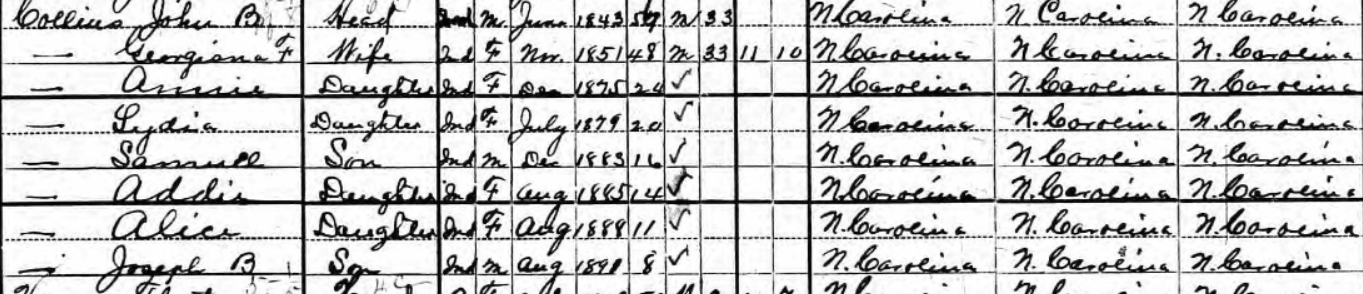
Collins Hertford Co

In the 1900 census in Winton Township, in Hertford County, NC, the John B. and Georgiana F. Collins family were listed as Indian.

John was born in June of 1843 and Georgiana in November of 1851.  They have been married 33 years and have had 11 children, 10 of whom are still living.  Six of their children, ages 24-8 live with them.

Utilizing Ancestry’s search feature, this is the only family in Hertford County designated as Indian in 1900.

In 1870 and 1880, this family is found in Hertford County and they are listed as mulatto.  Georgiana is noted as Frances which must have been her middle name.  In 1870 they live next door to a Jane Collins, age 50, also mulatto.

In 1880 John reports that he was born in NC, his father in VA and his mother in NC.  Frances and her parents were all born in NC.  They live next door to a Simon Collins, also mulatto.

I can’t find this family in 1860, but in 1850 they are in the northern district of Hertford Co., NC., listed as mulatto.  His father, William is age 40, a painter and his mother is Jane, age 30.

Hat tip to Justin for this family.

Posted in Census, Nottoway | 1 Comment

Ancestor of Native Americans in Asia was 30% “Western Eurasian”

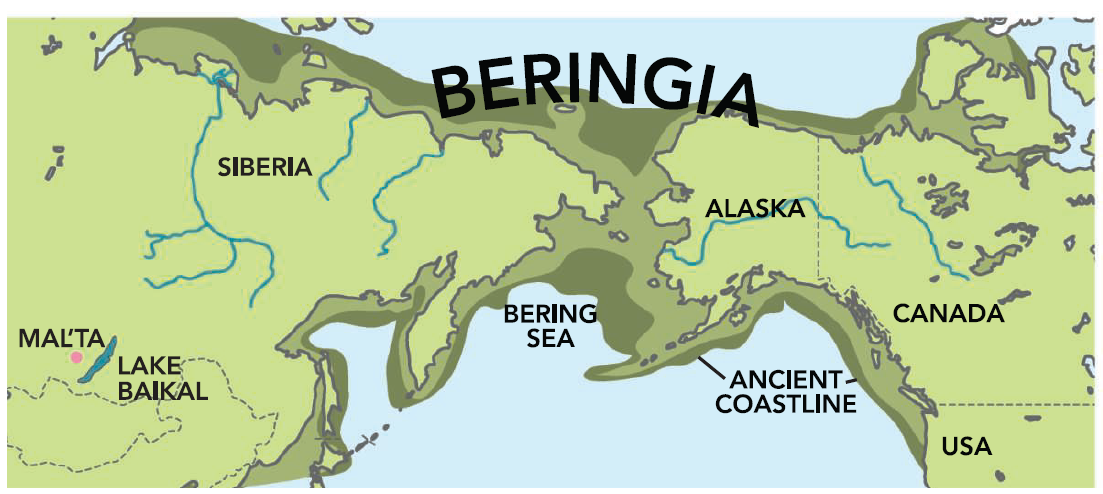
The complete genome has recently been sequenced from 4 year old Russian boy who died 24,000 years ago near Lake Baikal in a location called Mal’ta, the area in Asia believed to be the origin of the Native Americans based on Y DNA and mitochondrial chromosome similarities.  The map below, from Science News, shows the location.

malta boy map

This represents the oldest complete genome ever sequenced, except for the Neanderthal (38,000 years old) and Denisovan (41,000 years old).

This child’s genome shows that he is related closely to Native Americans, and, surprisingly, to western Asians/eastern Europeans, but not to eastern Asians, to whom Native Americans are closely related.  This implies that this child was a member of part of a “tribe” that had not yet merged or intermarried with the Eastern Asians (Japan, China, etc.) that then became the original Native Americans who migrated across the Beringian land bridge between about 15,000 and 20,000 years ago.

One of the most surprising results is that about 30% of this child’s genome is Eurasian, meaning from Europe and western Asia, including his Y haplogroup which was R and his mitochondrial haplogroup which was U, both today considered European.

This does not imply that R and U are Native American haplogroups or that they are found among Native American tribes before European admixture in the past several hundred years.  There is still absolutely no evidence in the Americas, in burials, for any haplogroups other than subgroups of Q and C for males and A, B, C, D, X and M (1 instance) for females.  However, that doesn’t mean that additional evidence won’t be found in the future.

While this is certainly new information, it’s not unprecedented.  Last year, in the journal Genetics, an article titled “Ancient Admixture in Human History” reported something similar, albeit gene flow in a different direction.  This paper indicated gene flow from the Lake Baikal area to Europe.  It certainly could have been bidirectional, and this new paper certainly suggests that it was.

So in essence, maybe there is a little bit of Native American in Europeans and a little bit of European in Native Americans that occurred in their deep ancestry, not in the past 500-1000 years.

What’s next?  Work continues.  The team is now attempting to sequence genomes from other skeletons from west of Mal’ta, East Asia and from the Americas as well.

You can read the article in Science Magazine.  An academic article presenting their findings in detail will be published shortly in Nature.

A Podcast with Michael Balter can be heard here discussing the recent discovery.

Posted in Anthropology, Archaic Indians, Asia, History, Lake Baikal | Leave a comment

Mingo Holler, Claiborne County, TN and Bell County, KY

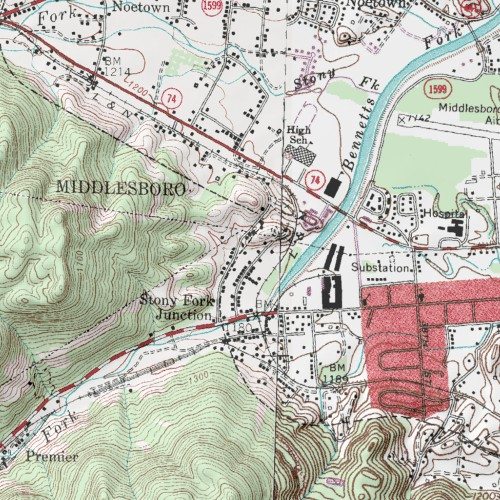
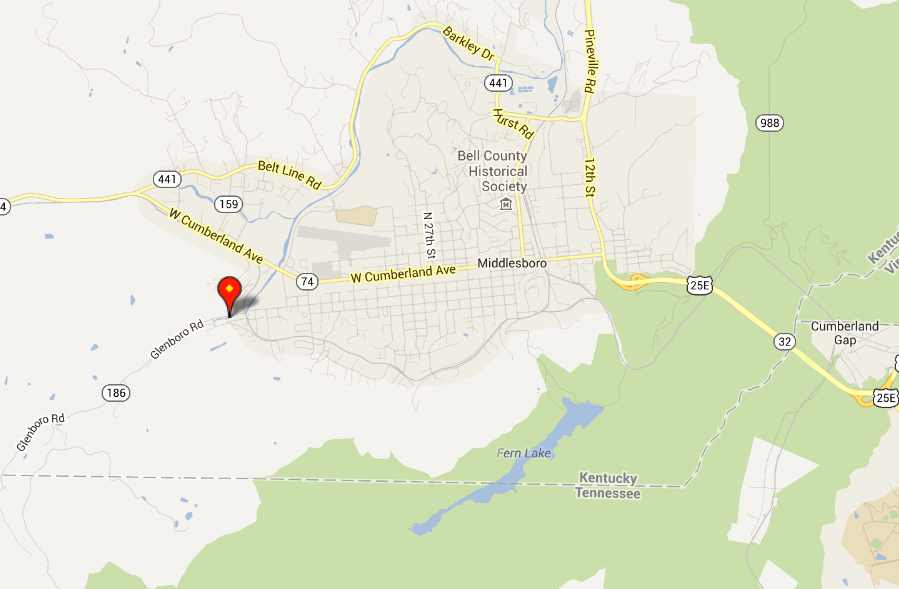
Mingo Hollow, known in Claiborne Tennessee and Bell County, Kentucky, as Mingo Holler, straddles the line between the two states, right at the Cumberland Gap.

The topographical map here shows it just south of Middlesboro, Ky.

Mingo topo

The Google map below shows the entire area.  The Holler itself is actually just over the line into Claiborne County, Tn.

mingo google

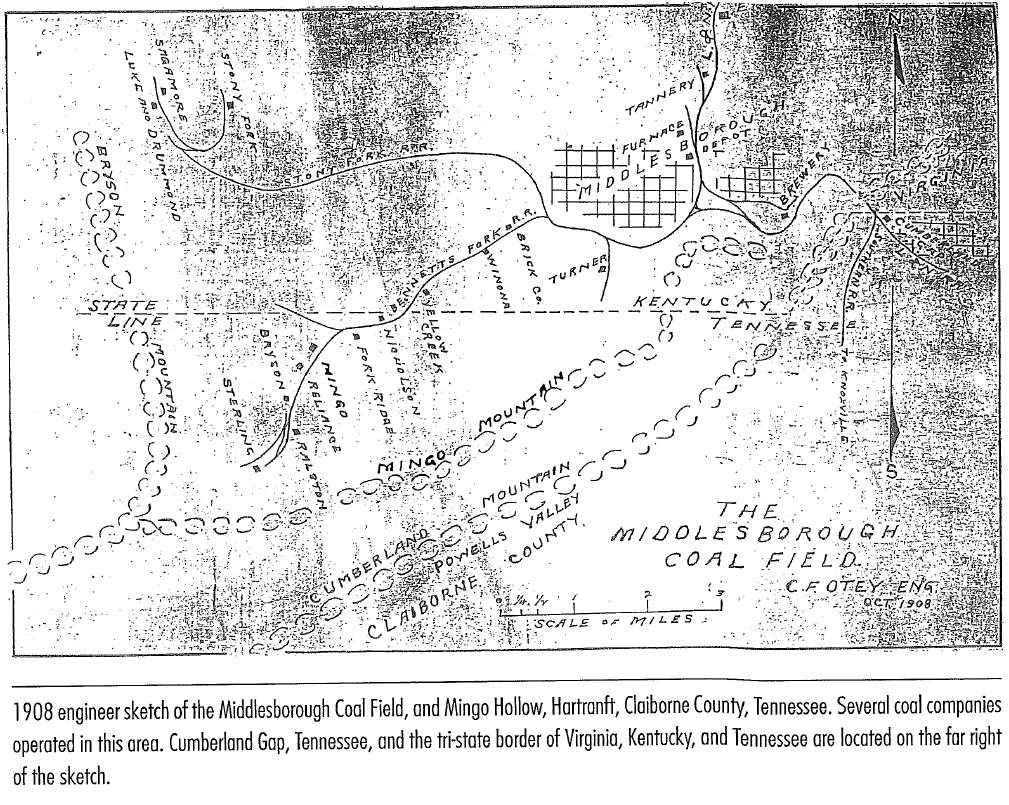
Wayne Bussell was kind enough to send me the following map from his book, “A Civil War Record: Private McDaniel Bussell, 8th Tennessee Volunteer Cavalry Regiment (USA) Company F.”

Mingo Bussell map

This shows the location southwest of Middlesboro along Mingo Mountain, actually in Claiborne County, TN.

D. Ray Smith, a historian and researcher, wrote about the history of Mingo Holler on his web page in an article titled Three Tragic Events in Mingo Hollow.  The second two events have to do with coal mining, as Mingo Holler because a huge coal mining area, now abandoned.

The first event, however, involves the Mingo Indians and the Cherokees.

In 1921, hunters happened up on a hidden cave that revealed skeletons of long-haired men who had carried battle axes and had arrowheads.  The newspapers covered this, and the Cherokee in Oklahoma made a connection with this find and their oral history that recounts two battles in this region, both of which occurred about 1700.

The first episode does not include a cave legend, but tells of the Mingo attacking and slaughtering a small Cherokee village on the south side of Quasioto Pass, now Cumberland Gap.  The warriors path at that time crossed at the Gap, and the Mingo crossed back over with more than 100 scalps.  The Mingo, however, had taken time to plunder the homesites so were moving slowly, when the larger band of Cherokee, who had gotten word, overtook and killed the Mingo, probably on or near Yellow Creek in present day Middlesboro, KY.

The Cherokee and the northern tribes had been at war for a very long time, and considered themselves mortal enemies, which is ironic because the Cherokee are of the Iroquian language stock themselves, so related to the Iroquois and northern tribes with whom they fought so violently.

The second legend tells of a force of 1500 Indians from the north who were headed south to attack the Cherokees.  The Cherokees had advance warning, and started north to head off the warrior party, hoping to take them by surprise.

The northern tribes camped in what is present day Middlesboro, on Yellow Creek, planning to cross at the Gap the next day.  Unbeknownst to the northern tribes, the Cherokee lay in wait on the other side of the Gap.

A huge storm occurred that night, and Yellow Creek had a flash flood, drowning several warriors and causing those who did not drown to literally run for their lives to high ground.  They were not able to take their weapons with them.

The next day, the Cherokee found the northern tribes in a state of confusion, and took advantage of that opportunity to slay the survivors, taking over 1000 scalps that day.  The oral history says few if any escaped, but of course, some may have found their way to the cave and died there from their battle wounds.

Sixkiller, the Cherokee from Oklahoma said that many families there still have tufts of hair said to have been taken at the Battle of Yellow Creek.

You can read the entire story of Mingo Holler as told by D. Ray Smith, here.

Local Legend

Wayne Bussell contacted me about a common surname we share in Claiborne County.  He grew up in this area, his family having been born in Mingo Holler for generations.  He told me that the local legend is that a group of Mingo Indians lived there and refused to leave, hence, the name, Mingo Holler.  I do know one thing.  This area is extremely dense and forbidding and they likely would have been left alone in their remote conclave, at least for awhile.

We also know from historical documents that there were Mingo in that region, generally, although we don’t think of the Six Nations, then the Five Nations, as being this far south and west, but they were.

Who Were the Mingo Indians?

The Mingos were an independent group in the Six Nations of the Iroquois Confederacy: Cayuga nation, Mohawk, Oneida, Seneca nation in Western New York State, Tuscarora, and Onondaga and were mostly Senecas and Cayugas.

The etymology of the name Mingo derives from the Delaware Indian’s Algonquian word mingwe or Minque, meaning treacherous. The Mingos were noted for having a bad reputation and were sometimes referred to as Blue Mingos or Black Mingos for their misdeeds. The people who became known as Mingos migrated to the Ohio Country in the mid-eighteenth century, part of a movement of various Native American tribes to a region that had been sparsely populated for decades but controlled as a hunting ground by the Iroquois. The “Mingo dialect” that dominated the Ohio valley from the late 17th to early 18th centuries is considered a variant most similar to the Seneca language.

After the French and Indian War (1754-1763), the Cayuga moved to Ohio, where the British granted them a reservation along the Sandusky River. They were joined there by the Shawnee of Ohio and the rest of the Mingo confederacy. Their villages were increasingly an amalgamation of Iroquoian Seneca, Wyandot and Susquehannock; and Algonquian-language Shawnee and Delaware migrants.

Although the Iroquois Confederacy had claimed hunting rights and sovereignty over much of the Ohio River Valley since the late 17th century, these people increasingly acted independently. When Pontiac’s Rebellion broke out in 1763, many Mingo joined with other tribes in the attempt to drive the British out of the Ohio Country. At that time, most of the Iroquois nations were closely allied to the British. The Mingo-Seneca Chief Guyasuta (c. 1725–c. 1794) was one of the leaders in Pontiac’s War.

Another famous Mingo leader was Chief Logan (c. 1723–1780), who had good relations with neighouring white settlers. Logan was not a war chief, but a village leader. In 1774, as tensions between whites and Indians were on the rise due to a series of violent conflicts, a band of white outlaws murdered Logan’s family. Local chiefs counseled restraint, but acknowledged Logan’s right to revenge. Logan exacted his vengeance in a series of raids with a dozen followers, not all of whom were Mingos. His vengeance satisfied, he did not participate in the resulting Lord Dunmore’s War, and was probably not at the climactic Battle of Point Pleasant. Rather than participate in the peace conference, he expressed his thoughts in “Logan’s Lament.” His speech was printed and widely distributed. It is one of the most well-known examples of Native American oratory.

By 1830, the Mingo were flourishing in western Ohio, where they had improved their farms and established schools and other civic institutions. After the US passed the Indian Removal Act in that same year, the government pressured the Mingo to sell their lands and migrate to Kansas in 1832. In Kansas, the Mingo joined other Seneca and Cayuga bands, and the tribes shared the Neosho Reservation.

In 1869, after the American Civil War, the US government pressed for Indian removal to Indian Territory (present-day Oklahoma). The three tribes moved to present-day Ottawa County, Oklahoma. In 1881, a band of Cayuga from Canada joined the Seneca Tribe in Indian Territory. In 1902, shortly before Oklahoma became a state, 372 members of the joint tribe received individual land allotments under a federal program to decrease common tribal land holdings and encourage assimilation to the European-American model.

In 1937 after the Oklahoma Indian Welfare Act, the tribes reorganized. They identified as the Seneca-Cayuga Tribe of Oklahoma and became federally recognized. Today, the tribe numbers over 5,000 members. They continued to maintain cultural and religious ties to the Six Nations of the Iroquois.

Hat tip to Wayne Bussell for the local legend information.

Posted in Cherokee, Five Nations, Iroquois, Kentucky, Mingoes, Six Nations, Tennessee | 2 Comments

The Leake Site

Leake site

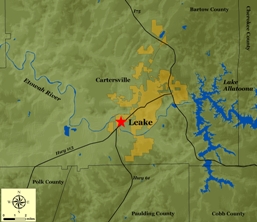
The location known at the Leake site is located in Bartow County, Georgia, along the Etowah River southwest of Cartersville.  The site contains the remains of Native occupation that lasted from approximately 300BC to 650AD including mounds, a circular ditch and an extensive midden.

Unfortunately, some of the mound was destroyed earlier and used as, are you ready for this, road fill.

Fortunately the site, or at least part of it is protected now.  This webpage presents a great overview of the site, the archaeology, history and the artifacts.  It even includes links for questions, including the Historical Preservation Officer of the Eastern Band of the Cherokee.

http://www.bartowdig.com/

Thanks to Yvonne for this link.

Posted in Archaeology, Archaic Indians, Georgia | 1 Comment

Native American Mitochondrial or Maternal Haplogroups

Today, what I’m sharing with you are my notes.  If you follow my blogs, you’ll know that I have a fundamental, lifelong interest in Native American people and am mixed blood myself.  I feel that DNA is just one of the assets that can be recovered and has a story to tell, along with early records, cultural artifacts and oral history.

In order to work with Native American DNA, and the various DNA projects that I co-administer, it’s necessary to keep a number of lists and spreadsheets.  This particular list is the first or earliest reference or references to a Native American mitochondrial (maternal line) haplogroup where it is identified as Native in academic papers.

Haplogroups A, B, C, D and X are known as Native American haplogroups, although not all subgroups in each main haplogroup are Native, so one has to be more specific.

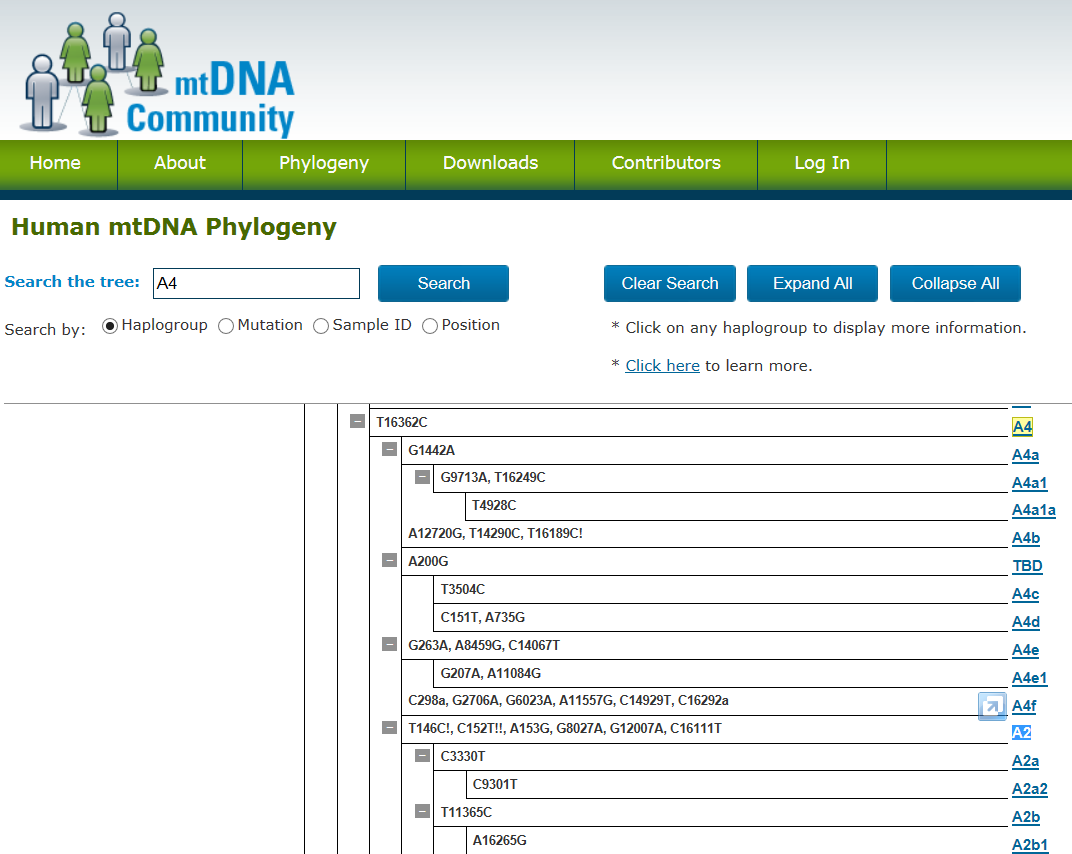
Normally, you could presume that if haplogroup A2 is Native, for example, that A2a, downstream of A2, would also be Native, but that’s not always true.  For example, A4 is found in Asia.  A2 is a subset of A4, which you wouldn’t expect, and we believe that haplogroup A4a is actually Native.

The lists below are just that, lists.  If you want to see these in tree fashion, you can visit www.mtdnacommunity.org, click on Phylogeny, click on Expand All, then search on A4, for example.

mtdnacommunity a4

Roberta’s Native Mitochondrial DNA Notes

A – A2 is Native – 2008 Achilli

A2a and A2b – Paleo Eskimo, identified in only Siberia, Alaska and Natives from the American SW (Achilli 2013)

A2a – Aleut – 2008 Volodko

Common among Eskimo, Na-Dene and the Chukchis in northeasternmost Siberia, Athabaskan in SW (Achilli 2013), circumpolar Siberia to Greenland, Apache 48%, Navajo 13%

A2a2 – Achilli 2013

A2a3 – Achilli 2013, northern North America

A2a4 – Achilli 2013

A2a5 – Achilli 2013

A2ad – second most common A2 subgroup in Panama in same countries as A2af – Perego 2012

A2af – Perego 2012

A2ag – Cui 2013 – British Columbia

A2ah – Ciu 2013 – British Columbia

A2b1 – Achilli 2013

A4 –  Kumar 2011

A4a – Kumar 2011

A4b – Kumar 2011

A4c – Kumar 2011

B – B2 is Native – 2008 Achilli, 2007 Tamm

B2a –  Achilli 2013, just to the south of A2a, widespread in SW and found in one Chippewa clan, one Tsimshian in Canada and tribes indigenous to the SW, Mexico, possibly Bella Coola and Ojibwa, evolved in North America

B2a1 – Achilli 2013

B2a2 – Achilli 2013

B2a3 – Achilli 2013

B2a4 – Achilli 2013, widespread in north central Mexico and US SW

B2a5 – Achilli 2013, restricted to the Yuman (5%) and Uto-Aztecan Pima and Papago from Arizona (7%)

B4b – 2007 Tamm

B4bd – 2007 Tamm

C – C1 is Native – 2008 Achilli, 2007 Tamm

C1 – Kumar 2011

C1a – Kumar 2011

C1b – 2008 Achilli, 2007 Tamm

C1c – 2008 Achilli, 2007 Tamm

C1d – 2008 Achilli, 2007 Tamm, Perego 2010

C1d1 – Indman 2000, Perego 2010, Fagundes 2008, Tamm, 2007

C1d1c – Perego 2010

C1d1c1 – Just 2008, Perego 2010, Kumar 2011

C4 – 2007 Tamm

C4a – Native American and Siberian, Kumar 2011

C4b – Kumar 2011

C4c – 2008 Achilli, 2007 Tamm – found in only 2 samples, an Ijka sample from South America and a Shuswap speaker from North America

D1 is Native – 2008 Achilli, 2007 Tamm

D1a1a1 – Aleut – 2008 Volodko

D1f – Kumar 2011

D2 – Aleut – 2002 Derbeneva, 2007 Tamm

D2a – NaDene – 2002 Derbeneva, 2008 Achilli, 2007 Tamm

D2a1 – among Aleut Islanders and northernmost Eskimos

D2a1a – Aleut – 2008 Volodko

D2a1a – Commander Islands – 2008 Volodko (100%)

D2b – 2007 Tamm, Aleut 2002 Derbeneva

D2c – Eskimo – 2002 Derbeneva

D3 – Inuit – 2008 Achilli, 2007 Tamm

D3a2a – Greenland – 2008 Volodko

D3a2a – Canada – 2008 Volodko

D4 – 2007 Tamm

D4e1 – Kumar 2011

D4e1c – Kumar 2011 – found in Mexican Americans (2 sequences only)

D4h3 – 2008 Achilli, 2007 Tamm

D4h3a7 – Ciu 2013 – British Columbia – may be extinct

M – discovered in prehistoric sites, China Lake, British Columbia – 2007 Malhi

X – X is a founding lineage – found in ancient DNA Washington State –  2002 Malhi, 2007 Tamm

X2a is Native – 2008 Achilli, 2007 Tamm, 2000 Schurr

X2b is European – note that 2008 Fagundes removed a sample from their analysis because they believed X2b was indeed European not X2a Native

X2g – identified in single Ojibwa subject – Achilli 2013

X2e – Altai people, may have arrived from Caucus in last 5000 years

MtDNA References

Reconciling migration models to the Americas with the variation of North American native mitogenomes, Alessandro Achjilli et al, PNAS Aug. 2013, http://www.pnas.org/content/early/2013/08/08/1306290110.full.pdf+html

The Phylogeny of the Four Pan-American MtDNA Haplogroups: Implications for Evolutionary and Disease Studies, Achilli et al, PLOS, March 2008,

http://www.plosone.org/article/info%3Adoi%2F10.1371%2Fjournal.pone.0001764

Mitochondrial genome diversity in arctic Siberians with particular reference to the evolutionary history of Beringia and Pleistocenic peopling of the Americans, Natalia Volodko, et al, American Journal of Human Genetics, June 2008  http://www.ncbi.nlm.nih.gov/pubmed/18452887

Decrypting the Mitochondrial Gene Pool of Modern Panamanians, Ugo Perrego, et al, PLOS One, June 2012, http://www.plosone.org/article/info%3Adoi%2F10.1371%2Fjournal.pone.0038337

Ancient DNA Analysis of Mid-Holocene Individuals from the Northwest Coast of North America Reveals Different Evolutionary Paths for Mitogenomes, Yinqui Ciu et al, PLOS One, July 2013  http://www.plosone.org/article/info%3Adoi%2F10.1371%2Fjournal.pone.0066948

Beringian Standstill and Spread of Native American Fuonders, Erika Tamm et al, PLOS One, September 2007, http://www.plosone.org/article/info:doi/10.1371/journal.pone.0000829

Analysis of Mitochondrial DNA Diversity in the Aleuts of the Commander Islands and Its Implications for the Genetic History of Beringia, Olga Derbeneva et al, American Journal of Human Genetics, June 2002, http://www.ncbi.nlm.nih.gov/pmc/articles/PMC379174/

Mitochondrial haplogroup M discovered in prehistoric North Americans, Ripan Malhi et al, Journal of Archaeological Science 34 (2007), http://public.wsu.edu/~bmkemp/publications/pubs/Malhi_et_al_2007.pdf

Brief Communication: Haplogroup X Confirmed in Prehistoric North America, Ripan Malhi et al, American Journal of Physical Anthropology, 2002, http://deepblue.lib.umich.edu/bitstream/handle/2027.42/34275/10106_ftp.pdf

Mitochondrial DNA and the Peopling of the New World, Theodore Schurr, American Scientist, 2000, http://www.sas.upenn.edu/~tgschurr/pdf/Am%20Sci%20Article%202000.pdf

A Reevaluation of the Native American MtDNA Genome Diverstiy and Its Bearing on the Models of Early colonization of Beringia, Fagundes et al, PLOS One, Sept. 2008, http://www.plosone.org/article/info%3Adoi%2F10.1371%2Fjournal.pone.0003157

High Resolution SNPs and Microsatellite Haplotypes Point to a Single, Recent Entry of native American Y Chromosomes into the Americas, Zegura et al, Oxford Journals, 2003, http://mbe.oxfordjournals.org/content/21/1/164.full.pdf

Large scale mitochondrial sequencing in Mexican Americans suggests a reappraisal of Native American origins, Kumar et al, Congress of the European Society for Evolutionary Biology, October 2011, http://www.biomedcentral.com/1471-2148/11/293

Mitochondiral genome variation and the origin of modern humans, Ingman et al, Natuer 2000, http://www.nature.com/nature/journal/v408/n6813/full/408708a0.html

Posted in DNA | 2 Comments