Sleep Long Time

In the Carlisle Indian School records, we find someone listed as Sleep Long Time, a Chief, listed among the students.  I was interested to see what I could find about this man.

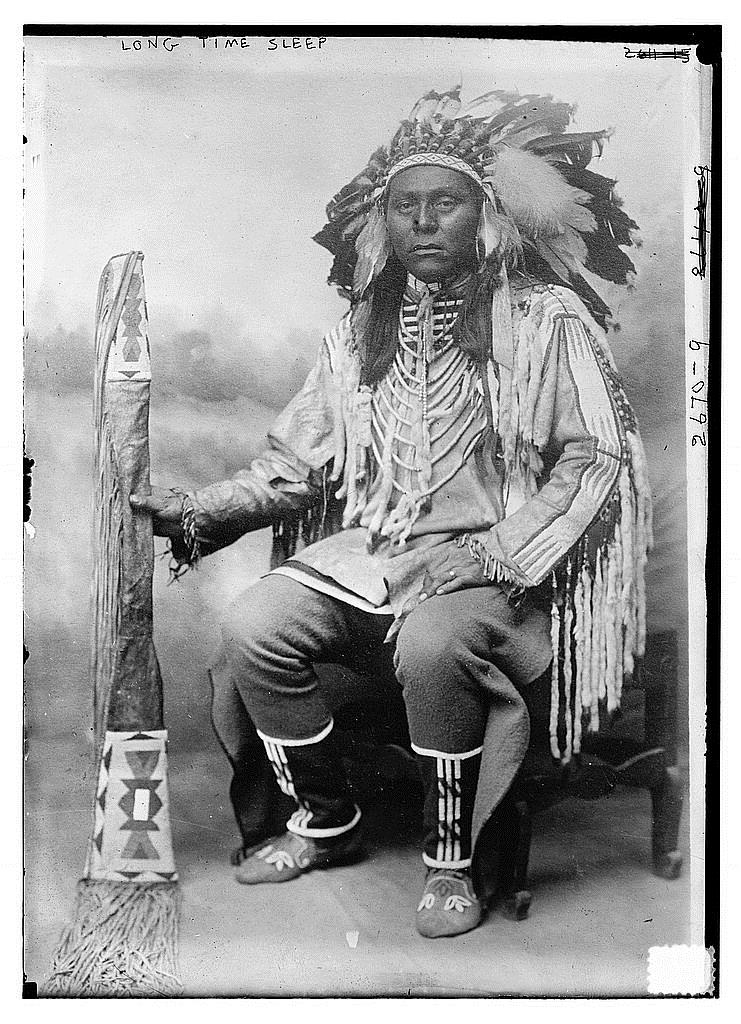
The picture below was taken between 1910 and 1915 of Long Time Sleep, which could be the same person, although the name is slightly different.  Sometimes the person indexing the Carlisle records had difficulty in determining the order of English Native names, such as Long Time Sleep or Sleep Long time.  Perhaps some additional information would shed light on this situation.

sleep long time

In an article published in the New York Times on May 4, 1913, Long Time Sleep is referred to as a wealthy Indian of the Glacier National Park Reservation.  This is the first time I’ve ever heard of a wealthy Indian.  It says he is part of a motorists club from Minneapolis and will enter his car in a national reliability run covering about 1200 miles.  They mention that Long Time Sleep is the most fluent “talker”  in the universal sign language of the American Indians, is of the Piegan Nation and dos not speak a word of English.

http://query.nytimes.com/mem/archive-free/pdf?res=9B0DE4D8173FE633A25757C0A9639C946296D6CF

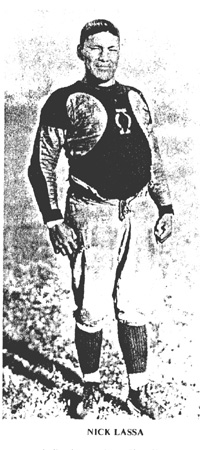
Wikipedia gives a slightly different story.   Wiki says that Long Time Sleep was named Nicholas Anthony Lassa from the Flathead Indian Reservation in Montana and a member of the Blackfoot tribe.   The man above may not be the same Long Time Sleep, in fact, probably isn’t.  A man who had studied at Carlisle would speak English, to begin with.  Secondly, the Nick Lassa from Carlisle was supposedly given his name by his football teammates because he was so difficult to wake up.  Third, a man playing football professionally in 1922 after previously attending Carlisle would probably not have been listed in 1913 as a wealthy Indian.  It seems that we are about a generation offset.

nick lassa

Nick not only played football, he was also a professional wrestler, once wrestling a bear at halftime at one of the football games. He use his wrestling earnings to take the entire team. The Oorang Indians, out drinking all night.  After the professional team folder in 1923, just a year after being formed, Nick stayed near LaRue, Ohio for some years before leaving the area, giving up drinking, raising a family and becoming a respected member of his community.

It looks like Nick attended the Haskell Indian Nations University in addition to Carlisle.  Haskell is located in Lawrence, Kansas.

The article doesn’t say if Nick Lassa, aka Long Time Sleep, was ever an Indian Chief.

Posted in Blackfoot, Piegan | 4 Comments

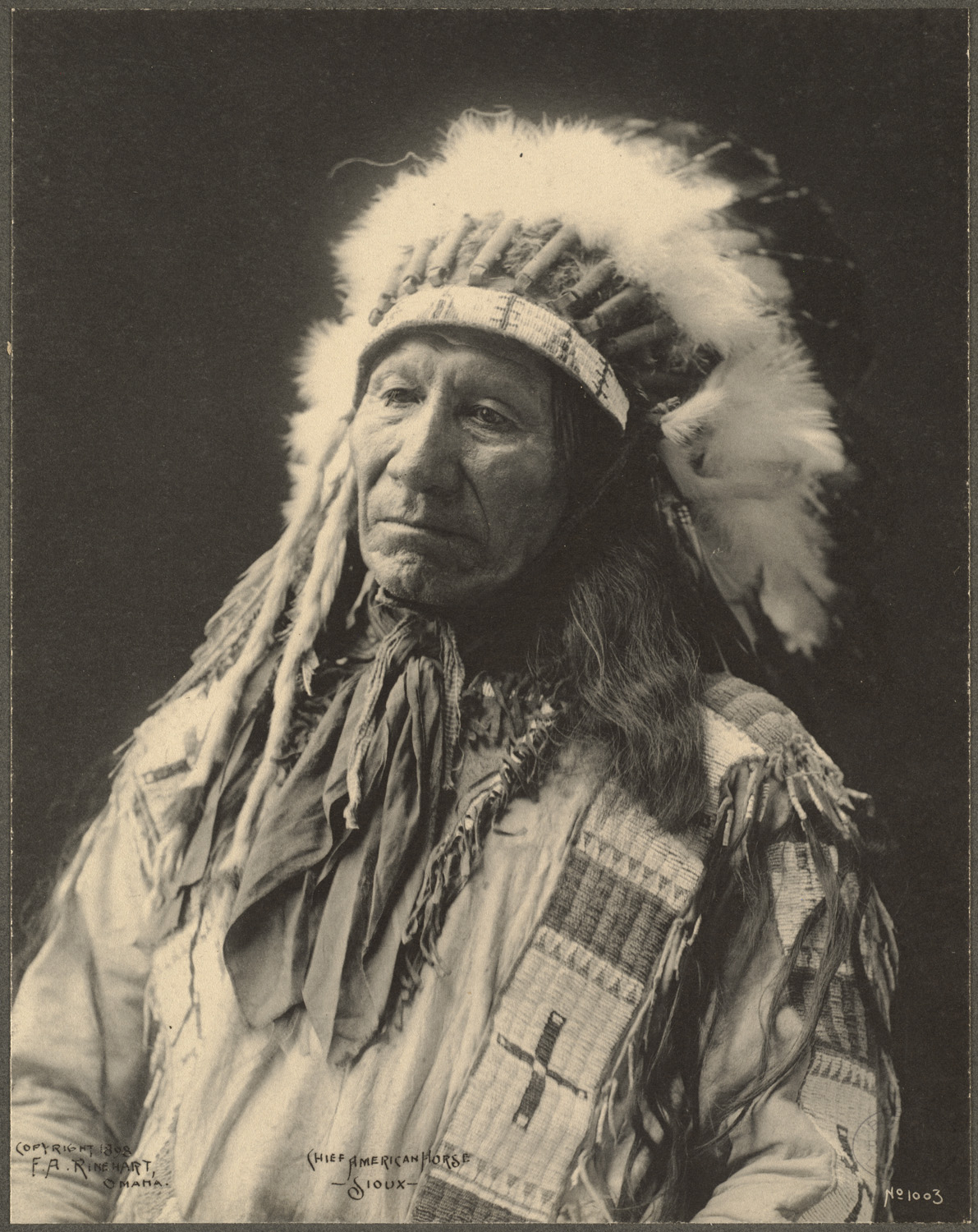
Chief American Horse, Sioux


chief American horse

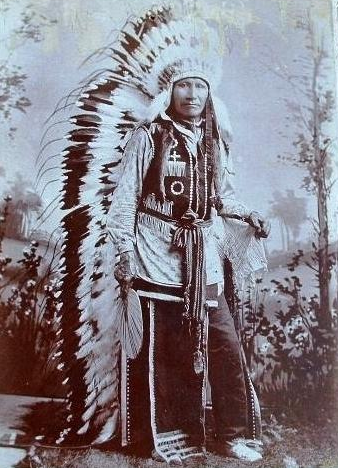
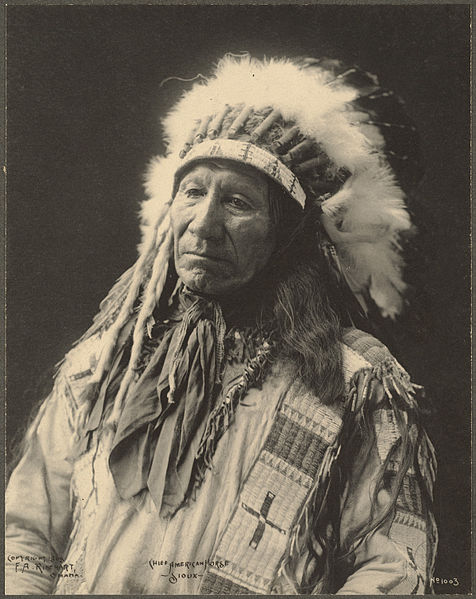
Chief American Horse (the younger) is one of the Indian Chiefs listed as either a visitor or a student at the Carlisle School.

Chief American Horse was Oglala Lakota, born in 1840 in the Black Hills of South Dakota, he died in 1908 on the Pine Ridge Reservation.  His adult Native name was Wasicun Thasunke, or, “He Has a White Man’s Horse.”  His childhood Native name was Manishnee or “Cannot Walk” or “Played Out.”  His nickname was Spider.  He was the son of Sitting Bear (father) and Walks With (mother.)  His wife was the daughter of Chief Red Cloud.  His children were Ben American Horse, Samuel American Horse and Maggie Stands Looking.

He was a US Army Scout and a progressive leader who promoted education for his people and friendly association with whites.  He was one of the first Native people to participate in Buffalo Bill’s Wild West show and he supported the Carlisle Indian School.

chief american horse 2

Chief American Horse in Buffalo Bill’s Wild West Show.

Today we might think of the Buffalo Bill show as exploiting Native people, but Buffalo Bill treated Native American employees as equals with white cowboys. Wild Westers received good wages, transportation, housing, abundant food and gifts of clothing and cash from Buffalo Bill at the end of each season. Wild Westers were employed as performers, interpreters and recruiters. Men had money in their pockets and for their families on the reservation. Female performers were paid extra for infants and children and supplemented wages by making and selling Lakota crafts.  Shows hired venerable elder male Indians to appear in the parades to ensure that young men acted with consideration and politeness when visiting host communities, and rules were self-policed by traditional Oglala Lakota chiefs and former U.S. Army Indian Scouts. Known as “Show Indians”, Oglala Wild Westers referred to themselves as “Oskate Wicasa” or “Show Man”, a title of great honor and respect.  Since 1887, Wild Westing has been family tradition with several hundred Pine Ridge families, and the tradition of the Wild Wester community is not unlike the tradition of circus families and communities. American Horse’s sons Ben American Horse and Samuel American Horse were Carlisle Wild Westers and interpreters.

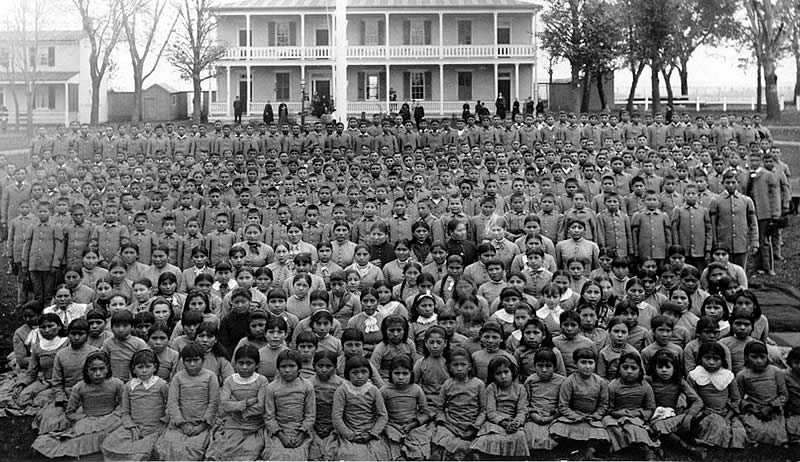
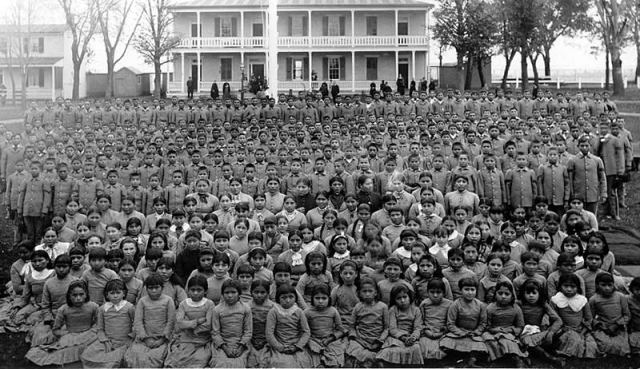
Chief American Horse also supported The Carlisle Indian Industrial School in Carlisle, Pennsylvania, which was the model Indian boarding school in the United States from 1879 through 1918. Carlisle was the first Indian boarding school located far from the reservation, in an Eastern environment free of the West’s anti-Indian prejudices and free from the influences of native cultures.  Carlisle offered a path of opportunity and hope at a time when people believed Native Americans were a vanishing race whose only hope for survival was rapid cultural transformation. Carlisle was founded on principle that Native Americans are the equals of whites and that Native American children immersed in white culture would learn skills to advance in society. Through the years, Carlisle evolved from an industrial trade school to a preparatory school with unique endowments and faculty. Attending Carlisle is considered by many Native Americans like going to Harvard, Yale or Oxford, and the family tradition of Carlisle alumni as “Harvard style” is one of pride and stories of opportunity and success.  Carlisle was a unique school and produced a new generation of Native American leadership.  While this interpretation of Carlisle is not shared by all, it certainly had the support of many Native American Chiefs who sent their children, family and tribal members when it opened in 1879 (photo below) and thereafter.
chief american horse 3

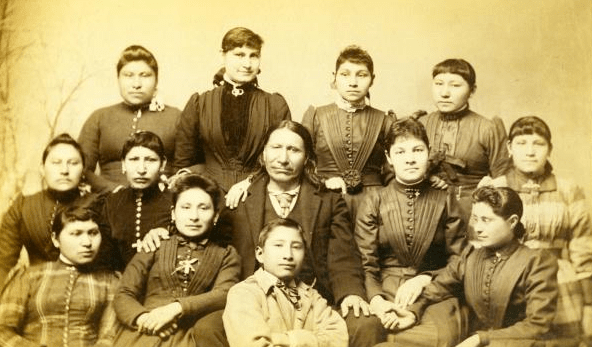
In 1882, Chief American Horse visited Carlisle with his daughter, Maggie Stands Looking and other Indian students, shown in the photo below.  Maggie Stands Looking was a model student at Carlisle.
chief american horse 4

Maggie Stands Looking wrote a letter to her father through an interpreter.

“Carlisle Barracks, PA, Jan. 24, 1881. My dear father: AMERICAN HORSE:- I want to tell you something, and it makes me feel very glad. You tell me that my brother is married and that makes me feel very glad. My cousins, and brothers, and I are all very well, at this Carlisle School. We would like to see you again. I am always happy here, but lately I sometimes feel bad, because you tell me that my grandfather is getting very old. Tell me how my brothers are. I would like to see my brother’s wife’s picture. Tell my brother Two-Dogs to write to me again. Miss Hyde’s father died two weeks ago, and I am very sorry. I remember all of my friends. If you don’t answer my letter soon, I’ll feel bad. I don’t always answer your letter soon, but it is because I can not write. As soon as I get so that I can write myself, I will write as often as I can. Tell Brave Bull that Dora (Her Pipe) has been a little sick, but is most well now. Tell if my grandfather is well. If he gets sick tell me. You wrote to my cousin Robert and told him that you had a house to live in, and lots of pigs and cows and such things, and I was very glad. You’ve got a white man’s house to live in now and I am anxious to learn all that I can, so that I can come home by and by and live with you. I hear that they have a big school out there and it makes me very glad. If you can, come again, and tell me if you can come again, when. I want to tell you that some more girls and boys came here. Twenty-five. Fifteen of them are girls. There are a great many of us here now, and Capt. Pratt is very kind to us. That is all I want to say now. Give my love to all of my friends. Your daughter, Maggie Stands-Looking.”

Maggie Stands Looking was among the first wave of children brought from Rosebud. According to Pratt in his book, “Battlefield and Classroom,” Maggie had difficulty adjusting to the demands of her new lifestyle at Carlisle. She once slapped Miss Hyde, the matron, when Hyde insisted that Maggie make her bed every day and keep her room clean. Instead of retaliating, Miss Hyde stood her ground and Maggie acquiesced.

Like most of the Carlisle students, Maggie was enrolled in the Outing Program. Instead of returning the Indian children to their families during the summer months, the detribalizing process was continued by placing them for hire with non Indian families. After her arrival to her country home, Maggie wrote this letter to the Superintendent:

“Dear Captain Pratt: What shall I do? I have been here two weeks and I have not bathe. These folks have no bath place. Your school daughter, MAGGIE STANDS LOOKING” Pratt advised her to do as he had done on the frontier…[after] filling a wash basin with water and “rubbing myself well, have had a bath that made me feel as good as jumping into a river.” He signed his letter – “Your friend and school father,” R.H. Pratt.

Other students with the last name, American Horse at Carlisle included two with only that name, no first name, then Alice, Benjamin (the son of Chief American Horse), Robert, Lucy and Sophia.  American Horse’s son Samuel is listed in family records as a Carlisle student, but I did not find him listed in the Carlisle records, although they are not complete and not in one location.

Chief American Horse attended several peace conferences in Washington DC between 1865 and 1877 and advocated yielding to the government, convinced of the futility of further resistance. He was known for his eloquence which was typically conciliatory, but he also had some very sharp works for the whites and their duplicity.

In 1905, several Indian Chiefs as well as the Carlisle band attended the inauguration of Teddy Roosevelt.

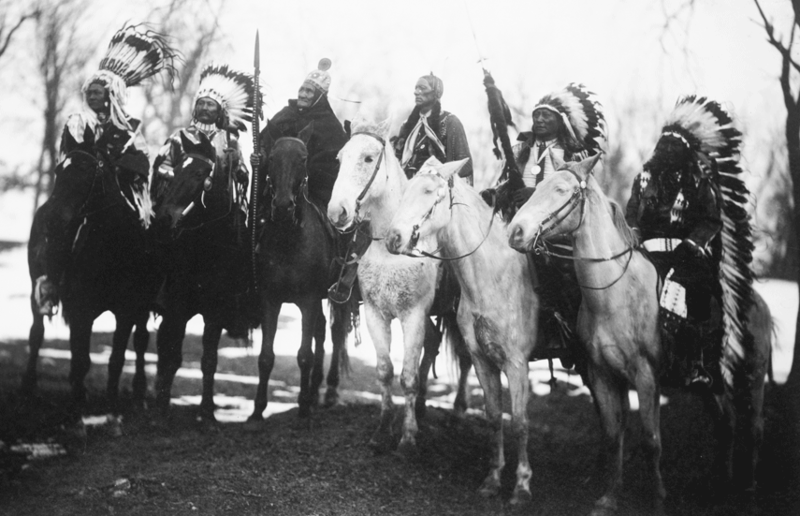
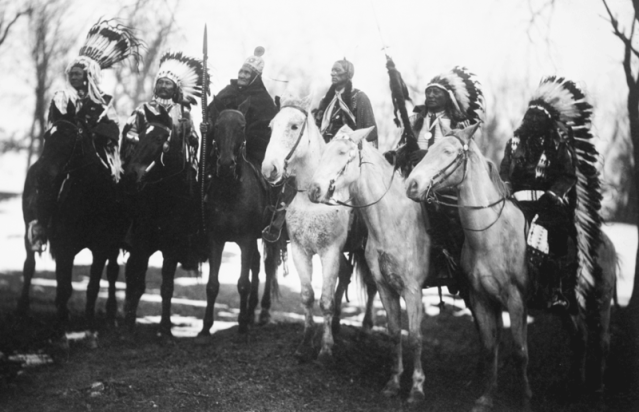
On March 4, 1905, Wild Westers and Carlisle portrayed contrasting images of Native Americans at the First Inaugural Parade of Theodore Roosevelt. Six famous Native American Chiefs, Geronimo (Apache),Quanah Parker (Comanche), Buckskin Charlie (Ute), American Horse (Sioux), Hollow Horn Bear (Sioux) and Little Plume (Blackfeet), met in Carlisle, Pennsylvania, to rehearse the parade with the Carlisle Cadets and Band.
chief american horse 5

Six tribal leaders (l to r) Little Plume (Piegan), Buckskin Charley (Ute), Geronimo (Chiricahua Apache), Quanah Parker (Comanche), Hollow Horn Bear (Brulé Sioux), and American Horse (Oglala Sioux) on horseback in ceremonial attire.

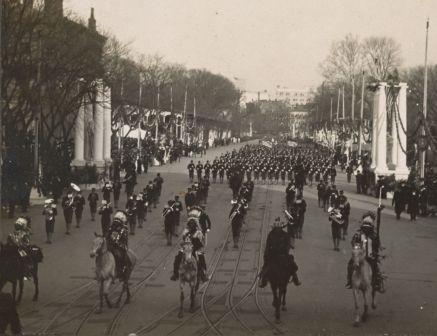
Theodore Roosevelt sat in the presidential box with his wife, daughter and other distinguished guests, and watched West Point cadets and the famed 7th Cavalry, Gen. George A. Custer’s former unit that fought at the Battle of Little Bighorn, march down Pennsylvania Avenue.
chief american horse 6

When the contingent of Wild Westers and the Carlisle Cadets and Band came into view (above), President Roosevelt vigorously waived his hat and all in the President’s box rose to their feet to behold the powerful imagery of the six famous Native American Chiefs on horseback adorned with face paint and elaborate feather headdresses, followed by the 46-piece Carlisle Indian School Band and a brigade of 350 Carlisle Cadets at arms. Leading the group was Geronimo, in full Apache regalia including war paint, sitting astride his horse, also in war paint, in the center of the street. It was reported that: “The Chiefs created a sensation, eclipsing the intended symbolism of a formation of 350 uniformed Carlisle students led by a marching band,” and “all eyes were on the six chiefs, the cadets received passing mention in the newspapers and nobody bothered to photograph them.”

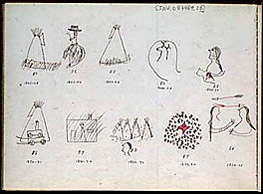
Chief American Horse was also a Lakota historian and authored a “winter count” he kept on a piece of cloth covering over one hundred years of Lakota history, 1775-1878. Lakota years are conceived as extending from the first snow of a winter to the first snow of the next winter. Years are given names based upon significant or unique event that would be easy to recall.  For example, Chief Flying Hawk’s Winter Count for 1866 records the Fetterman Incident during Red Cloud’s War as “Wasicu opawinge wica ktepi” or “They killed one hundred white men.” Likewise, 1876 is “Marpiya llute sunkipi” or “They took horses from Red Cloud” (the U.S. Army did after the Battle of the Little Big Horn), 1877 is “Tasunka witko ktepi” or “When they killed Crazy Horse” and 1890 is “Si-tanka ktepi” or “When the killed Big Foot” (the Wounded Knee Massacre).

In 1879, American Horse drew the winter count in a sketchbook at the request of William H. Corbusier, an Army surgeon. Corbusier sent it to the Smithsonian together with an explanation of the years provided by the keeper.  An example is shown below, and several more can be viewed in an online Smithsonian exhibit.  American Horse said that the winter count had been kept in his family for generations, passed down from his grandfather, to his father, to him. American Horse was born in the year they stole many horses from the Flatheads, or 1840-41. His death on Dec. 16, 1908 is marked in the No Ears calendar for the year 1908-09.

chief american horse 7

Posted in Apache, Blackfoot, Comanche, Piegan, Sioux, Ute | 7 Comments

First Footprints: Episode 4 – The Biggest Estate 9,000 Years Ago to 1788

Aboriginal 4 - 1
Living in Australia for 50,000 years, in order to survive, the Aboriginal people learned every ecological detail, immortalized it in the law, and passed it on through the generations.  They transformed the entire continent of Australia into the biggest estate on earth.

Agriculture came to Australia about 9000 BC, discovered simultaneously in numerous places around the world.  In Australia, they created gardens, dug ditches for drainage, and planted crops using the same tools they were using when contact with the outside world was made in the early part of the 20th century.

aboriginal 4-5

By now, people in Australia were learning to manipulate the available plants and animals to increase their food resources. They transformed an entire continent into a huge estate, fully sustainable until outsiders arrived.  Some of the initial contact with the outside world was made with Aboriginal people within memory of now elderly Aboriginals.

Agriculture stabilized where people lived, as they farmed the same area repeatedly once it was determined to be productive.  Agriculture in Australia began in New Guinea and is one reason why New Guinea developed so many cultures and languages.

Some of the food sources were toxic foods found in the rainforest.  The ancestors found ways to detoxify plants and through that process, provided reliable, sustainable food sources.  Although it does make you wonder how many people died or became ill in the process of discovering the multiple steps required including roasting, soaking in water and leaching.  Rather amazing that this discovery was ever made, considering the complexity of the process.

And of course, with the understanding of plants comes the understanding of plant medicine and how plants affect our human bodies.

aboriginal 4-2

The mask in The Mask Cave of New Guinea is about 2500 years old and represents the community and also the chieftainship.

The Lapita People, ancestors of the future Polynesians, would also settle in New Guinea, on their way to settle the Polynesian Islands.

Pottery was developed about 2500 years ago as well, possibly in conjunction with the arrival of the Lapita people.

Of course, warfare was also part of their culture, and headhunting raiding parties were greatly feared.  This too is recorded in rock paintings, with the enemy canoes depicted on the horizon.

aboriginal 4-3

These people were not simply hunter gatherers, living off the land.  They lived in stone houses and set up an elaborate series of fish dams and weirs taking advantage of seasonal flooding.   They also used fired for controlled burning during the dry season and for hunting.

Aboriginal people today can go and walk where their ancestors walked, sit where they sat and even visit the remains of their stone homes, shown below.

aboriginal 4-4

This is the fourth and final segment of this wonderful series.  As I watched the Aboriginal people, I was struck by some of the similarities of the ways in which the Aboriginal people and Native American people refer to their ancestors, as Grandmother and Grandfather, as a group.  They also show a great respect for what their ancestors left behind, giving it a sacred aura.  For example, when shown a piece of pottery excavated that was about 2500 years old, the Aboriginal man looked at it tenderly and reverently and said “hello Grandfather.”

aboriginal 4-6

The cultural and spiritual footprint of the Aboriginal people in Australia is very much alive.  Watch the video below and enjoy.

http://www.youtube.com/watch?v=yvOOihE0Mlg&feature=youtu.be

Posted in Aboriginal, Australia | 1 Comment

Cut Your Hair – or Else

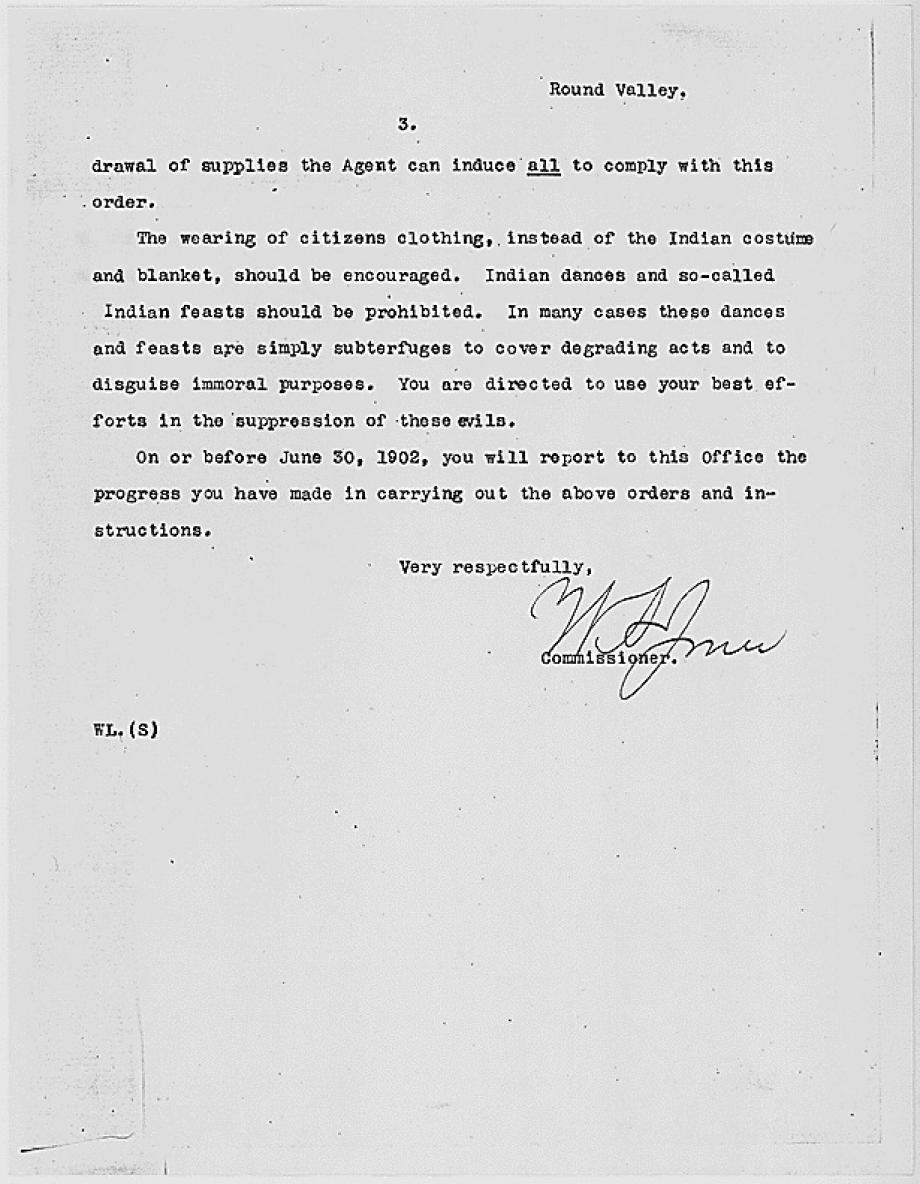
It was 1902.  The government was unhappy that Indians were acting like, well, Indians, with their own customs and ways of life.  The government wanted to make the Indians white, or what they called “civilized,” so they would stop causing trouble with all of those “unacceptable ways.”

So on January 11, 1902, the Department of the Interior, Department of Indian Affairs, issued a letter instructing that Native people should cut their hair (males), stop painting themselves, start wearing white people’s clothes, stop wearing Indian clothes and blankets, and stop having dances and feasts.

If they didn’t, it was suggested that those who didn’t comply should have their rations withheld.

To read more about this edict, click here.

1902 hair cut letter

1902 hair cut letter 2

1902 hair cut letter 3

Hat tip to Chris for this letter.

Posted in Bureau of Indian Affairs, History | 5 Comments

Indian Slaves from NC Wills

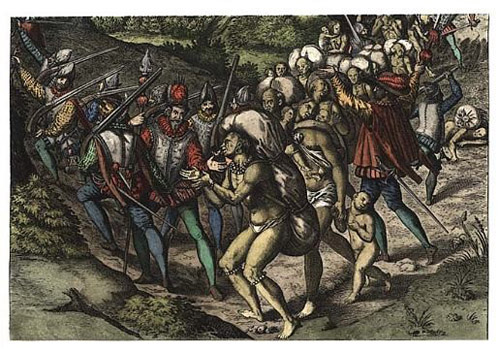
One of the first things that the Europeans did was to harness the physical power of the Native people.  The English weren’t the first.  The Spanish enslaved the Native people beginning with their first foray into what is now North Carolina by De Soto in 1540.  However, with the English settlement of what would become the United States at Jamestown in 1607, enslavement of the Indians in Virginia would follow very shortly and would become an industry, of sorts.  This 1596 painting shows Native Americans enslaved by the Spanish.spanish enslaving indiansOne of our Lost Colony researchers, Sharron, came across several mentions Indian as well as mustee (Indian mixed race) slaves in early North Carolina wills.

Sadly, since these people don’t have surnames and are primarily known by the families who own them, there is no way to track them forward in time to see if they had descendants that lived into the present time.  What we do know is that maybe someday their descendants will DNA test, have a “surprise” when they discover that their enslaved ancestors had Native American DNA instead of the expected African, and maybe, just maybe, the records will exist so that they can thread their way backward through time through transactions in white families involving slave to these records.  I suspect that these Indians were not local Indians.  If they were, they would be familiar with the area and would simply leave, run away, and return home.  It’s most likely that these people were captured and sold to local NC or NA planters and were from more distant tribes.  Local Indians participated in the slave trade by capturing members of other tribes with whom they were at war and selling their captives into slavery.

Our thanks to Sharron for extracting these records and not allowing these people to be entirely forgotten and slipping beneath the waves of time.

From the book, “Abstract of North Carolina Wills compiled from Original and Recorded Wills in the Office of the Secretary of State” by J. Bryan Grimes Secretary of State. Published under Authority of the Trustees of the Public Libraries.  Raleigh. E.M. Uerell & Co. State Printers and Binders. 1916

Arderne, John.  October 22, 1707. May 17, 1712. Kinsman: William Duckenfield (tract of land known by name of Salmon Creek, all negro, Indian, molato slaves. all horses, mares, cobbs, cattle, hoggs, young and old, and everything else in America, England, or any other part of the world.”)

Bishop, George. Onslow County. December 20, 1743. December 20, 1743. Brothers: James Sidbury (“one Indian man”). [Lists brothers, sister, cousins, father, other legatees, witnesses.] Will proven in New Hanover Court.

Innes, James. July 1754. October 9, 1759. “Of Cape Fear in North Carolina. Col. of the Regiment of sd. Province raised for His Majesty’s imediate Service and Commander in Chief of the Expedition to the Ohio against the French and there Indians who have most unjustly Invaided & Fortified themselves on His Majestys Lands.” [Lists bequests, wife, witnesses] Will made and executed at Winchester in Virginia.

Jones, Frederick. Chowan Precinct. April 9, 1722. March 26, 1723. Daughters:  Jane (“Indian girle, four negroes, diamond ring and diamond earrings…) [Lists sons, brother, other daughters, witnesses. Lands in Virginia, on Moratoke River, and Maherrin.]

Lewis, David. Carteret County. October 6, 1773. November 11, 1773. Devisees and legatees:  John Shepard (“plantation whereon I now dwell known by the name of Indian Town”)

Masters, Thomas. Craven County. October 27, 1746.  Mentions Indian slave. [Lists sons, wife, witnesses]

Pollock, Thomas. Bertie County. April 16, 1732. January 20, 1732. Bequests include “two tracts nigh Tuskarora Indian Town”

Porter, Mary. Chowan Precinct. November 12, 1717. January 21, 1717. To daughter Elizabeth “my Indian woman called Judith and her daughter named Sukey…”  [Lists sons, daughters, long list of possessions including land at Yawpim]

Reed, Andrew. Perquimans Precinct. February 29, 1723. July Court 1728. Grandsons: William and Andrew Woodley, Jonathan Keeton (to William is bequeathed an Indian slave) [Lists daughter, granddaughter, witnesses.]

Rodgers, Joseph. Bath County. January 2, 1704-1705. Indian slave freed. [Lists grandchildren, wife, witnesses]

Sanderson, Richard. Perquimans County. August 17, 1733. October 15, 1733. Son:  Richard (“ye Island of Ocreecock,” three negroes and one Indian slave”; “all my lots in Ronoak Town”…) Brother-in-law:  Henry Woodhouse (one Mustee fellow).  [Lists other relatives]

Slocomb, John. Craven Precinct. March 28, 1722. September 19, 1722. Sons:  Jeseway and Josias (land on Mill Branch and one Mustee boy). Daughter: Elizabeth Slocom (land on Mill Branch and one mustee boy.)  [Lists other sons.].

Smith, Henry. Craven County. August 4, 1748. November 2, 1748.  Daughters:  Elizabeth (one mustee boy).  [Lists sons, other daughters, witnesses.]

Posted in North Carolina, Slaves | 1 Comment

Pee Dee Indian Surnames

In Volume 11, Issue 2 of the Rice Planter Newsletter of the Old Bartholomew Chapter of the South Carolina Genealogical Society, an article written by J. Michelle Schohn, Historian of the Pee Dee Indian Nation of Beaver Creek was reprinted by permission.

While I can’t reprint that article here, what I can do is to provide you with a list of the surnames involved, and then point you to the article.

Here is the list of Pee Dee Indian surnames.

  • Argoe
  • Bears
  • Bird
  • Bonner
  • Bowen
  • Braveboy
  • Bunch
  • Carpenter
  • Chandler
  • Chavers
  • Chavis
  • Collins
  • Commins
  • Carter
  • James
  • Clark
  • Cook
  • Deas
  • Fitts
  • Galphin
  • George
  • Gibson
  • Grooms
  • Hall
  • Hamilton
  • Huffman
  • Hunt
  • Hutto
  • Jones
  • Jackson
  • Johnson
  • Lowery
  • Marbury
  • Nagin
  • Newness
  • Owens
  • Oxendine
  • Quick
  • Read
  • Reed
  • Reynolds
  • Rose
  • Rouse
  • Scott
  • Smith
  • Solley
  • Sweat
  • Thompson
  • West
  • Whitlock
  • Williams
  • Wise
  • Wooton

Accessing the article itself is a little tricky.  First, click on this first link.

http://www.bartholomew.scgen.org/

You will see the following information with the user name and password to the newsletters in the top left hand box below the pictures.

SC Gen Soc

This is the article you are looking for:

http://www.bartholomew.scgen.org/Newsletters/Rice-Planter-2003-Volume-11-Issue-2.pdf

Hat tip to Joy for the link.

Posted in Peedee | 16 Comments

Portingals, Portuguese, Melungeons, Creoles, Moors, Mulattoes and the Banjo

banjo

You just never know where a banjo is going to take you.

George Gibson wrote a very interesting article about his own Gibson genealogy research, spurred by his enduring interest in banjos and banjo-playing mountain men.

One of the areas where George’s ancestors were found is in the area near Cumberland Gap, just slightly east, on the Virginia/Tennessee border.  This area is where the Melungeons were first documented in 1813 at the Stony Creek Baptist Church in Russell County, Virginia.  Nearby is Big Stone Gap.

According to George, a song named “Big Stone Gap,” was popular around southwest Virginia and east Kentucky 75 to 100 years ago. Dr. Josiah Combs said the song was one
of many that came from African Americans after about 1880.   George plays the song in the video below.

Eventually, George’s search would lead him to Chesapeake Virginia and back to Africa, historically speaking.

These adventures led him to research various mixed race communities and people including the Melungeons, the Moors and other tri-racial isolates.   But George’s story is much more lively than my musings and quite well written, so take a look….

http://www.banjohistory.com/article/detail/2_mellungeons_and_myth

Hat tip to Don for this information.

Posted in Creoles, Melungeon, Moors, Portuguese | 3 Comments

Spencer Wells – DNA LiveChat – September 13th

geno logo man walking

Mark your calendar now!  This upcoming Friday the 13th holds a bit of good luck.

National Geographic is offering the opportunity for people interested in the field of genetics to ask questions directly to The Genographic Project and Spencer Wells in a live Twitter chat on September 13 at 12pm ET. Spencer will be tweeting from his twitter handle @spwells and participants may ask questions using the hashtag #NatGeoLive.

This is a great opportunity for you to reach out to Spencer and National Geographic directly and ask questions about the Genographic Project, human migration, and population genetics.  It’s especially relevant for those who have taken the Geno 2.0 test. Please feel free to pass the invitation on to those who might be interested.

You can learn more at this link: http://newswatch.nationalgeographic.com/2013/09/06/whats-in-your-genes-join-a-twitter-chat-with-geneticist-spencer-wells/

Posted in DNA | Leave a comment

1731 – Tuscarora Raiding South Carolina Indians

Instructions to William Waties concerning the relationship between North Carolina and South Carolina and Native Americans

Johnson, Robert, 1677-1735

April 10, 1731

Volume 11, Pages 23-25


——————– page 23 ——————–

[B. P. R. O. So: Carolina. B. T. Vol: 7. e. 79.]

South Carolina.

By His Excellency Robert Johnson Esqr Capt General Governor and Commander in Chief in and over His Majesty’s Province of South Carolina.

Instructions to William Wattis Esqre

Whereas it hath been made known unto me that several Parties of the Tuscarora Indians under his Majesty’s Government of North Carolina have made frequent Inroads into His Majesty’s Province of South Carolina and have (at divers times) Killed taken and destroyed several Indian Slaves belonging to the said Province of South Carolina and many of our friendly Indians residing in the heart of this settlement and insulted divers of the Inhabitants without any colour or pretence whatsoever or any occasion given for so doing.

And whereas I thought fit at the request of the Commons House of Assembly to appoint you the said William Waties to represent the said injurys to His Excellency George Burrington Esqre Governor of His Majesty’s Province of North Carolina to the end that not only the said Insults may be prevented for the future but that satisfaction may be made by the said Tuscarora nation for what are past You are therefore hereby required on receipt of these your Instructions to repair to the Government of North Carolina and on your arrival you are to deliver to His Excellency George Burrington Esqre the letter from me to him directed which you will receive herewith.

You are to make your journey by way of Cape Fear and in the best manner you can inform yourself if any of the said Tuscaroras have lately passed or repassed that way and which of them are known.

You are to acquaint His Excellency the said Governor Burrington (or the Governor and Commander in Chief for the time being) with the particulars of the insults and injurys which heretofore as well as of late have been made and done by the said Tuscarora Indians to His Majesty’s subjects in this Government and to our friendly Indians.

You are to request His Excellcy Governor Burrington that be

——————– page 24 ——————–

cause the sevl Head Men of the said Nation to be sent for to come before His Excly and more especially such as have been lately in this settlement (if known)

You are to request His Excellency that you may have liberty to give them a Talk Face to Face in the name of this Government which if complied with you are to charge the said Indians with the particulars of the insults and injurys by them done to this Government and to demand satisfaction

You are to demand of the said Indians whether on the like complaint afore made they did not promise to do no more injurys to this settlement.

You are to demand of the said Indians whether on the said complaints afore made they did not promise to do no more Injurys to this Settlement.

You are to tell the said Indians that all the English in the several Govmts have but one Great King and are all one and the same people and therefore that if any injury be done to the white people in their persons or to their black or Indian Slaves Horses or Cattle that all the said Governmts are requested to assist each other in resenting their injurys as they have fully experienced already in the old wars between them and the White People.

You are to acquaint them that if they make any more Inroads and offer any more Injuries or refuse to make satisfaction for what is past this Government will treat them as Enemies and will immediately call in the Catawbas and Cherokees to their assistance and cut them off.

That this Government does expect they will immediately before your departure return all the Slaves they have taken (if alive) and if dead to pay the value of them.

You are to insist that they enter into articles with you in the name of this Government that they will come no more into this Settlement nor do any more injury to our White People Indian Slaves Horses or Cattle nor to our friendly Indians living within our Settlements on pain of being all cut off and destroyed as above said.

You are to communicate these your instructions to His Excellency the said Govr Burrington and to give him a copy thereof and you are in the name of this Government to request of His Excellency his favour countenance and assistance in all and singular the matter aforesaid.

——————– page 25 ——————–

And you are to act and do in all the matters aforesaid and in all matters and things whatsoever that may or shall hereafter occur to you or be thought beneficial and useful to this Government for promoting the ends aforesaid according to the best of your knowledge and judgment desiring that all due credence and dispatch be given to you the said William Waties in this behalfe.

Given under our Hand and the Great Seal of this His Majtys Province the tenth day of April in the fourth year of His Majesty’s Reign and in the year of our Lord one thousand seven hundred and thirty one.

ROBT: JOHNSON.

Recd Febry 22. 173⅔.

http://docsouth.unc.edu/csr/index.html/document/csr11-0014

Hat tip to Chris for this info.

Posted in Catawba, Cherokee, Tuscarora | Leave a comment

Gone Fishin’

Gone Fishin 3

What was I thinking when I said that I wanted to really focus on DNA and be able to make a significant contribution?  What was I thinking several years ago when I said that I really believed the genetic genealogy field needed consultants and sent out all of those positive intentions?  What the devil was I thinking?

I think this falls in the “be careful what you ask for” category.  Because, not that I’m complaining….but the next 2 months or so are, well, insane.

I will be in a total of 7 countries and 3 states, on 2 continents unless you count the British Isles and islands separately, and then it’s 6 land masses, will attend 2 conferences, give several presentations and participate in 2 photo shoots for an upcoming documentary.   This touches about 10 different DNA projects and ongoing scientific research.  Oh yes, and did I mention, I still have to work too?  I think I’ve lost my mind….

Part of this time, I’ll be, as Spencer Wells is so fond of saying, “off the grid.”  For some reason, I really like the sound of that, sounds very mysterious and adventurous, Land Roverish…right up until I want to talk on my phone, check my e-mail, approve a blog comment or see what’s happening on Facebook, which is generally about every 30 minutes or so.  We’re an electronically addicted society aren’t we.

There will be times over the next few weeks that I won’t have internet access, or that it’s extremely expensive (more than a dollar a minute,) and so, in that case, I won’t be blogging, approving comments or replying to e-mail for that matter.  So, please don’t take it personally – it’s not you.  And I’ll eventually catch up when I get back.  Hmmm, maybe being “off the grid” is less about a Land Rover and more about $$$.

When I get back….I wonder if my husband will still know me.  But worse yet….the cats.  You see, the cats are already mad and as people-owned-by-cats will vouch for…there is just nothing worse than an angry cat…unless it’s a very smart angry cat.

Phoenix packed

My cats are already pre-angry because the suitcase is in evidence.  They’ve packed their toys and themselves and they are ready to go.  As you can see, Phoenix thinks she’s going fishing too.  It’s downright ugly when they discover they’re not invited.

I shudder to think about what will be waiting for me upon my return…

I have prepared some articles in advance and we’ll see if I can manage to post them from something other than a PC when I do have internet access.  The smaller gizmos, of which I’ll have 3 different flavors with me, just don’t behave the same.  So, if you don’t see any blogs for awhile, just think of it as me out fishing for good material for future articles.  I promise, when I get back and get settled, there will be an exciting harvest of blog material and next year, a wonderful new documentary too.

That’s my fish story anyway, and I’m sticking to it.

Posted in News | 2 Comments