Bertie Co., NC – Potential Fort Location

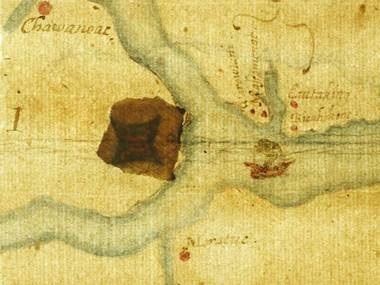
In May, 2012 the now famous Bertie County fort icon on John White’s map was discovered at the British Museum .  We covered this in two postings, one about the discovery and a second one that provided some historical analysis. 

https://nativeheritageproject.com/2012/05/07/sir-walter-raleighs-lost-fort-found/

https://nativeheritageproject.com/2012/05/07/john-white-map-chowan-fort-discovery-analysis/

This image of the fort icon was exposed on John White’s map at the confluence of the Roanoke and Chowan Rivers in present day Bertie County. 

During a recent trip to North Carolina, I had the opportunity to visit the area and was excited to do so.

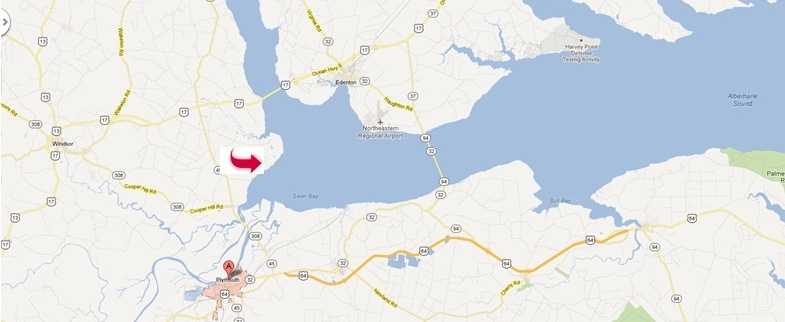
On the map above, the red arrow points to the approximate location of the fort on White’s map.  You can see the inlet above and the indention for current day Edenton across the sound. 

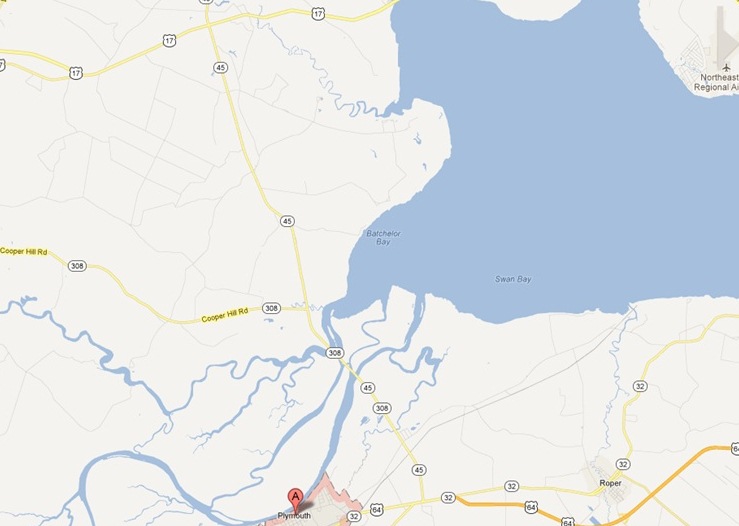
A closer view shows the road from Plymouth, crossing the Cashie, Middle and Roanoke Rivers where they join to form Swan Bay which is part of Albemarle Sound.  The Chowan flows from the north and is the body of water that separates Bachelor Bay and Edenton.

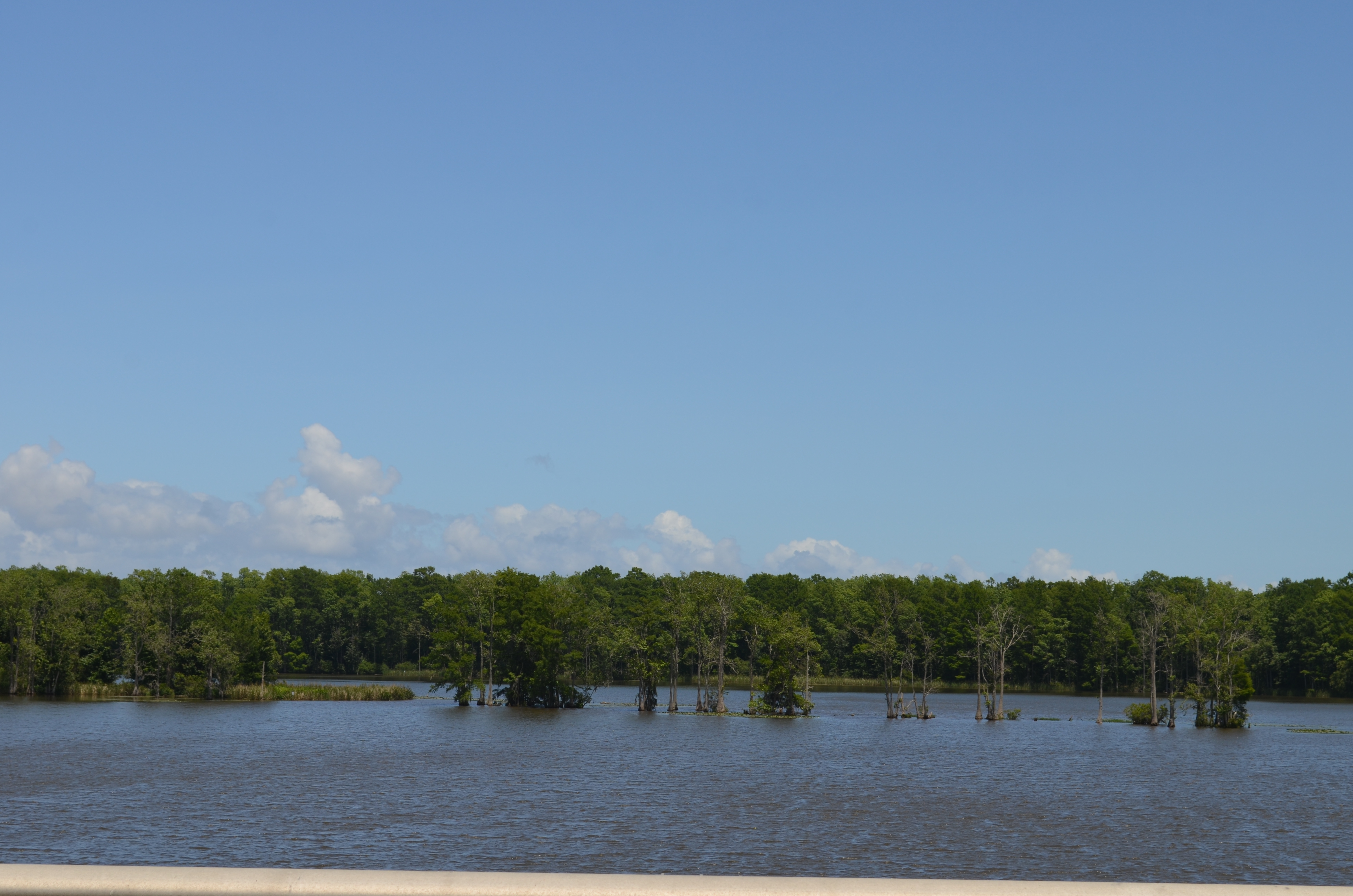
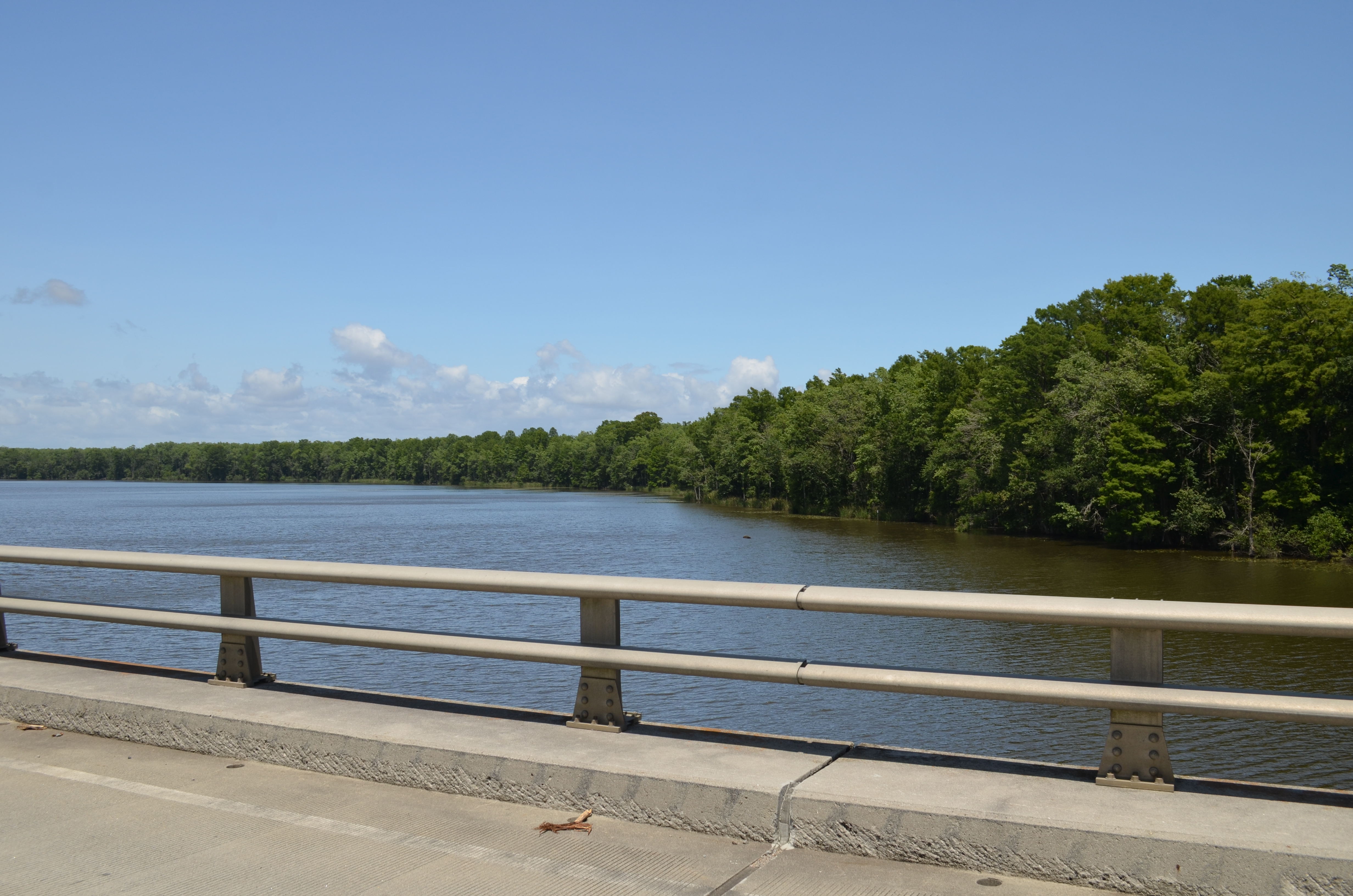
Crossing the rivers, I was surprised how undeveloped this region is, and I do mean totally undeveloped in most places.  The next two photos were crossing the bridges of the three rivers.  They all look exactly the same, tree lines and if you didn’t see the bridge, you would never be able to tell that it wasn’t 1585.  This must have been exactly what the military expedition of colonists saw when they explored here in 1585-1586.  The water is brackish here, not totally fresh water, nor totally saltwater.  The key to survival in this location would have been fresh water, and of course, the ability to defend yourself, or being friendly with a tribe that would help.  The Indians would probably have been all too willing to assist in trade for guns.  They understood a competitive edge.

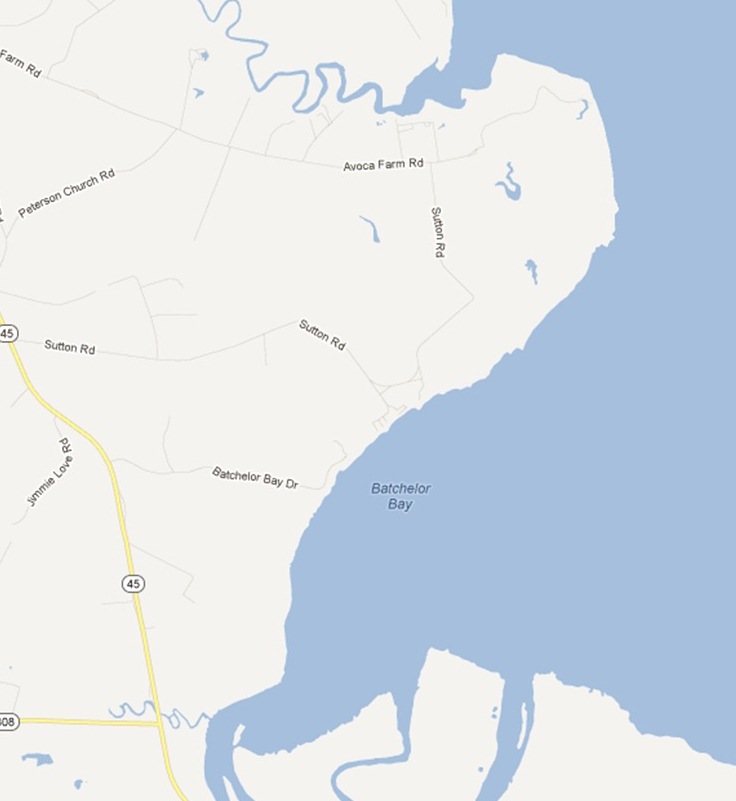
Looking at the map closer, we see that the area of Bachelor’s Bay, Sutton Road and Avoca Farm Road are the areas where the fort, if it ever existed, might be found.

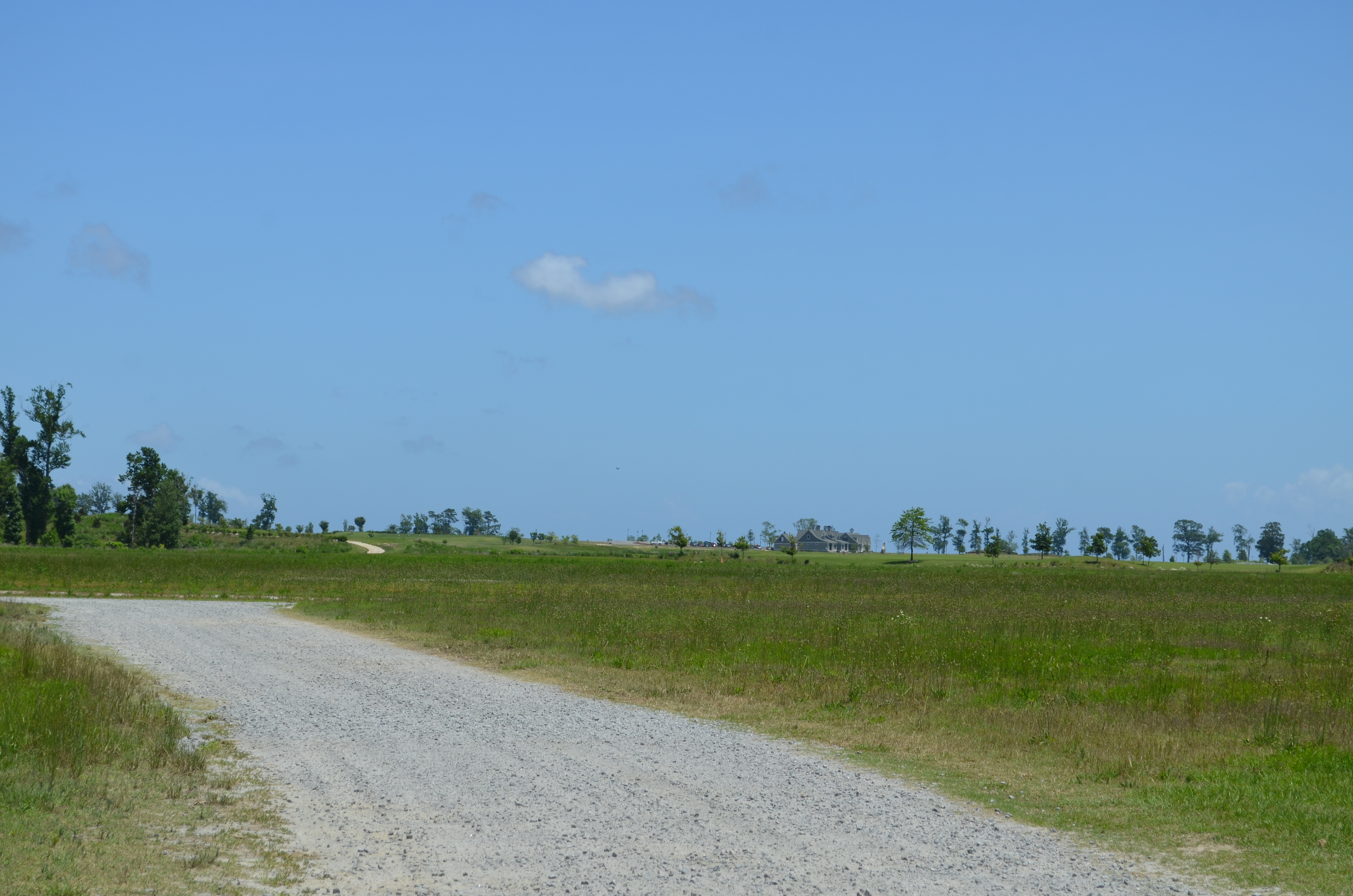
Let’s take a look and see what is there today.  The area from NC45 to the Bachelor’s Bay development is a good candidate location.  The road is about 2 miles long and this is just about the only place on that road where there is anything except forest until you get to the end where you find the Bachelor’s Bay development right on the sound.

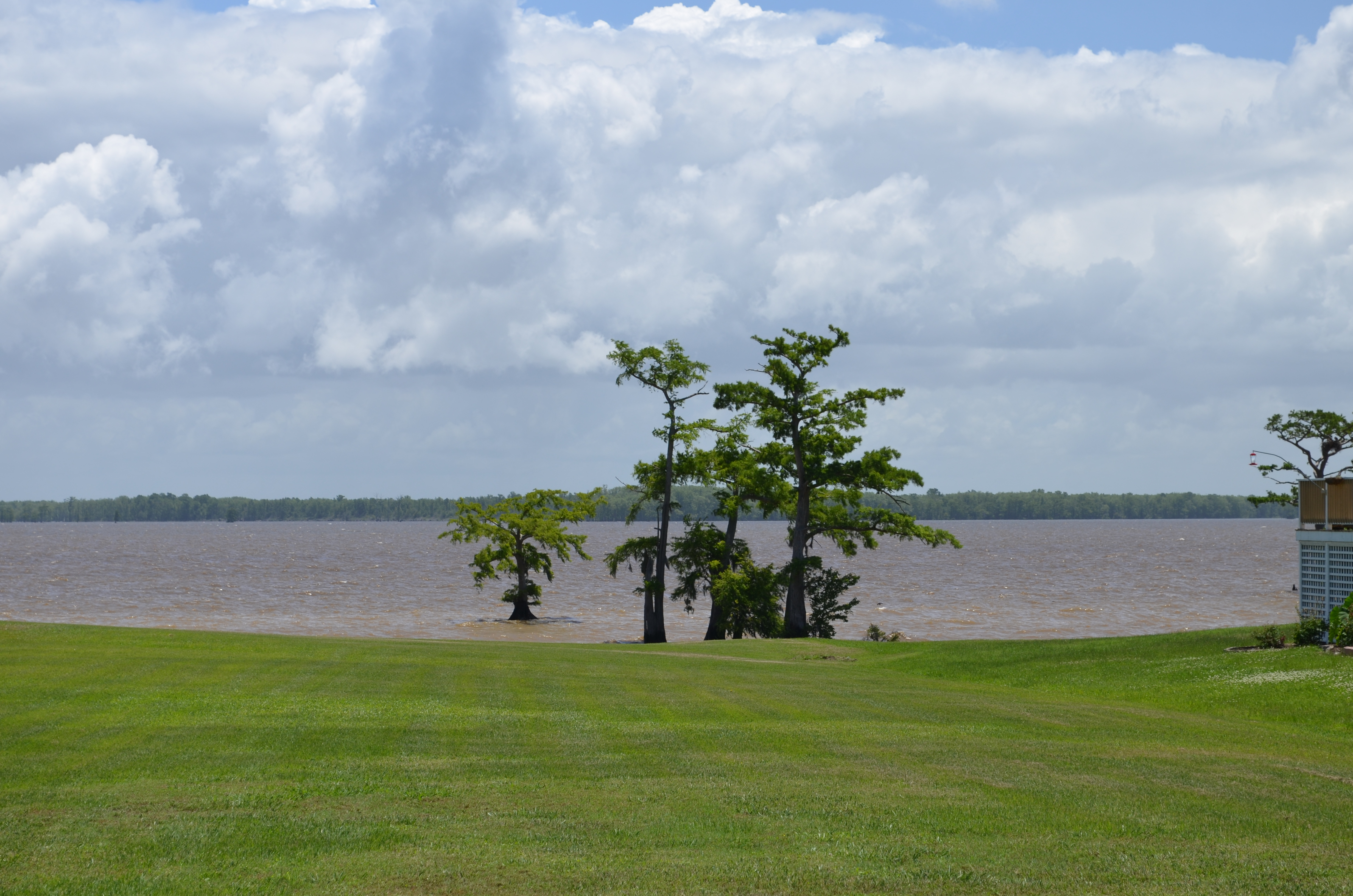
You can see the other side of the Sound from here.  The area does flood, as you can see, and probably significantly more so in times of heavy storms.  Dr. Charles Ewen (ECU) tells me that archaeological digs have taken place in Bachelor’s Bay in the past, with no relevant results.

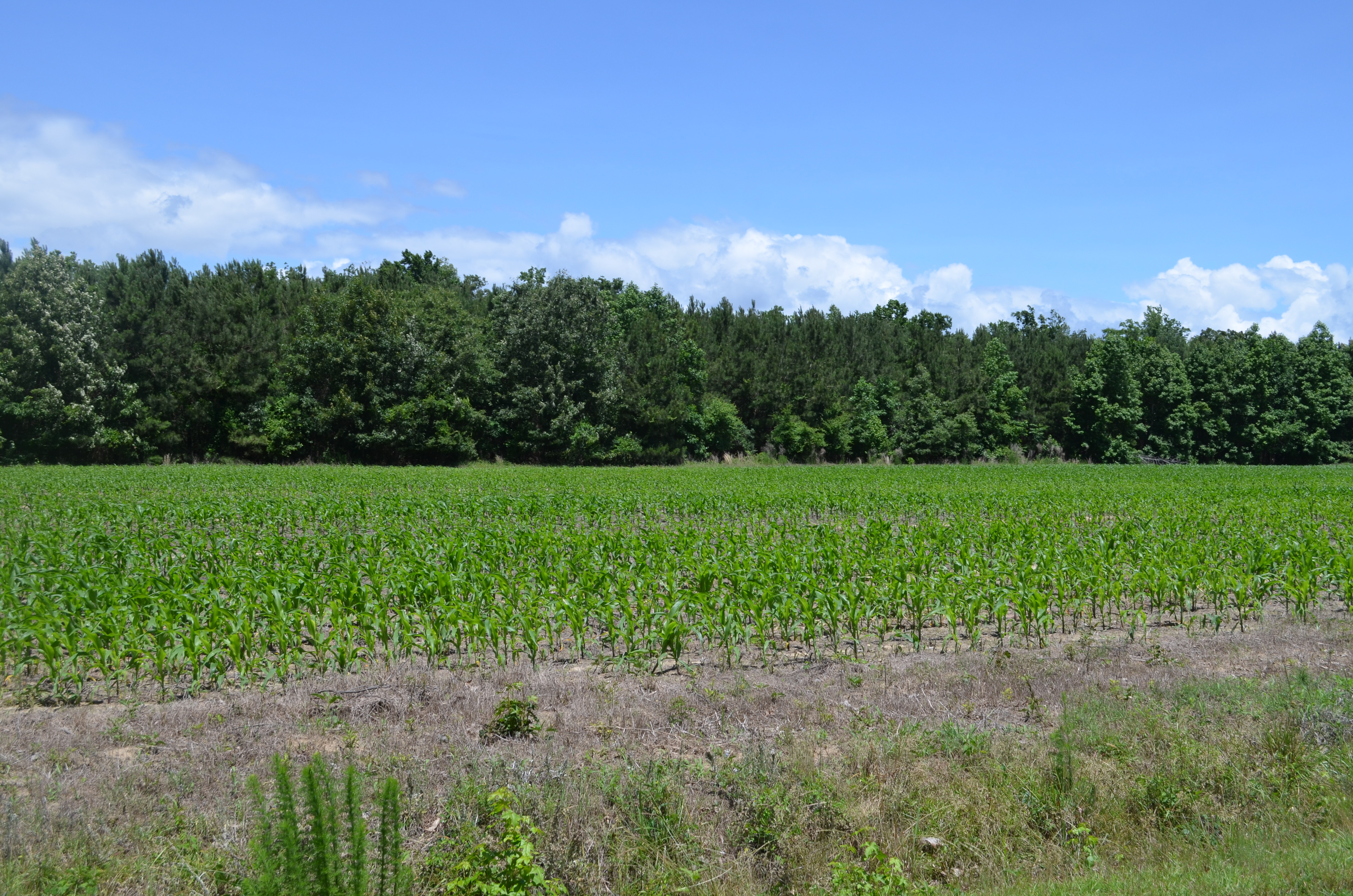
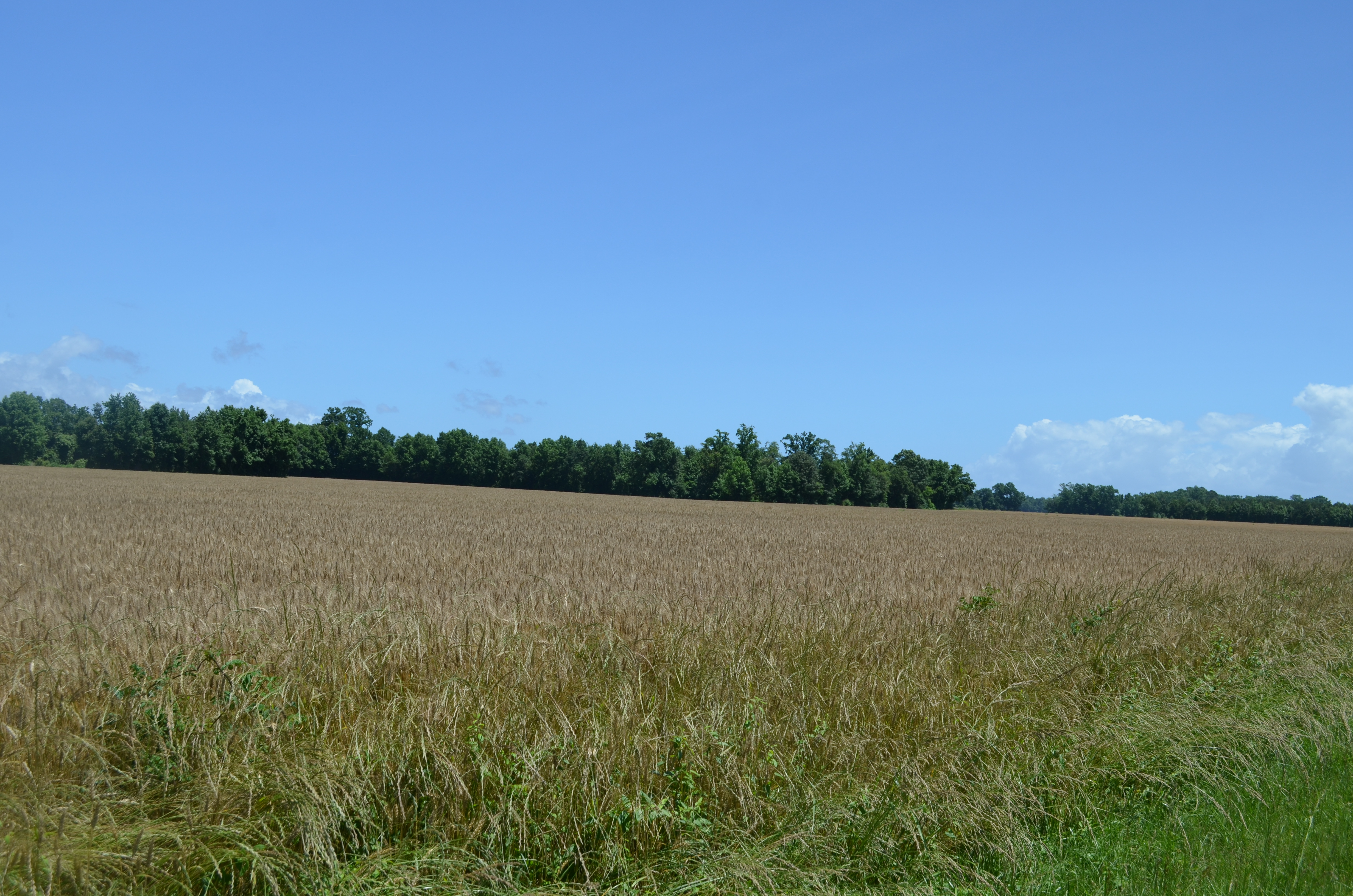
Driving on Sutton Road, we find more farming.  The land has been cleared and is relatively flat.  This would be a good fort location, assuming we can find a creek with fresh water.

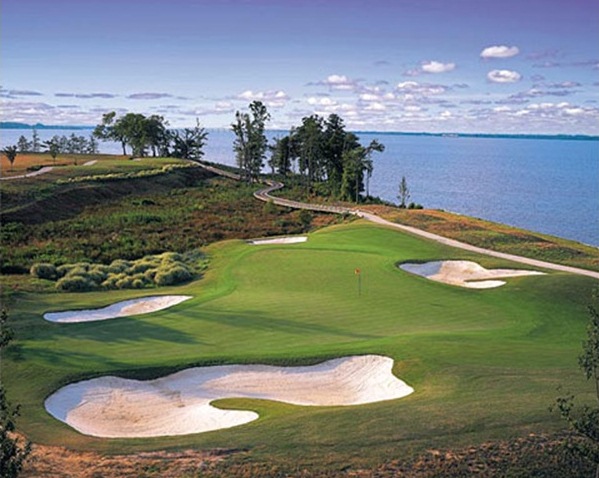
Today on Sutton Road, literally in the middle of nowhere, is the Scotch Hall Preserve, a 900 acre gated golf community that includes sculpted grounds and a golf course designed by Arnold Palmer.  This encompasses nearly all of the peninsula from where Sutton Road intersects with Sutton Road all the way to and including Avoca Farm Road east of Sutton Road.  It’s a huge area.  In fact, the reason it’s there is because it was entirely undeveloped.  Below is a photo from their ads.  You can see that the entire area is heavily sculpted, meaning little has been left undisturbed, and I’m not thinking they are going to welcome an archaeology dig in the middle of Arnold Palmer’s hole 7.


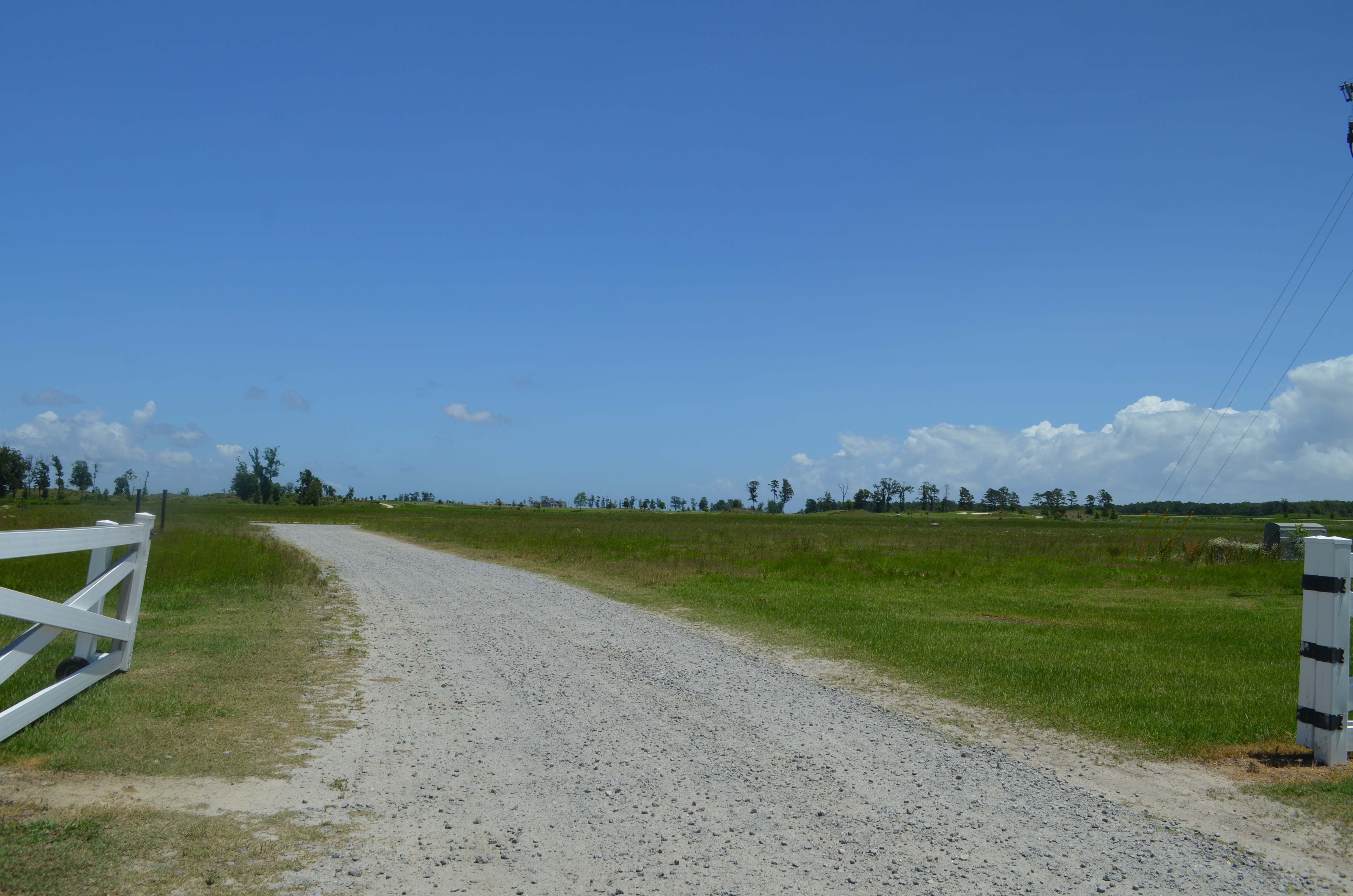
The front of the Scotch Hall Preserve is protected by gates and access only granted to residents and members, but in all developments, there is always a construction entrance.  Below is what is left of Avoca Farm Road within the development.

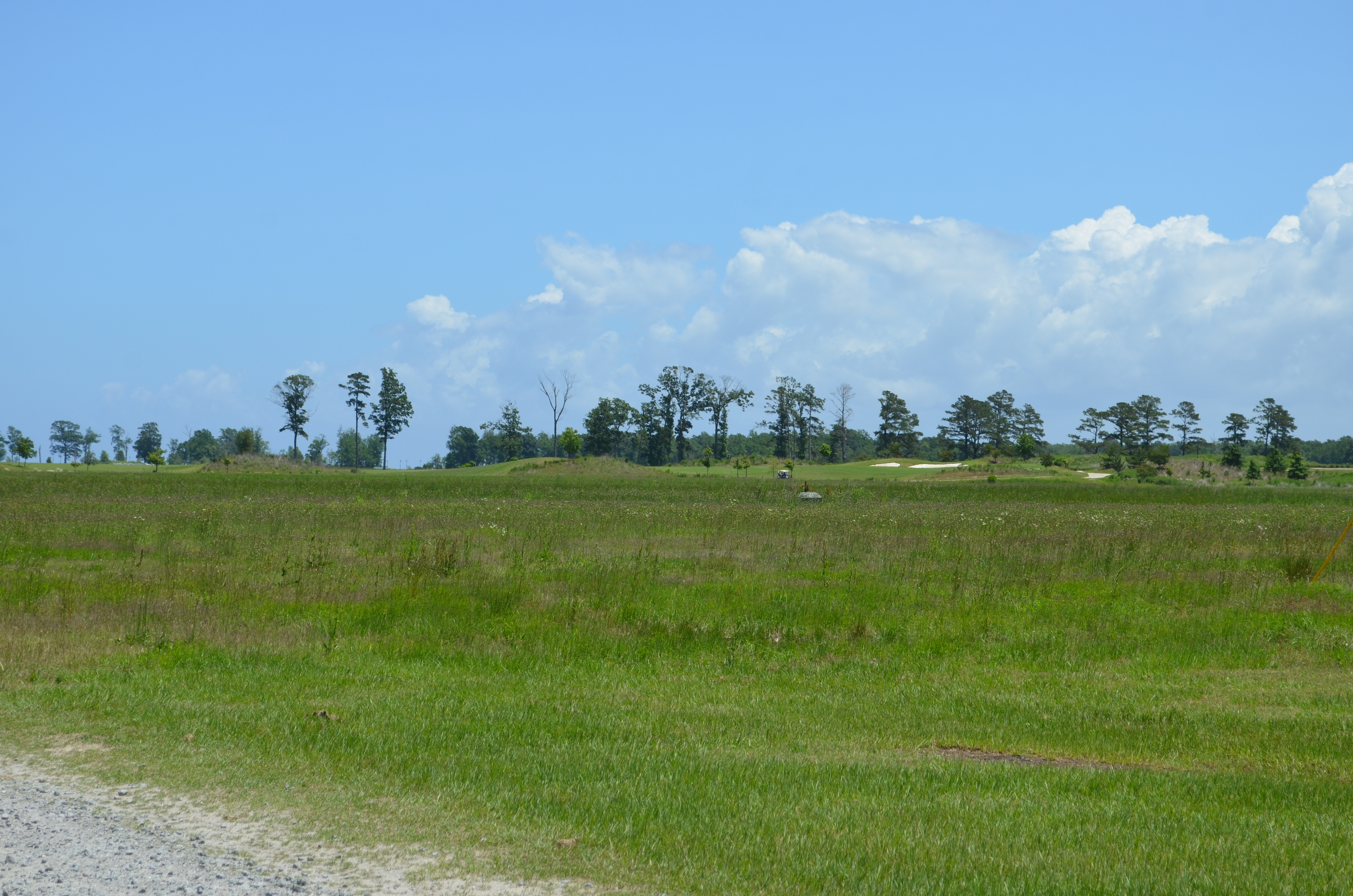
This is the right area, but looking at the map, appears to be too far north, if the map is accurate at all, and if there was ever a fort.  The photo below is along the front on Sutton Road. 

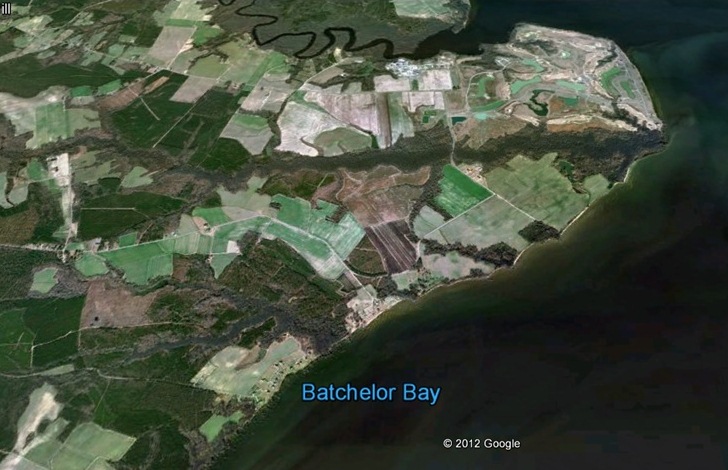
On the Google Earth map below, you can see Bachelor Bay at the bottom and you can follow Sutton Road to the Scotch Hall Preserve. 

So, are we walking in the footsteps of the colonists, or are we on a wild goosechase?  Only time, research, and archaeology will tell, if that.  In the mean time, whether indeed you believe it’s the footsteps or the goosechase, I think everyone will agree that what we are looking for is indeed a very small needle in a very large, very remote and very overgrown haystack, except of course, for where it’s the golf course.

Posted in Lost Colony | 3 Comments

A Report on Research of Lumbee Origins by Robert K. Thomas – Part 18 – Appendix

The final segment of Robert K. Thomas’s Report of Research on Lumbee Origins.  This was transcribed from a photocopy of an original report at the Wilson Library, UNC, Chapel Hill, NC in June of 2012.   Any comments I have will be made at the end of these transcriptions and it will be evident that they are mine.  To see more about Robert K. Thomas, go to:  http://works.bepress.com/robert_thomas/

(P 69) Part VII – Appendix

As I said in the previous section, if we really did this research up right we would know the history of all the Indians in eastern NC, southeastern Virginia and central SC, plus perhaps gather some very important material on the refugee tribals from the Granville-Edgecombe area who went west into the Appalachians.  So in this final section, I would like to say just briefly what we know about other Indian groups or what I suspect at this point about other Indian groups in this region.

First, let me examine the Haliwa.  At this point it looks as if the Richardsons were part of the Pan-Indian “pot” in the Granville-Edgecombe area in the 1750s.  By the 1770s the Richardsons had moved further west and were in Chatham County.  After the Revolution one of the Richardson brothers returned to Halifax County and was granted a large acreage of land in that area where he proceeded to raise a big family.  Other stragglers who had not moved out of this section west or south began to cluster around the Richardsons – Lynch, Harris and so forth.  Ater 1802, I think at least some of the remnants of the Tuscaroras in Bertie County moved into the Richardson area; the Copelands, Silvers and perhaps a few other families.  I have not seen Ernest Jaycock’s material so I am only guessing.  Some of these people who clustered around the Richardsons might also have been recent newcomers from Virginia into the area.  For instance, I suspect perhaps the Evans family was such a one.

The Coharie Siouan seem to be primarily Hatteras mixed with a few refugee tribals from the Granville-Edgecombe area who moved (p 70) in with the Hatteras to form a community on the Neuse.  The Indians in Hoke and Cumberland Counties are simply Lumbee “stragglers”.  The Indians in Montgomery County are Lumbees that moved west from Hoke County.

I would guess that the modern Waccamaws are the descendants of Indians who moved south from Sampson County or perhaps the Neuse, as well as Indians who came back into that area from SC; that is to say, some of the refugee tribals from the Granville-Edgecombe area who had gone to SC gravitated back to the Waccamaw Lake area.  I would guess that such is also true of Indians of western Columbus County.

The Indian groups in SC, except for the ones near Charleston and Cheraw, appear to be descendants of people from the Granville-Edgecombe area.  As I stated earlier many people went from the Granville-Edgecombe area directly to SC and then some of them came back to Robeson County in the late 1700s.  In the 20th century of course, the Smilings moved en masse from Sumter County to Robeson County.

The small group of people known to whites as Marlboro Blues near Cheraw, SC are undoubtedly Cheraw Indians or at least Cheraw who have mixed in with Indian refugees from northeastern NC. 

The Indians near Hamlet in Richmond Co., NC seem to have moved over into NC from the Cheraw area sometime in the early part of the last century. 

There are two other groups in NC which are interesting as well.  One are the mixed-blood families who live near Wilmington on the Cape Fear and who I understand now identify as (P 71) black.  There is also a small group of people between Kinston and Snow Hill at a place called Brownstown who are also former Indians recently assimilated into the black population.  The Browns appear to me to be what remains of that old community on the Neuse and the Cape Fear people are “Indians” from the Granville-Edgecombe area who settled in that section and did not maintain their Indian identity.

The Indians in Person County are still somewhat of a puzzle to me.  I can find evidence of them in the 1760s on Island Creek where it runs into the Roanoke on the Virginia side, north of present-day Henderson, NC.  It looks to me that by 1850 they had moved farther west to the south of Clarksville and that after the Civil War they began to drift west and south into NC.  I do not think they are necessarily connected to the group formerly in Granville and Edgecombe Counties.  I would suspect that they are primarily Virginia Indians from the Powhatan area east of Richmond, but further research will have to tell us that.

The Indians further west near Stoneville, NC in Rockingham County who are primarily Goings and Harris seem to be simply drop offs from the main migration straight west from the NC frontier  to Newman’s Ridge, TN.

I have some idea now of the broad outlines of the history of the Indians in the Cumberland area of Tennessee, Virginia and Kentucky but there needs to be quite a bit more work done in that widely scattered group.

The work on the Haliwa could be done very quickly as well as on the Indian groups in Sampson and Columbus Counties.  The (p 72) research on Person County Indians might be, however, a major job since they are not part of, or so it appears to me at this time, that general exodus out of the NC frontier in 1750 into other areas. 

There are a few Lumbee “off-shoots” I would like to visit in the near future – one group near Grouse in Lincoln County, NC; another at Swananoa near Asheville; and the last in Macon County near Franklin, NC.

I would, especially, like to look at the area of Skeetertown near Suffolk, VA.  I believe this formerly Indian, now black, community is the source of many of the families that went to the Granville-Edgecombe area in NC in 1750.

Roberta Estes:  Does anyone have, have access to or know the location of Ernest Jaycock’s work?

Posted in Cheraw, Coharie, Haliwa, Hatteras, Lumbee, Person County Indians, Powhatan, Waccamaw | 8 Comments

A Report on Research of Lumbee Origins by Robert K. Thomas – Part 17 – Conclusion

A continuation of Robert K. Thomas’s Report of Research on Lumbee Origins.  This was transcribed from a photocopy of an original report at the Wilson Library, UNC, Chapel Hill, NC in June of 2012.   Any comments I have will be made at the end of these transcriptions and it will be evident that they are mine.  To see more about Robert K. Thomas, go to:  http://works.bepress.com/robert_thomas/

(P 65) Part VI – Conclusion

As I said in the beginning of this paper, the main reason I decided not to write an article for the Smithsonian is that I did not want to add more confusion into an already confused situation.  I feel that before any publication comes out we need to gather as much evidence as can possibly be gathered.  At this point, I don’t think that I will change my mind on the broad outlines of Lumbee history but much of our evidence is indirect evidence and to make a case on indirect evidence, you need mountains of it.  Direct evidence would be something like if in the records of Granville and Edgecombe Counties the ancestor of the Lumbees were listed as half-breed Indians instead of Mulattoes.  More, if we had a few quotes or observation about the tribal background of these frontier families we would be “in clover.”  However, we don’t have that sort of evidence and I don’t expect we ever will.  We will have to build our case on indirect evidence.  Now, I, myself, do not think that oral history is indirect evidence.  I think it is very solid direct evidence.  Many scholars, however, do not agree with me so I think that in order to make our case we have to have as much evidence from the records as possible and most such evidence is indirect evidence.

I think we need to find out, for instance, how many “mulattoes” in the Granville-Edgecombe area in the 1750s fought in Hugh Wadell’s army, if that is possible.  I think we have to find out if Colonel Nash took some people with him in the early 1760s when he moved from the Granville County area to the area of New Bern.  I think we have to do some work on the migration of the (p 66) Hatteras from the east into Robeson County.  We need to do some more diligent searching in northeastern NC land records and church records.  I think we have to do some work in Virginia and SC.  We have to make the picture as complete as possible, with mountains of indirect evidence.  Much of the material I have presented in this paper has been indirect evidence.  I think to really do Lumbee history the way it should be done, we will have to look at all of southeastern Virginia, eastern NC and central SC between 1730 and 1840.  This means that after we are through we will not only have a history of the Lumbee but also a history of all of the Indian groups in the region.  I think it is a big job of research but it will be well worth it by the time we get through.

For some groups like the Haliwa and the Meherrin and the descendants of the Nottowa (sic) of southeastern VA I think such research might be the basis of a land claim against the US which would allow these people to collect quite a bit of money.  The main thing I would like to see done is to give the Lumbee a documented, authentic history that is “nailed down,” so that all these confusions can be cleared up once and for all.

The other thing I would like to see done, as an anthropologist, is really secondary to the historic research on origins; and that is some research on modern Lumbee culture.  I don’t know very much about modern Lumbee culture, needless to say, but it appears to be very interesting; and much more distinctive and “Indian” than one would think.  For instance, the curing complex and the religion, just offhandedly and impressionistically, appears to me to be some kind of historic combination of Indian, white,  (p 67) and black patterns which then evolved uniquely among the Lumbee people in Robeson County.

Personality wise, Lumbees, to me, most resemble the Metis of Saskatchewan.  They are a folk people, but lusty and outgoing with a strong sense of personal and group honor.  I would guess that the Metis are very much the product of their French voyageur ancestors and I would guess that the Lumbees as personalities hark back to that frontier era between 1740 and 1790 when they were both forming as a people and moving on the frontier as well.  What I can glean from history about the ancestors  of the modern Lumbee point to a lusty “free-wheeling” frontier type who must have resembled the mountain men of the west or the Metis in the prairies of Canada.

The other feature I think needs some anthropological work is Lumbee English. Lumbees can usually recognize another Lumbee by his English and also recognize the dialects among Lumbee settlements in Robeson County.  Importantly, this dialect appears to by symbolic of Lumbee identity.  It is true that the Lumbees do not speak an Indian language, but they certainly speak a kind of English which has become symbolic of their identity and this in itself is interesting, scientifically.

Lumbee social organization is fascinating; one hears of the Lowery settlement, the Brooks settlement, the Oxendine settlement, and the Lockleer settlement.  These are almost small tribes which have maintained themselves through strict patrilocal residence.  There are many cultural features about the Lumbees which are probably both unique to them as a people and from which one could also get some notion of the different components which have (p 68) contributed to the formation of modern Lumbee Indian culture in Robeson County.

Posted in Lumbee | 6 Comments

Scientists Discover “Black Drink” in Cups from Cahokia

In the 1600s, Europeans exploring the American southeast wrote of a purification ritual practiced by the native people, involving dancing, vomiting, and large amounts of what the travelers called black drink. Served from shell cups, the highly caffeinated tea was brewed from the shrub Ilex vomitoria, a species of holly. In a new study, researchers have found the first direct evidence of black drink — not in shells from Florida or Mississippi, but in ceramic beakers at the ancient city of Cahokia outside what’s now St. Louis, Missouri. The finding hints at a trade network that flourished centuries before Christopher Columbus landed in the New World, in which caffeinated drinks had Starbucks-like importance and possibly religious significance.

Aside from the story, these cups themselves are absolutely beautiful.

For the entire article, go to this link at Wired Science:

http://www.wired.com/wiredscience/2012/08/early-american-caffeine-trade/?utm_source=feedburner&utm_medium=feed&utm_campaign=Feed%3A+wired%2Findex+%28Wired%3A+Top+Stories%29&utm_content=Google+Feedfetcher

Hat tip to Steve for sending this article.

Posted in Cahokia, Ritual | Leave a comment

A Report on Research of Lumbee Origins by Robert K. Thomas – Part 16 – Lumbee Identify – The White Perspective

A continuation of Robert K. Thomas’s Report of Research on Lumbee Origins.  This was transcribed from a photocopy of an original report at the Wilson Library, UNC, Chapel Hill, NC in June of 2012.   Any comments I have will be made at the end of these transcriptions and it will be evident that they are mine.  To see more about Robert K. Thomas, go to:  http://works.bepress.com/robert_thomas/

Now, let’s look at what we can glean from white sources about the identification of Robeson County people  We know, if McMillan is right that French-Swiss in NC (I presume this means the people around new Bern, NC) referred to the ancestors of Robeson County people as Melungeons, that is to not (sic) Indian or black or white but as a new race, a mixture.  In Cumberland Co., NC in the 1700s it appears that whites referred to Lumbees as Indians, if we can rely on some indirect evidence.  For instance, there are quite a few Indian place names around the region (p 59) of Fayetteville in Cumberland County.  One is called Indian Wells and is an old Lumbee settlement.  Another is called Indian Walls and is the remains of another Lumbee settlement, I think perhaps a church.  A third place is called the Old Indian Stonehouse and is the remains of another building built by the early Lumbees.  Also the city of Fayetteville expended sometime in the 1880s and enclaved a community of Indians who are the same stock as the Lumbees.  In that area there is a street called Redbone Street.  Redbone is a derogatory term for mixed blood Indians in the South.  I understand it comes from the feeling of whites that although an Indian can look white if you dig down far enough their bones will be red.  So that at least whites in Cumberland County were referring to  Lumbees as Indians in the late 1700s and early 1800s.

Whites in Robeson County refer to the Lumbees from 1770, our earliest record, to about 1800 simply as mulattoes.  Mrs. Norment in the first edition of her book “the Lowery History” refers to them simply as mulattoes, although she says that the Lumbees are a mixture of white, black and Indian.  Other Robeson whites would refer to the Lumbees as mulattoes but would say they were a mixture of Indian and Portuguese.  The Indian “connection” was usually identified as Cherokee.  Whites at Civil War times referred to the Lowerys, particularly as Indians and stated that the Lowerys had always thought of themselves as Indians.

Now, if we turn to Lumbee tradition it appears that the Lumbee identification as Indians must go back pretty far.  Around 1915 A.W. McLean took a series of depositions from Lumbees in their 70s and 80s which stated that they had always been known as Indian, (p 60) some of them said Cherokee Indians but all of them said Indians, and that they were told this when they were children by their grandparents.  These depositions were invariably stated in this manner.  This would mean that a Lumbee 80 years old in 1915 was born in the 1830s and would hare grandparents who were at least born in 1790. I think it is conservative to say, based on this testimony, that at least as early as 1800 most Lumbees thought of themselves as Indian and continued presenting themselves as Indians to outsiders: even in the period between 1830 and 1860 when it was a very serious disadvantage to be an Indian in NC, when it would have been more politic (sic) to keep quiet about the matter and accept the local designation as mulattoes.

In fact, it is the Lumbee conception that they have gone through a great deal of persecution because they were Indians and a great deal of persecution as well, because they would not become black and continued to declare themselves to be Indians.  Many Lumbees feel that NC white society has been determined over the years to wipe them out as an Indian people and force them to be blacks.  Thus, many Lumbees are very resentful toward blacks, I must say inappropriately so.  But it has been blacks who have been threatening to their identity as Indians.  So as most people do, rather than taking out their resentment on the source of the problems, which was the white establishment, they have turned their anger and resentment on blacks as, say, Poles have done in Detroit.

When I started out this section one of the things I wanted to assess was not only whether there was not only a present day identity as Indians but how far back historically this may have (p 61) gone. It appears to me that the weight of the evidence would lead me to believe that before 1800 a great many Lumbees, a least, thought of themselves as Indian and that after 1800 the vast majority identified as Indians.

Now, the next question I have to address about Lumbee identity is why the confusion about tribal names among Lumbees?  Since 1880 the Lumbees have been legally called first Croatans, then Cherokee Indians of Robeson County, then Siouan Indians and then finally Lumbee Indians.  Few of these legal names have been satisfactory to any large portion of the Indians in Robeson County.  First the name Croatan was discarded after whites made a joke out of the name and it became a derogatory term in Robeson County.  The legal name “Cherokee Indians of Robeson County,” I think as fairly satisfactory to most Indians in Robeson County but the Eastern Band of Cherokee Indians in NC objected so strenuously to the name that it was finally discarded by the state government and by the influential Lumbees in Robeson County.  Siouan Indians never did have much currency and faded from the picture quite soon.   “Lumbee” is still not accepted by a great many people in Robeson County. It tends, primarily, to be accepted by people in the Pembroke area.

This does not mean that the Lumbees do not have a strong sense of peoplehood.  Among themselves they call themselves “Our People” or “the Indians” but it is in presenting a public face to the outside that there is disagreement.  One is tempted to say, of course, that the reason for the confusion is because Robeson County is a Pan-Indian community with the strains of three tribes in the population plus individual families form 2 or 3 tribes .  (p 62)  But I do not think that is the source of the confusion.  If one talks to Indians in Robeson County today, there are three major tribal designations which he will hear. One is Lumbee, which is the official name and tends to be current around Pembroke and with Robeson County people who live in other areas.  A great many Indians in Robeson still refer to themselves as Cherokees.  Currently quite a few people, particularly those in two heavily Indian rural area refer to themselves as Tuscaroras.  As I said in the beginning of this paper, I think this comes from Mrs. Norment’s account and has been promoted by the Indian Bureau, plus the publication of Evans book “to Die Game” in which  he quotes Mr. Normant on the history of the Lowery family with her claim of Tuscarora ancestry for the Lowerys.

Now, why the confusion?  I think the confusion emanates from two sources. One is the Lumbees have simply been misinformed by outsiders.  Most members of Indian tribes learn that they are aborigines and “our people” from their parents and, of course, this is what the Lumbees learn as well.  However, Indians learn their specific tribal designation from neighboring whites generally or whites in official positions.  I think in the 1880s the Lumbees learned from whites that they were Cherokee Indians and that has tended to stick, although many Lumbees also accept McMillan’s “Lost Colony theory.”  Such a paradox appears not to cause any conflict among those Lumbees who are themselves as (sic) both Cherokees and descendants of the Lost Colony.  Many Indians in Robeson County simply think of themselves as Indians and don’t try to identify with any particular tribe.  Anthropologists were largely responsible for the Siouan name.  The only Indians in eastern (p 63) NC who have taken over the Siouan designation are the Indians in Sampson County whom I am convinced are largely Algonquian speaking Hatteras and not Siouan at all.  I don’t hear too many people in Robeson County saying they are Siouan.  The Indians around Pembroke, I think, have accepted Lumbee as reasonable because it is a fairly neutral term; that is, it is a local term and offends no other Indians or whites.  The Tuscarora identification, once again, has tended to come from whites and is simply I think, once again a case of the Lumbees being inadvertently misinformed.

Many Lumbee, however, are now caught in a rank dilemma and that is the second source of confusion.  Lumbees want very much to be able to trace their ancestry to a specific and “respectable” historic Indian tribe.  Therefore, Cherokee and Tuscarora both are every appealing tribal designations to many of the Lumbees.  I am hoping that Wes White does not promote the Waccamaw name among the Lumbees so that we will have a Waccamaw “faction” in Robeson County in future years.  In spite of their strong sense of Lumbee peoplehood and a strong identity of being Indian, Lumbees are still confused about their tribal background because they have not only been misinformed by whites but also because many Lumbees are searching for some “respectable” Indian tribal roots.  Many of the Lumbees, in the past 20 years, have become a little called into question by the attitudes of outsiders toward them.  I think that a great many whites really do not “buy” the identification of Lumbees in Robeson County as Indians of any tribe.  Further, some people in other Indian groups feel the same way as do whites about the Lumbees.  Many Lumbees have obvious (p 64) black blood.  Lumbees do not have a distinct language and a distinct tribal religion.  Different individual Lumbees present themselves as members of different tribes, which causes some confusion on the part of many Indians of other tribes.  I think many such Indians think that the Lumbees don’t know who they are and reflect this reaction back to the Lumbees; which of course causes many Lumbees to wonder more who they are.

Further, there is a search for validation going on among many Lumbees now.  Many would like some official agency to not only validate them as Indians but to validate them as descendants of a historic Indian group.  It appears to me that the desire on the part of many Indians in Robeson County to be recognized by the federal government stems in part from just such a search for validation.  Now this isn’t all there is to the desire for federal recognition.  Certainly the Lumbee would benefit from better health facilities if they were recognized by the federal government, but I don’t’ think that is the main source of Lumbee motivation for official recognition.  As I say, I think part of it stems from the search for outside validation but also with many Lumbees “recognition” is a moral point.  Many Indians in Robeson County feel as if the federal government has neglected them for many years.  Official recognition on the part of the federal government that they are indeed Indian would be something of an apology and a confession on the part of the federal government that officialdom has been lax in recognizing not only that the Lumbees are Indian but a respectable and worthy community in the world.

Posted in Lumbee | 7 Comments

A Report on Research of Lumbee Origins by Robert K. Thomas – Part 15 – Lumbee Identify – Their View of Themselves

A continuation of Robert K. Thomas’s Report of Research on Lumbee Origins.  This was transcribed from a photocopy of an original report at the Wilson Library, UNC, Chapel Hill, NC in June of 2012.   Any comments I have will be made at the end of these transcriptions and it will be evident that they are mine.  To see more about Robert K. Thomas, go to:  http://works.bepress.com/robert_thomas/

(P 54) Part V – Lumbee Identify (sic)

In this section I would like to look at how Lumbees conceive of themselves and see if anything can be gleaned from this avenue of inquiry.  The Lumbees have a conception of their own history, as of course do any other people.  They see themselves as having come from Roanoke in Virginia originally.  Although some modern Lumbees have “bought” the Lost Colony notion, as well.  But this is almost like some kind of mythical emergence.  It is like when Appalachian whites tell you their family came from Ireland.  It really hasn’t too much to do with who they are as a people now.  It is the American experience which molded them as a social group.  Lumbees conceive of a core of families who were the original settlers in Robeson, presumably from Roanoke in Virginia.  I think most people would agree that the Lockleers, Braveboys, Oxendines, etc. are core families; that is, first settlers in this area.  Most Lumbees are vague about the time of the first settlement except that it was sometime before the Revolution.  They see this core as having been joined by other Indian families.  I get the impression that older Lumbees think of this original core as belonging to the same tribe while these late families coming in, like Ishmael Chavis’ family or the Woods family coming from the east or the Stricklands coming from SC, are really representatives of other Indian tribes.  Further, they see the Lumbee people as having emerged in Robeson County as a result of the merger of this original core group of families with these later families coming in who were offered refuge.  But the Lumbee as a people, I think, were “born” in Robeson County.

(P 55) That does not mean to say that the Lumbees do not have roots in other areas but Robeson County is seen as really their homeland.  The Oglala Sioux, for instance, know that at one time they lived in Minnesota but once again that’s like coming up out of the earth.  It’s like an emergent myth.  The Sioux came out of Minnesota onto the Plains and the Sioux as they are “happened” on the Plains.  Coming from Roanoke in Virginia, for the Lumbee, is their mythical origins but they came into being, as they are, in Robeson County; as this group of core families probably of the same tribe took in these refugee Indian families from other areas.  Many Lumbees see themselves as a people who have offered refuge over the years for many Indians.

Lumbees usually speak of themselves as “Our People,” as do a great many other Indian groups when they speak in their native language, or else as “the Indians,” meaning of course the Indians around here.  They have a strong notion of being Indian.  Now being Indian does not mean a middle ground caste position, as it does to many whites in Robeson County.  For many whites in Robeson County, Indian simply means people who are neither black nor white, whatever might be their specific racial origin.  In fact, some whites in Robeson County think Lumbees are really a mixture between black and white.  They use the word Indian, but they use it to mean a middle ground status position.  Even whites who use the word Indian for Lumbees in the standard sense of the word think that the Lumbees aren’t “real Indians”; that is, that they aren’t fullbooded, they don’t speak an Indian language, and so forth and so forth.  But the Lumbees think of themselves as Indians, meaning the native aboriginal people of that region.  Many Lumbees (p 56) know that there is considerable white blood in the Lumbee veins because they know that in the 1800s there was quite a bit of intermarriage and hanky panky with whites.  However, they have no traditions of any intermixture with blacks even though it is obvious physically that the Lumbees do carry black genes.  They tend to deny that this is the case for a very good reason.  I think most of the black blood among the Lumbees was acquired before 1770 when they lived in other regions and their sense of history really dates from the time they were welded together as one people in Robeson County. 

It appears to me that the Lumbee view of their own history and how they came to be a people where they are, is, in broad outline, historically correct. The question becomes, I think to many scholars, is how long have the Lumbees conceived of themselves as Indians?  Is this something which came up after the Civil War during the time of segregation?  So I think we have to address that question and see what light we can throw on it.

It is impossible to say how the people who I have called refugee Indians in 1750 on the frontier in Granville and Edgecombe Counties conceived of themselves.  We simply do not have the documentation.  The only hint that we have at all is that Thomas Kersey who was a resident of Granville County joined Hugh Wadell’s army of SC Indians and fought in the French and Indian War.  There are some hints that other refugee Indians in that region fought with Wadell.  This was an all Indian army with a few white officers.  It is probable that Thomas Kersey conceived of himself as Indian. But that is the only hint that we have of Indian (p 57) identification among these mulattoes.

However, I think if we look at what happened to those people who went into Tennessee we can get a little better idea of how they must have conceived of themselves on the NC frontier.  In 1840 there were several of these families in Tennessee who were enrolled on the Cherokee rolls of the 1840s and 1850s.  There were Maynors, Thompsons and a few others enrolled as Cherokee Indians. So they must have conceived of themselves as Indians and as Cherokees.  Further, if we look at the census of Letcher County, Kentucky which was boring settled about 1840 by this same stock of Indians out of Newman’s Ridge on the Virginia-Tennessee border, we find a great many people with Indian first names like Blackfox Thomas, Tecumseh Collins and so forth.  So it is probable that some of these people, in the 1840s, conceived of themselves as Indians.

In 1890 we have some direct evidence.  The people of this stock living on Newmans Ridge who had originally come from Granville and Edgecombe Counties were presenting themselves to whites as Melungeons which, according to McMillan, was a name that French-Swiss whites, I presume from around New Bern, NC applied as well to Lumbee families.  It comes from the French word Melange, to mix.  These families were presenting themselves to whites as a mixture of Portuguese and Indian.  This sounds very much like the way the Red River halfbreeds, the Metis, conceived of themselves.  There were other families in that Cumberland region, however, who simply conceived of themselves as Indians. 

Modernly, most of these families, scattered in this Cumberland region, will tell you that they are Indians or part Indian and (p 58) usually identify as Cherokees.  In Ohio up until about WWII whites were referring to people of this stock as halfbreeds.  I would guess therefore, on the basis of this material, that part of this group on the frontier in 1750 conceived of themselves as a mixed race, Indian and something else.  Other families, that had a heavier component of Indian blood and were more attached to the Indian part of their family for some reason or another, conceived of themselves as Indian.  Thus, there was some division of opinion between people who thought of themselves as a new product and other families who simply thought of themselves as Indian but without any particular tribal designation.  When the majority of these people left the frontier in Granville and Edgecombe Counties for Robeson County and there absorbed a large element of Hatteras and Cheraws I would imagine that this clinched the Indian identification; that is, if there was some division in 1750 along the lines which I have postulated the absorption of more people of Indian stock probably squelched the mixed race identification, if it was ever very strong in Robeson County, and confirmed the Indian identity.

Roberta Estes:  It would certainly be interesting to see the list of men serving in Hugh Waddell’s army of SC Indians.  If have not been able to locate the list, if it exists.  If anyone has knowledge of this, please let me know.

Posted in Cherokee, Lumbee | 4 Comments

A Report on Research of Lumbee Origins by Robert K. Thomas – Part 14 – The Social History of the Early Lumbees after 1770

A continuation of Robert K. Thomas’s Report of Research on Lumbee Origins.  This was transcribed from a photocopy of an original report at the Wilson Library, UNC, Chapel Hill, NC in June of 2012.   Any comments I have will be made at the end of these transcriptions and it will be evident that they are mine.  To see more about Robert K. Thomas, go to:  http://works.bepress.com/robert_thomas/

In the 1770s there were a lot of Indians moving straight from the Granville – Edgecombe area to /Robeson County.  Other families from 1770 to 1790 were bypassing Robeson County going from the Granville – Edgecombe area into SC either to the Cheraw area, to Peedee Town or even further west of the Santee.

By 1800 most of the families from Granville or Edgecombe Counties were either on their way west, were in Robeson County or were further south in SC.  People from the “Refugee Hatteras” community on the Neuse were beginning to move straight on to Robeson County after the Revolution or were moving to Sampson County on their trek west by stages.  After the Revolution, it also appears that Indians who had left Robeson county or bypassed Robeson County and had gone on to SC were beginning to turn around and to regroup with the main body in Robeson County itself.

By 1800 most of the Indian families now present in Robeson county were established there although some of their relatives were still “straggling in” from SC.  Ishmael Chavis had come first from SC to Robeson in the 1760s although he appears to have moved around considerable and finally to have come back to Robeson County for the third or fourth time right after the American Revolution.  Hatteras were still moving in from the east all through this period.  In the 1820s, according (p 48) to Mr. Claud E. Lowery, a great many Indians came from the area of Cheraw, SC probably a mixture of these refugee tribals from the north and the Cheraw, moved to Robeson.  When the NC legislature said in 1740 that the Robeson County “free colored” came from the Roanoke and Nuese Rivers into Robeson County, I think they were essentially correct; the people from the Roanoke River region being the first settlers in the area and the core families.  When the Lumbees of the 1880s stated that they were from Roanoke in Virginia, they were essentially correct.

There may have been other stragglers come in from other tribes.  Thomas was a very common name early among the Meherrin.  Bell and Reed appear to be Chowan names from around the region of Gatesville, NC and there may have been some Peedee who wandered into Robeson County.  But I am convinced that Robeson County Indians are essentially refugee tribals from the Yawpim, Potoskite, and Nansemond tribes who merged with the Saponis in the 1750s and the Hatteras at about the same time and then collected together in Robeson County; attracting then a contingent of Cheraw plus some wandering “loose” Indians from other parts of NC like the Thomas and the Bells and the Reeds.

One thing that the reader should remember is that in these early times, I am talking about very small numbers of people.  In 1730 there was not over a dozen Hatteras families, not over a dozen Yawpim families.  In the 1740s when the Saponis came to Granville County, they numbered some dozen families.  Further, probably not more than 5 or 6 Nansemond families drifted over the border from Virginia.  One Cheraw, Ishmael Chavis, came with his family in the late 1760s to Robeson County and probably 5 or 6 other (p 49) Cheraw families in the 1820s or 1830s came also to Robeson County.  By 1790, I would guess the majority of Indian families now in Robeson County had already settled there and there were no more than 300 Indians there altogether.

In 1750 the population of NC numbered some 35,000 all told in the settled regions of NC, excluding the Cherokee population.  The major part of NC was later populated by what has been called in this country the Scots-Irish (the north Irish or Protestant Irish) who came to the US primarily between 1715 and 1760.  They settled first mostly into Pennsylvania and then pushed down into the Shenandoah Valley and then into the Yadkin valley.  They probably account for ¾ of the modern NC population.  English stock settlers did not increase rapidly.  The Scots have not increased that rapidly.  The north Irish have had a tremendous increase in the New World.  I would guess that not more than 200,000 Scots-Irish came to American between 1715 and 1760, yet I can’t imagine less that 60 million Americans being descended from those 200,000 Scots-Irish.  In a sense, the Lumbee increase is no more startling than the Scots-Irish increase, but it is a startling increase.

Now this is not to say that the Indians just came into Robeson County, clustered up there and then started a population explosion.  There were families straggling into Robeson County up until 1850.  In fact, one branch of the Maynor family of Robeson County came from east Tennessee about 1850.  It looks to me like this particular branch of the Maynor family had gone from Granville straight west to east Tennessee, and the in the 1850s came east to Robeson County.  But there were other Indians who left Robeson County and went into other areas.  Some of them stayed and some of them returned later.

(P 50)  For instance, there were Indians who stayed only for a few years in Robeson County after coming down from the Granville-Edgecombe area and then scattering south in a wide belt going from northeast to southwest in SC.  In SC in this central belt we find Chavis, Goings, Gibsons, Scotts, Bunches, etc.  There were quite a few Lockleers in western SC in 1790, but I am not sure what happened to them.  We do know that quite a few families – Dial, Bass, Willis, Sweat, Deas, Willes, etc – left SC after 1800, moved to western Louisiana and merged with Native Indians there to from a group now called the “Redbones.”  A few families – Dial, Ware, etc. – then moved on into east Texas.  Other families left SC later in the 1800s – the Strick, tyc. – to form Indian communities in north Florida.

There were quite a few Lockleers who left Robeson County after the Revoltuion probably after 1790, along with Oxendines, who migrated to the mountains of NC and east Tennessee, but most of these returned about 1830.  There were also Robeson County people who left after the War of 1812 and settled in Lincoln County just west of present-day Charlotte, NC.  In the 1840s there was another big migration out of Robeson County which McMillan mentions.  Mr. Jim Chavis told me of the migration from Robeson County of what he called the white Chavis’, but I am not quite sure when that took place.  Thus, Indians were moving in and out of Robeson County all during the late 1700s and early 1800s. After the Civil War I think there were more Indians moving out.  There were Lumbees who went into South Georgia in the late 1800s to work and quite a few stayed there.  Individual Lumbees migrate west in this era; and since the Second World War a lot of Lumbees have individually (p 51) migrated to many NC cities, to Baltimore, to Detroit, etc.  Sometimes they formed large colonies as in Baltimore and sometimes they scattered out as in Detroit but keep in contact with each other.  I understand by the census that there were around 30,000 Indians in Robeson County in 1970.  I would guess there are at least 30,000 other Lumbees who have migrated from Robeson since WWII and now live in other areas.

The Lumbees tend to show a population increase and a migration pattern very much like the Scots-Irish except the Lumbee have much more of a home base than any of the Scots-Irish have.

When I say that I am not talking about more than a dozen families of Hatteras or Yawpim or Saponi, I am not implying that these are necessarily full blood Indian families.  I would guess not.  In fact, I would guess that by 1890 or by 1820, when most of the Lumbee families were situated in Robeson County, the average Indian in Robeson County was probably somewhere between one forth or one half Indian by “blood, a little over one fourth would be my guess.  Further, there has been considerable “hanky panky”: in Robeson County in the last 150 years; enough for quite a bit more foreign blood, in this case white blood, to spread around among the Lumbees.  So I would guess, just off handedly, that the average Indian in Robeson County (if there is such a thing) is probably around one quarter Indian, three quarters white and with a little sprinkling of black genes in the pot.  I think that most of this foreign blood was acquired before 1770 and that Indians congregated n Robeson County in 1790 were already carrying a great deal of foreign intermixture at that point in time.

This is not typical of other Indians in the eastern part of (p 52) the US.  Some groups, for instance, those in southern New England have absorbed so much black blood that they are almost physically indistinguishable from blacks.  Others have absorbed so much white blood as to be physically indistinguishable from whites and most of this intermixture took place in the 1700s when these groups were small and mates were hard to find.  When your tribe gets down to a dozen families it is hard not to be compelled to marry out of the group.  In fact, much of the wanderings around of Indians in NC in the 1700s and the merging together I would postulate, was not only motivated by the need for land but also to find marriage mates.

I know that modern geneticists have done a study in Robeson County in which they conclude that the Indians in their sample are about one eighth Indian, one eighth black and about three quarters white.  I would say that this is a little “light” on the Indian side.  I don’t know the school the geneticists took or what sampling procedures they used but I feel that they are too light on Indian ancestry.  Further, there must be a tremendous difference in degree of Indian blood from one part of Robeson County to another.  Offhand, I would guess that the Brooks family must be at least half Indian.  Other areas in Robeson County may have very little Indian “blood.”  But it really doesn’t make that much difference.

My point is that most of their foreign blood was acquired very early and I don’t’ think it had too much influence on Lumbee history except in terms of Lumbee relationships with outsiders.  I do not think it had much to do with notions of who they thought they were.  It is bound to have had a tremendous cultural influence; having one of your parents and perhaps one of your grandparents,  a foreigner (p 53 of the report, his page 52) in terms of language, culture, perception, personality, and so forth.  But in terms of peoplehood, I don’t think it was very important.

I must put in a personal reaction here.  I am getting very weary of snide remarks about the Lumbee’s “Indianness.”  The Comanches, some Pueblos and some Mission tribes in California are largely Mexican by blood.  Some Chippewa communities are primarily French in blood and very French culturally, as well.  I don’t hear any snickers directed at these groups.  Nor do I hear anyone say that the people in a large section of northern Italy are not “real” Italians because they are largely descendants of invading German tribes.  I find American racism boring as well as annoying.

Roberta Estes:  Regarding Thomas’s comment about modern geneticists, keep in mind that this report was written more than 20 years ago.

Posted in Cheraw, Hatteras, Lumbee, Meherrin, Nansemond, Peedee, Poteskeet, Saponi, Yawpim | Leave a comment

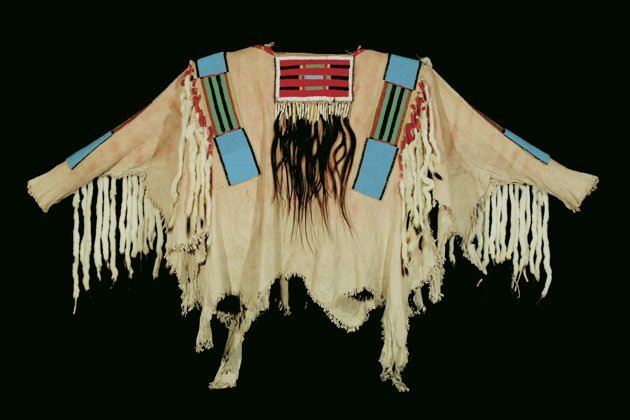
Chief Joseph of the Nez Perce War Shirt

This photo released by the Coeur D’Alene Art Auction shows a war shirt worn by Chief Joseph of Nez Perce tribe that sold for $877,500 at auction.(AP Photo/Coeur D’Alene Art Auction, Michael Scott)

“It does not require many words to speak the truth.” 

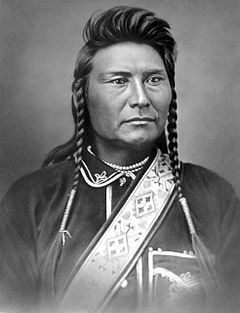
These infamous words were spoken by Chief Joseph of the Nez Perce.  Chief Joseph, born in 1840, died in 1904, is best remembered for his resistance to the US Army’s attempts to forcibly remove his tribe from their Oregon home to a reservation in Idaho.

While initially friendly to the Europeans, an 1863 gold rush caused much coveting of the Native land. 

Joseph the Younger succeeded his father as leader of the Wallowa band in 1871. Before his death, the old Chief counseled his son:

My son, my body is returning to my mother earth, and my spirit is going very soon to see the Great Spirit Chief. When I am gone, think of your country. You are the chief of these people. They look to you to guide them. Always remember that your father never sold his country. You must stop your ears whenever you are asked to sign a treaty selling your home. A few years more and white men will be all around you. They have their eyes on this land. My son, never forget my dying words. This country holds your father’s body. Never sell the bones of your father and your mother.
 

Joseph commented “I clasped my father’s hand and promised to do as he asked. A man who would not defend his father’s grave is worse than a wild beast.”

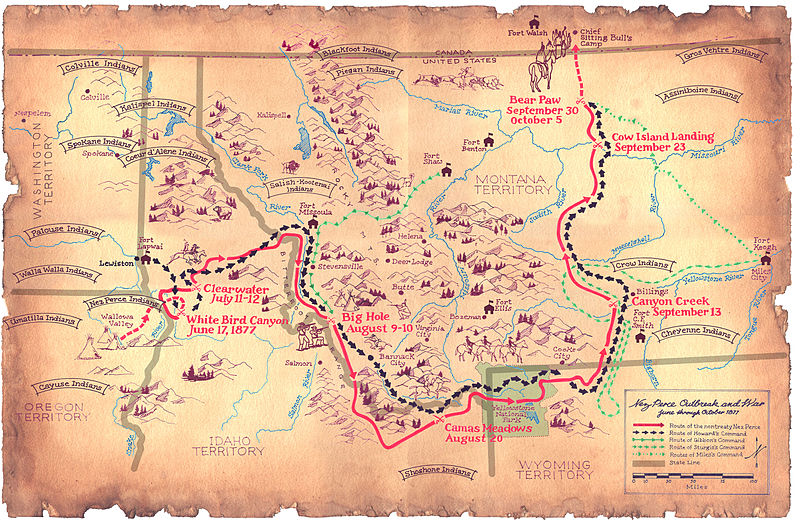
Joseph did indeed defend his land, but he always advocated peace over conflict.  In 1877, when the government reversed an earlier decision, the Nez Perce were forced into what was known as the Nez Perce War.  The Nez Perce didn’t moved to Idaho, but they hardly won the war.  Many were killed.  Many more froze or starved, and even though the surrender negotiations included safe passage home for the Nez Perce, instead the survivors were shipped to Fort Leavenworth, Kansas as prisoners in unheated rail cars, held for nearly a year, and then shipped to Oklahoma for another 7 years.  Most who didn’t die during the war, or as a result of the war, died of epidemic diseases while confined. 

The map below shows the path of the Nez Perce people.  It would have been during this time that Chief Joseph would have worn the war shirt.

Chief Joseph survived the ordeal and lobbied endlessly for his people.  Some Nez Perce did settle on a reservation in Idaho, but Chief Joseph and his group were forced to live on the Colville Indian Reservation in Washington State, far from his father’s bones in the Wallowa Valley in Oregon.  

You can read about Chief Joseph in his own words here:  http://digital.library.cornell.edu/cgi/t/text/pageviewer-idx?c=nora&cc=nora&idno=nora0128-4&node=nora0128-4%3A7&frm=frameset&view=image&seq=420

Posted in Nez Perce | Leave a comment

A Report on Research of Lumbee Origins by Robert K. Thomas – Part 13 – The Social History of the Early Lumbees

A continuation of Robert K. Thomas’s Report of Research on Lumbee Origins.  This was transcribed from a photocopy of an original report at the Wilson Library, UNC, Chapel Hill, NC in June of 2012.   Any comments I have will be made at the end of these transcriptions and it will be evident that they are mine.  To see more about Robert K. Thomas, go to:  http://works.bepress.com/robert_thomas/

(P 38) Part IV – The Social History of the Early Lumbees

Now, what I will do in this section is to take Lumbee traditional history plus Wes White’s historical survey of North Caroline in the 1700s and Michelle Lawing’s genealogical work and put them together into a coherent picture.  If you simply look at my oral history material it appears that three tribes congregated in Robeson County; two Siouan speaking tribes and one Algonkian speaking tribe came together to form the Lumbees.  But the situation is much more complicated than that and when you put Lawing’s and White’s material together with mine, a more complicated but consistent historical picture emerges.

Michelle Lawing’s material shows that in 1850 one finds families bearing the same names we find today in Robeson County congregated along the frontier in Edgecombe and Granville Counties, NC.  It is further apparent that these families are a cohesive social group; that is to say, sometimes they are living in each other’s households, they are marrying together, they are witnessing wills for one another and so forth.  These families had a cohesion apart and separate, to a degree, from the rest of the families in that area.  I would estimate there were some 25 to 40 families or family names involved in this social group.

Their race as recorded on tax lists and other documents varies.  Most individuals are listed most commonly as mulattoes.  In that time in NC the legal category mulatto meant having one white parent and one non-white parent.  The non-white parent could be either Indian or Negro.  Some individuals in these families are listed as white, a few are listed as black and occasionally an individual is listed as Indian.  In the case of listing as Indian, (p 39) this meant fullblood Indian to all apparent purposes; that is, someone both of whose parents were Indian.  In other words, in this time the government of NC was legally listing individuals as to race, not whether people were part of any particular community.  There would be no such thing legally in the colony of NC as a mixed-blood Indian.  By definition, a mixed blood Indian would be a mulatto. 

If you look at these families internally, once again the racial classification of individuals within the family is quite varied.  It is apparent that in some of these families spouses were of different races; a black man married to a white woman or a white man married to someone listed as a mulatto.  Of course within the family household there are differences between generations, as one would expect if the parents were from different racial backgrounds.  But it is also true that as these families moved from one area to another, their racial classification might very well change so individuals go from black to white, from white to mulatto and so forth.  It appears to me that this racial classification was simply determine visually by the authorities; if you looked of mixed background you were listed as mulatto, if you were fairly dark you were listed as black, if you looked white you were listed as  white, and if you looked strongly Indian you were listed as Indian.

One of the apparent things about this group of families is that they were forming a very cohesive group, and the question is why this cohesion?  My best guess at this point in our research is that what made for the cohesion of this group was a feeling of being Indian.  There were fullblood Indians in the group and the (p 40) majority of people in this group were probably of least partial Indian background.  My best guess is that they were mixed blood Indians with a strong feeling of being Indian.  Of course, this is a guess because there is no direct evidence that this group in 1750 identified as Indians. But I have to ask myself as a social scientist why the cohesion.

It is apparent that these families are from different areas of the country.  Some are from extreme northeastern NC and some are from Virginia.  Most of them were probably not related before they began to cluster together in that frontier area, nor did there appear to be any social exclusion that would thrust them together.  The racial situation in NC around 1750 was very fluid and on the frontier even more so.  Therefore, there is no reason to assume that these families were simply social deviants who were pushed together because of a caste situation.  In fact, if you go to that area of NC today there are a great many white people who will tell you that they have Indian blood and blacks who will tell you they have both white blood and Indian blood.  Now, of course, no whites in that area will tell you they have black blood but it appears to me simply from visual evidence that there are a great many white in that area who do have black blood.  This region was pretty socially fluid in 1750 as were most frontier situations, even in the South.  This, kinship cannot explain the reason for this social cohesion nor can social exclusion.  This is not a community of free blacks.  There were very few free black in NC at that time, particularly on the frontier.  Free blacks, thus, could not and probably would not have formed the core of such a community, particularly in the absence of any social exclusion.

(P 41) It is true that there were blacks as part of this social group but they appear to be few in number and to have attached themselves to a core group.

It is my contention that this group were refugee Indians from further east in NC and from VA.  There was a couple of things we know about social conditions in southeastern VA just prior to this period, between 1720 and 1740.  One is that there was a lot of racial intermixture in northeastern NC and southeastern VA in this period, especially between Indians and whites; so much so that authorities were very concerned about what they considered a “problem.”  Secondly we know that several Indian groups in the area lost their lands in the 1730s and 1740s and disappear from history – the Yawpim and Potoskite in extreme northeastern NC and the Nansemond in VA.  By the 1730s the Yawpim and Potoskite probably did not number more than a dozen families each although the Nansemond appears to have been a much larger group. 

Now, Indian tribes simply do not disappear because they disappear from the records.  A number of things happen to such Indian tribes.  Indian tribes are not divisions of some larger unit.  Each Indian tribe is a small national group in and of itself and it is very hard to do away with whole national groups.  National groups tend to persist if possible.  Now, it is true that sometimes American Indian “tribes” (national groups) have disappeared through being exterminated by military hostilities and disease.  Usually, however, these factors have simply cut down the population of an American Indian tribe without exterminating them completely, although in some few instances there has been extermination.  On rare occasions (p 42) an Indian tribe will be assimilated by the white or black population that surrounds them.  This has been true of a very few Indian groups.  Generally, what happens is that tribes merge together to form larger groups if they are small, and in dire circumstances sometimes they will be assimilated by a larger Indian group.  The Six Nations are an example of a large confederation of tribes which incorporated quite a few small eastern Indian tribes.  The Catawba are another example of such a process.  The Fort Berthold Indians of North Dakota who are representatives of three tribes have in recent years merged together to make one tribe.  The usual process is that a tribe will get “whittled down” by disease and warfare and then assimilate into a larger tribe or more often merge with other small tribes to make a new group.  Rarely, as in the case of the Miami, does a small group of Indians become assimilated into the population which surrounds them.  If there are people of a national group left around, no matter how small, they would tend to resist assimilation.  Indian tribes usually prefer a general Indian peoplehood, by merging with other tribes, over against losing their local peoplehood by assimilating into white or black society.  Community and identity are a very precious commodity to most people and although many middle class Americans opt for a raising of rank at the sacrifice of community, relatives and tradition, very few other peoples of the world are apt to do this, particularly tribal peoples.

So the question is, what became of these three small groups after they lost their lands?  I would guess, even if I knew nothing at all about the historical situation, that these groups migrated (p 43) west and either bunched up together or attached themselves to some larger Indian group.  In fact, something of a the sort did happen to these three small tribes.  I think that even before these tribes had lost their land they had taken in a great deal of white blood and maybe some black blood and were fairly acculturated.  I would guess that after the land loss these three tribes then fragmented and as individual families made their way to the frontier regions of Edgecombe and Granville Counties by 1750.

There is some indirect evidence that this was the case.  For instance, we find prominent among this social group a family by the name of Bass and a family by the name of Goins.  We know historically that there were, in 1750 , Indians in Virginia named Goins and Bass.  There was a very prominent family in this social group called Kersey.  We know that there are modern day Kerseys in Virginia who, not too many generations ago, were American Indians.  The same is true of a family by the name of Powell.

As far as connections to the Yawpim and Potoskite of northeastern NC most evidence is even more indirect than the evidence which I have presented for a connection with Virginia.  Most Indians of this time and region adopted their names from those of their white neighbors.  We have found one name which may be an Indian patrinym, Braveboy.  We know it is not a British name and we, therefore, assume it must be an Indian name.  (Lumbee tradition says it is indeed an Indian name.)  But we are not sure whether the Braveboys are from Virginia or whether they are native to northeastern NC.  Many names on this frontier region in this “mysterious” social group are names from northeastern NC – (p 44) Lockleer, Lowery, etc.  But we can trace only one definitely Indian family to extreme northeastern NC.  They are a family of Hatcher who indeed are legally listed as Indians and who appear to have come from the Little River region of northeastern NC, probably Yawpim Indians.  Also, we know that Taylor was the name of an Indian family in the Yawpim area.  Taylor appears later associated with these frontier families.  Jones and Sanderson were prominent white families who lived adjacent to the Potoskite and we find these family names also showing up later associated with the group of families from Edgecombe and Granville Counties. 

I cannot explain the behavior of this group of families in this area very satisfactorily unless I assume, even if I didn’t have indirect evidence, that they were primarily mixed blood refugee Indians.

In the 1750s the Saponi were living in Granville County.  By 1766 they had disappeared.  One local historian said that they disappeared by marrying other races.  I am assuming also at the point that this group of refugee mixed blood Indian families from Virginia and northeastern NC were merging with the Saponi.  Once again, I have some indirect evidence for this.  One cannot find any descendants of the Saponi in the region of Granville County anymore than one can find the descendants of the Yawpim and Potoskite in northeastern NC.  The Saponi undoubtedly did not disappear in a puff of smoke and in fact, one author said, as I quoted above, that the Saponi disappeared by marrying other races.  I would contend that these “other races” were these refugee mixed blood Indian families, as I intend to call them.  We know that two (p 45) of these families, the Lockleers and Chavis’, lived immediately adjacent to the Saponi enclave in Granville County.  We also know that the first generation of Lockleers in Robeson County; that is, Lockleers born in the 1760s were said to be the last speakers of an Indian language in Robeson County – Will Lockleer, Elizabeth Lockleer, Randall Lockleer, etc., who all died in Robeson County before the Civil War.  Unless the Lockleers were speaking Potoskite or Yawpim, which is possible, I would assume that their mother was probably a Saponi Indian. 

In this same time in 1760, new mulattoes appear in the records, Gibson and Collins, for instance. Both of these families appear early in Robeson County.  Some Collins are still in Robeson County, but the Gibsons all moved further south into SC where they are now a numerous Indian family.  Gibson was a prominent early white family in Orange County which is just west of Granville County and Collins was a name among the Saponi, one of the few cases of names that we can authenticate as a Saponi name.  This, of course, does not mean that the Collins’ could not have come from somewhere else since Collins was a fairly common name.  I think the probabilities are that, of these new mulattoes, Gibson was Saponi in the female line and Collins in the male line.  The Saponi, thus, disappear from history at the same time that this new group of mulattoes emerge in this area.  No trace of the Saponi can be found in the area today.  Mr. Dawley Maynor’s phrase, Epta tewa newasin, is the best evidence I have that this group of refugee tribals merged with the Saponi on the frontier in Edgecombe and Granville Counties. But other indirect evidence also points in this direction.

 (P 46) In the 1750s and 1760s this group of people who I will now call Refugee Saponis began to fragment and move off in different directions out of Granville and Edgecombe Counties.  The frontier had bypassed them.  Some people simply kept on the frontier and moved straight west.  By 1810 they were collecting on the Tennessee-Virginia border on what is called Newmans Ridge, near Sneadville, TN and Blackwater, Va.  From there they sent out colonies both north, south and west.  In the 1890s they were called the Melungeons.  Today most of them refer to themselves, that is these Indians originally from Newmans Ridge who now live in pockets all through the Cumberland region, as Cherokees.

A few “Refugee Saponis” in the late 1750s moved into the region of Fayetteville in Cumberland County, NC and then in the 1760s began to move into the recent Lumbee area in Robeson County. 

Other families moved southeast to the Neuse, probably in the 1760s.  There was a famous military man by the name of Nash, originally from Virginia, who lived in this frontier region of Granville and Edgecombe County.  Nash moved to the area of New Bern, NC in the 1760s.  I would presume that many of these Refugee Saponi had probably served under him in different military engagements on the frontier and they may have followed him down to the region of New Bern.  At the same time, the Hatteras of Lake Mattasmuskeet may have started to move over to the Neuse.  But this is purely a guess.  It may very well have been that the Hatteras moved to the region of New Bern in the late 1760s and that people from the Granville-Edgecombe area began to move to this region where they (p 47) could find another Indian community.  I do know that Nash is a very common name among the Indians in southwest Virginia, that Nash was very involved in Indian affairs and that he went to the region of New Bern sometime in the 1760s.  But whether or not Indians followed him there is a guess, but a good historical “lead.”

Posted in Lumbee, Miami, Nansemond, Poteskeet, Saponi, Yawpim | 1 Comment

A Report on Research of Lumbee Origins by Robert K. Thomas – Part 12 – Traditional Lumbee History – The Saponi

A continuation of Robert K. Thomas’s Report of Research on Lumbee Origins.  This was transcribed from a photocopy of an original report at the Wilson Library, UNC, Chapel Hill, NC in June of 2012.   Any comments I have will be made at the end of these transcriptions and it will be evident that they are mine.  To see more about Robert K. Thomas, go to:  http://works.bepress.com/robert_thomas/

The third tribe which this oral tradition points to is the Saponi, but admittedly this is much the weakest tradition.  No one in Robeson County or in the literature specifically states that the Robeson County people are Saponi.  This contrasts with the Hatteras and with the Cheraws.  However, Lumbee elders were said by most of the authors of the literature which I surveyed to have universally declared that the Lumbees came from Roanoke in Virginia.  McMillan took Roanoke to mean Roanoke Island and said that the Lumbees generally called northeastern North Carolina Virginia.  Later he found that the Lumbee elders referred to the Pamlico Sound area as Roanoke.  I doubt , however, that the Pamlico Sound area was ever referred to as Virginia by the Lumbee elders.  There is certainly evidence that the Pamlico Sound area was referred to as Roanoke but in the literature in the 1700s it is never spoken of as being in Virginia. 

Another Roanoke, of course, is the Roanoke River region.  It appears from reading over documents in the 1700s and 1800s that (p 34) rivers were very important identity markers in NC and if you came, for instance, from near the Neuse River you were spoken of as “Coming from the Neuse”; not the Neuse River or not the Neuse River region.  The same thing applied to the Roanoke River.  People of that area were spoken of as “Coming from Roanoke.”

We know historically that the Saponis lived most of their recorded history either directly on or near the Roanoke River, in earliest times in Virginia and in later times just over the line in NC.  So that “Roanoke in Virginia” certainly could refer to the Saponi.  McMillan is right that Roanoke refers to the Pamlico County but “Roanoke in Virginia” fits the Roanoke River region much better.

The other bit of evidence which I have for a Saponi element in Robeson County Indians is a phrase given to me by Rev. Dawley Maynor, a phrase in what he called “the Indian language.”  The phrase is – “Epta Tewa newasin.”  That appears to me to be a Saponi phrase.  Mr. Maynor says it means, “I love you, Lord Jesus.” And that it was taught to him by his great-grandmother Susan Dial who was born about 1830 or 1840.  One word in that phrase can be shown to be a Saponi word, tewa.  It apparently means dead.  From what I can make of the phrase, I would translate it literally, “Raise-up-from-the dead one, I love you.”  Raised up from the dead meaning resurrected one of Jesus; Epta – to raise up, tewa – dead, newasin – I love you.  Now it is possible that this could be a Cheraw phrase but we have no record of the Cheraw language.  We do have this Saponi word, tewa.

In the 1670s the Saponi were living on the Roanoke River near where it crosses into NC, somewhere between the modern (p35) town of Roanoke Rapids in NC and the Virginia line.  They shortly moved to the region of Clarksville, VA further west near the Occaneechi Indians.  Archaeologist and historians have put them in the area when the famous Bacon’s Rebellion in Virginia broke out.  This was a rebellion of settlers against the Indian policy of the Crown.  Virginia settlers simply began to wipe out the Indians in retaliation for certain acts they believed Virginia Indians had perpetrated on them.  At this time, I the late 1670s, the Saponis fled from the region of Clarksville, VA further west to the Yadkin River where they were encountered by explorers around 1700.  Shortly after 1700 they started moving east, I would suppose returning to their old country, and were just west of the Tuscarora area in 1708 or 1709.  When the Tuscarora War broke out they moved to Bertie Co., the neutral Tuscarora area, in order to, I would guess, escape the Tuscarora War.  The neutral Tuscarora area was a safe area.  The later neutral Tuscarora reservation sometimes was referred to as Saponi Town.

In about 1714 Governor Spotswood of Virginia established Fort Christiana a few miles south of modern Lawrenceville, VA near the VA and NC line, and the Saponi, Occaneechi and Tutelo went to that area to live.  In the 1720s right after making peace with the Six Nations the Tutelo left Fort Christiana for the Six Nations country.  The Saponi and Occaneechi stayed at Fort Christiana.  The Saponi during the period absorbed the Occaneechi.  In 1728 the Saponi got into a war with the Tuscaroras and Meherrin, abandoned Fort Christiana and went to the Catawba country.

In the early 1740s some of them left the Catawba county.  It appears that one band headed north.  They were reported in northern Virginia in 1754 and in a couple of years were on the Susquehanna in Pennsylvania.  In a few more years they were in the Six Nations county in New York and were adopted by the Six Nations, presumably no one is quite sure what happened to this band of Saponi.  After the Revolution their kindred, the Tutelo, moved to the Six Nations Reservation on Ontario where some of their descendants live in the western end of the Six Nations reserve near Brantford.  According to anthropological research done in the 1890s, one old Tutelo said that the Tutelo and Saponi parted at Niagara Falls and that they saw no more of the Saponi.  I would guess that the Saponi integrated with the Tuscaroras around Niagara Falls or more probably with the Cayuga on the Cataragus Reservation south of Buffalo.  It is even possible that some of the Saponi, in individual family groups, wandered over into Ontario later and were incorporated with the Munsee near London.  More research will have to be done before we know what happened to the Saponi in NY. 

Another band of Saponi appears to have gone, in 1743, to Granville Co., NC to live on the land of Colonel John Eaton, a very famous Indian fighter originally from Virginia, and a man who had traded with the Catawba and spoke the Saponi language.  They lived there from 1743, according to local historians, to the 1760s.  Then according to one local historian, they disappeared by “marrying with other races.”

There are two statements in Lumbee oral history which appear to me to speak of a Saponi origin.  This is over and above the Lumbee statement that the Lumbees come from Roanoke in Virginia and Mr. Dawley Maynor’s phrase.  One is that the Lumbee elders, in (p 37) 1800, told McMillan that they had relatives in Canada west of Lake Ontario.  West of Lake Ontario is the Six Nations Reserve, and I take it that Lumbees in the 1880s were referring either to the Tutelo or to some Saponis who had accompanied the Tutelo.  The Tutelo and Saponi, according to Lawson, spoke similar languages and had inter-married a great deal in their association in the late 1600s and 1700s. 

The other tradition is one that says that in the old days the Indians (Lumbees) were driven across the Roanoke River by bad Indians.  Now this could very well be a reference to the war with the Tuscarora in 1728 when the Saponi abandoned Fort Christiana and moved south across the Roanoke to the Catawba county.  Granted, this is “reaching” historically, but I can’t think of any other tribe to which to attribute this last statement and there are other evidence which point to the Saponi – the language phrase given by Mr. Dawley Maynor, the notion of coming from Roanoke in Virginia, and having relatives west of Lake Ontario.  I can’t think of another tribe that I could substitute here for the Saponi and for whom it would be possible to have descendants in Robeson County.

In fact, even without this traditional history it is the Hatteras, the Cheraw and the Saponi which would be the logical choice as the key tribes in the Lumbee “puzzle.”  Just looking at the historical records and the map of Indians in the 1700s plus the general flow of migration and settlements, would lead one to pick these tribes to be the ancestors of modern Indians in Robeson County.  But I think the Lumbee traditional history certainly establishes the Hatteras connection, fairly well establishes the Cheraw connection and points to a probable Saponi connection.

Roberta Estes:  The Lumbee reference to being driven across the Roanoke by “bad Indians” could also be in reference to the Tuscarora War in 1711-1712 where Barnwell, with Yamasee Indians, pursued and defeated the Tuscarora.  Not all Tuscarora were killed or captured.  Those that survived escaped by whatever means possible which could easily include crossing the Roanoke River seeking safety in Virginia.  The Tuscarora living closest to the Roanoke in Bertie County, Chief Hancock’s group, attempted to remain neutral.

Posted in Catawba, Cayuga, Cheraw, Lumbee, Meherrin, Munsee, Ocaneechi, Saponi, Tuscarora, Tutelo | 11 Comments