The Legend of Cucklemaker, an Indian Chief

In the Bertie County, NC Heritage (1722-2010) book, I found a nice summary of a story that floats around the internet in pieces.  I can’t vouch for accuracy, but I surely thought you might enjoy the story.  It was submitted by Christine Cale Johnson from Windsor, NC, as follows:

This version of “The Legend of Cucklemakeer, an Indian Chief” was handed down through the following family line:  Charney Cale b 1779, Duncan L. Cale b 1817, Franklin Pierce Cale b 1854, Albert Duncan Cale b 1891 and Christine Cale Johnson b 1918.

Legend has it that Cucklemaker, an Indian Chief of the Tuscarora Tribe, married a French Huguenot widow, Elizabeth Marie Calais Duneleaux, about 1775.  Elizabeth Already had two children by Henry Duneleaux.  Cucklemaker anglecized his name to John Cale in honor of Elizabeth’s father, Jean Calais.

The legend has been passed down through the generations in the Cale family that John, being an Indian, was not accustomed to the ways of the white man.  He refused to pay taxes on his property. The sheriff confiscated John’s horses for payment of uncollected taxes.  John did not think the land should be taxed.  He believed the land belonged to “Mother Earth” and not any one man. Thinking he wasn’t doing anything wrong, he ‘stole back’ his horses.  It appeared that this happened more than once.

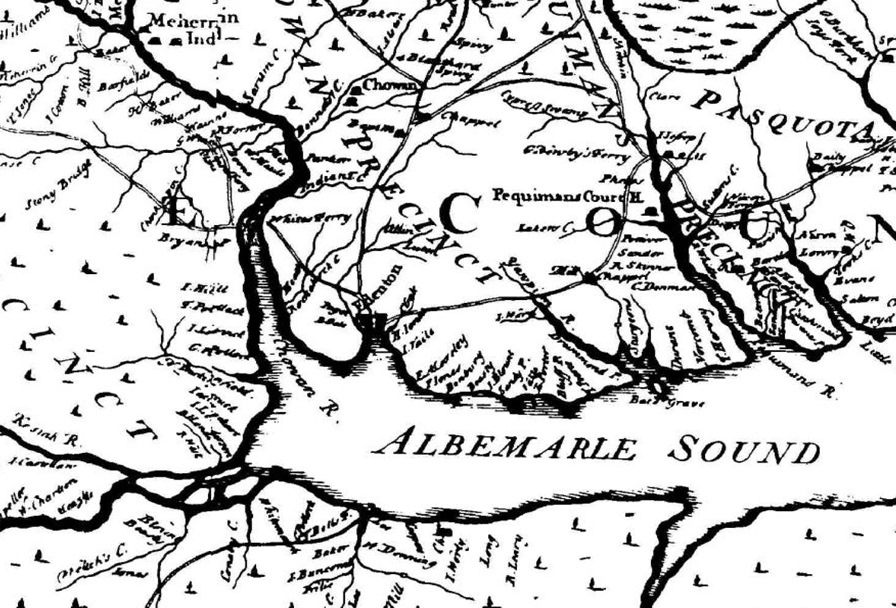
Sometime later, on our about 1792, John Cale was killed by ambush.  He was shot in the back while sitting on a log eating his lunch.  The murder was said to have occurred near where Ross Baptist Church is today.  John of John Cale’s descendants were told that he was killed by the sheriff because he kept stealing his horses back, but not all versions of the story agree with this.  Others say he was killed by the “white people” of Bertie County for trying to remain neutral during clashes between the local Indians and the “whites.”  The killer was never apprehended.

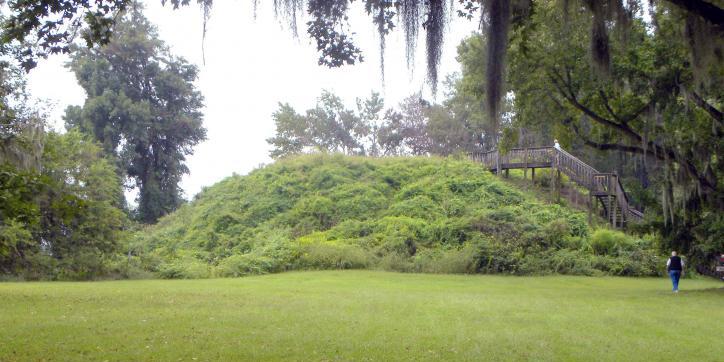
John lived near Cucklemaker Swamp, and it is believed that he was buried in an Indian burial ground beside the stream.

John Cale had two children, Charney and Tilury.  Little is known about Tilury, but Charney became well known in Bertie County.  He has many descendants who have been told the same story about the “Legend of John Cole, Cucklemaker, an Indian Chief.”

Charney married Elizabeth Harmon, and they had 13 children: Windfield, Duncan L., Gilbert Russell, Martha, Amilia, Mary E., Elizabeth, Robert M., James, Charney H., Sarah (Sallie), Penelope and Graham.  Charney had two illegitimate children, Freeman J. and Jesse.

For reasons unknown, Charney changed his name to Charney C. Dundelow.”  It has been said that by using the name Dundelow he gained respectability and disassociated himself from the Indian name “Cale.”  He served in the army prior to and during the War of 1812 using the name Charney C. Dundelow.  After using the name Dundelow for 40 years, he changed his name back to Charney Cale.  The name Cale was carried on by his descendants.

<End of story.>

Not being able to just leave well enough alone, I had to see what I could find in the records about John Cale or Cucklemaker.

Cucklemaker married about 1775.  His son was born about 1779.  This implies that Cucklemaker was born at least by 1755, and likely significantly earlier, if he was a chief.  A 20 year old chief would not have had time to prove himself worthy of the chief role, so let’s assume he was at least age 30 when he married.

In any case, the Tuscarora were signing deeds in Bertie County beginning in 1775 and ending with a petition in 1780.  Of the final count of Tuscarora in Bertie Co., we have the names of 52 on various deeds.  There is no Cucklemaker.  All of these people have anglicized names.  Of these, the chiefs and head men are identified as such.  John Cale is not among them.  There are two instances of a John Cain, and there are other Cain men as well, so this is likely not John Cale if he took the surname to honor his wife after his 1775 marriage to her. 

The land owned by the Tuscarora was exempt from taxes.  The Tuscarora sold the land in the 1770s in order to leave and migrate to New York.  Those deeds and related legislative petitions are the only reason we have records of their names.  The tribe did in fact leave, leaving only a few “old families” behind.  They returned a final time to take those families with them in the very early 1800s.  They declared that any who did not migrate were no longer in the tribe.  There were only 3 individuals left that we know of, one Esther Gibson, one girl whose name is not mentioned, and one young boy who eventually betrayed the trust of the Tuscarora.  Clearly none of these are Cucklemaker.

If Cucklemaker did stay in Bertie County, he would in fact have had to move from the former Tuscarora lands and he and his wife would then have had to pay taxes like all non-Indian citizens.  Taxes were only exempt for Indians if they were living on a reservation.  Tax lists do exist for some years for Bertie County.  They have been transcribed for 1755-1764, 1765-1771 and 1772-1784.  While he would not be on the lists through about 1777, he clearly should have been on the lists after 1777 through 1784.   I don’t own a copy of the book of transcriptions, but checking the index of the book for Cale (or maybe Kale) of even Cucklemaker would be very enlightening.  Failing that, I’d check for his wife’s surname. Maybe one of our subscribers has access to these records.

Marriage records also exist for Bertie County from 1762 through 1868.  It’s very unlikely that a European woman would accept any type of marriage other than a legal one.  Illegitimacy had ramifications other than social in that time and place.  The mother could be and generally was prosecuted and whipped or fined, or both.  The children were considered bastards and took the mother’s last name.  They did not inherit from their father.  Given the social stigma and legal issues conferred by not marrying within the system, marriage records should be checked.  However, we have a fly in the ointment.  In 1715, North Carolina passed a law prohibiting intermarriage between whites and black and between whites and Indians.  Therefore, they could NOT have legally married within North Carolina.  So maybe, they slipped over the border into Virginia.  Nope, Virginia passed a similar law in 1691, and these laws were not repealed in either state until in 1967.

Ok, let’s try a different tactic.  Let’s look at the North Carolina records known at the Tax Census.  These records were taken between 1784 and 1789.  We do find a John Kail in Bertie County, but near to him we also find a Cader Kail, Dempsey Kail and Rebecca Kail who was a widow.  So this Kail family is clearly not that of John Cale who just adopted the surname in 1775 to honor his wife.  This Kail family has several members and has obviously been in Bertie for some time, or a group of them arrived together from elsewhere.  We know that Rebecca was not his widow as Cucklemaker’s wife’s name, according to this story, was Elizabeth. 

We know that when the 1790 census was taken, the Tuscarora were long gone and living in New York.  Cucklemaker, John Cale, would have been enumerated in the census, since he was not an Indian living on “Indian lands.”  There is no John Cale, Kail, or anything similar in Bertie County.  There are a number of Cale families in Perquimans County, but that’s not Bertie. 

One last possibility exists, checking to see if a DNA project exists that includes the DNA of the Cale family.  A Cale family project does not exist, so I checked the surname Cain.  Checking the Cain family project, it does not appear that in or near Bertie County, a Cain family has tested.  http://www.familytreedna.com/public/Cain-Caine/  Furthermore, there are no Cain family members who have Native American haplogroups.

And as a last resort, checking Ysearch for the Cale or a Native Cane family is futile as well.

There are however, in the various deed books, a Cucklemaker swamp and creek  mentioned, so this legend is not new and existed as a place-name historically. 

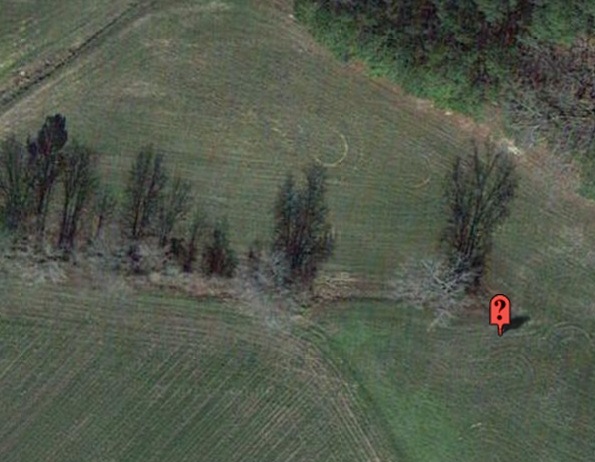
The Indian Mound reputed to be the burial location of Cucklemaker is shown on Find-A-Grave. 
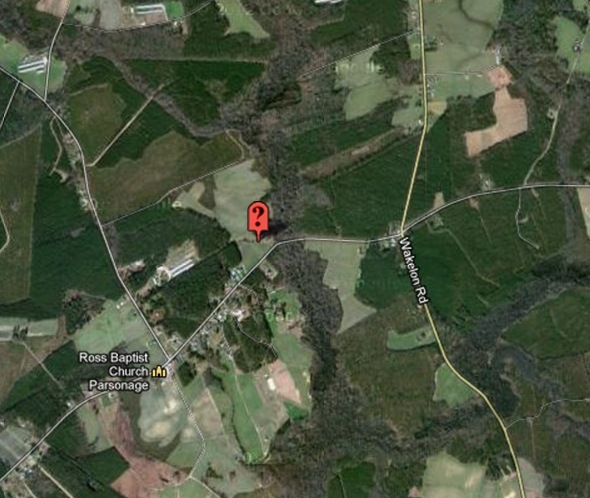
Charney Cale, son of Cucklemaker, is shown to be buried here as well, along with his mother and wife.  Charney was a member of the Ross Baptist Church, shown on the map above in 1822.
You can read a slightly different story with some additional details here:  http://www.rootsweb.ancestry.com/~ncbertie/cuckle.htm
Posted in History, Tuscarora | 25 Comments

The Dreaded “Middle East” Autosomal DNA Result

One of our blog followers, Ron, asked this question:

“My late father and his brother were born and raised on Hatteras Island which was a very isolated community until relatively recent times. Curious about their genetic ancestry, I had my uncle do the Family Tree DNA Family Finder test. His results for the Family (Population) Finder were:

Europe (Western European) – Orcadian 91.37% ±2.82%

Middle East – Palestinian, Bedouin, Bedouin South, Druze, Jewish, Mozabite 8.63% ±2.82%

The 8.63% Middle East was surprising since most if not all of his ancestors, going back 4 or more generations, were born on the OBX (Outer Banks). Most of the original families on Hatteras Island trace their roots back to the British Isles and western Europe.

Since my mother’s parents were immigrants from eastern Europe, I thought it would be interesting to know what contributions my maternal grandparents added to my genetic ancestry, so I submitted my DNA samples for the same test.  The Population Finder test showed that I was Europe Orcadian 100.00% ±0.00%. I was shocked that some other population did not show in the results.

Can you help me understand how the representative populations are determined and why Middle East didn’t show in my sample?”

Yes, indeed, the dreaded “Middle Eastern” result.  I’ve seen this over and over again.  Let’s talk about what this is and why it might happen.  As it happens, the fact that Ray is from Hatteras Island provides us with a wonderful research opportunity, because it’s a population I’m quite familiar with.

Given that Dawn Taylor and I administer the Hatteras Families DNA Projects (Y-line, mtDNA and autosomal), I have a good handle on the genealogy of the Hatteras Island Families.  They are of particular interest because Hatteras Island is where Sir Walter Raleigh’s Lost Colonists are rumored to have gone and amalgamated with the Hatteras Indians.  The Hatteras Indians in turn appear to have partly died off, and partly married into the European Island population.  Both the Lost Colony Project and the Hatteras DNA Projects at  http://www.familytreedna.com/public/HatterasFathers and http://www.rootsweb.ancestry.com/~molcgdrg/hatteras/hifr-index.htm are ongoing and all Hatteras families are included.

As part of the Hatteras families endeavor, Dawn and I have assembled a data base of the Hatteras families with over 5000 early settlers and their descendants to about the year 1900 included.  What Ron says is accurate.  Most of the Hatteras Island families settled on the island quite early, beginning about 1710.  Nearly all of them came from Virginia, some directly and others after having settled on the NC mainland first for a generation or so in surrounding counties.  By 1750, almost all of the families found there in 1900 were present.  So indeed, this isolated island was settled by a group of people from the British Isles and a few of them intermarried with the local population of Hatteras Indians.

Once on the island, it was unusual to marry outside of the island population, so we have the situation known as endogamy, which is where an isolated population marries repeatedly within itself.  Other examples of this are the Amish and Jewish populations.  When this happens, the founding group of people’s DNA gets passed around in circles, so to speak, and no new DNA is introduced.

Typically what happens is that in each generation, 50% “new” DNA is introduced by the other parent.  When the new DNA is from someone nonrelated, it’s relatively easy to sort out using today’s DNA phasing tools.  But when the “new” DNA isn’t new at all, but comes from the same ancestral stock as the other parent, it has the effect of making relationships look “closer” in time.

Let’s look at an example.

You carry the following average percentages of DNA from these relatives:

  • Parents 50% from each parent
  • Grandparents 25%
  • Great-grandparents 12.5%
  • Great-great-grandparents 6.5%

As you can see, the percentage is divided in each generation.  However, if two of your great-grandparents are the same person, then you actually carry 25% of the DNA from that person, not 12.5.  When you’re looking at matches to other people in an endogamous community, nearly everyone looks more closely related than they are on paper due to the cumulative effect of shared ancestors.  In essence, genetically, they are much closer than they look to be on a genealogy pedigree chart.

Ok, back to the question at hand.  Where did the Middle Eastern come from?

Looking at the percentages above, you can see that if Ray’s Uncle was in fact 8% (plus or minus about 2%, so we’ll just call it 8%) Middle Eastern, his Middle Eastern relative would be either a great-grandparent or a great-great-grandparent.  Given that generational length is typically 25 to 30 years, assuming Ray’s birth in 1960 and his uncles in 1940, this means that this Middle Eastern person would have been living on Hatteras Island between 1835 and 1860 using 25 year generations and between 1810 and 1840 using 30 year generations.  Having worked with the original records extensively, I can assure you that there were no Middle Eastern people on Hatteras Island at that time.  Furthermore, there were no Middle Eastern people on Hatteras earlier in the 1800s or in the 1700s that are reflected in the records.  This includes all existent records, deed, marriages, court, tax, census, etc.

What we do find, however, are both Native Americans, slaves and free people of color who may be an admixture of either or both with Europeans.  In fact, we find an entire community adjacent to the Indian village that is admixed.

We published an article in the Lost Colony Research Group Newsletter that discusses this mixed community when we identified the families involved.  It’s titled, “Will the Real Scarborough, Basnett and Whidbee Please Stand Up” and details our findings.

These families were present on the island and were recorded as being “of color” before 1790, so the intermarriage occurred early in the history of the island.

Furthermore, these families continued to intermarry and they continued to live in the same community as before.  In fact, in May and June of 2012, we visited with a woman who still owns the Indian land sold by the Indians to her family members in 1788!  And yes, Ray’s surname is one of the surnames who intermarried with these families.  In fact, it was someone with his family surname who bought the land that included the Indian village in 1788 from a Hatteras Indian woman.

So what does this tell us?

Having worked with the autosomal results of people who are looking for small amounts of Native American ancestry, I often see this “Middle Eastern” admixture.  I’ve actually come to expect it.  I don’t believe it’s accurate.  I believe, for some reason, tri-racial admixture is being measured as “Middle Eastern.”  If you look at the non-Jewish Middle East, this actually makes some sense.  There is no other place in the world as highly admixed with a combination of African, European (Caucasian) and Asian.  I’m not surprised that early admixture in the US that includes white, African and Native American looks somewhat the same as Middle Eastern in terms of the population as a whole.  Regardless of why, this is what we are seeing on a regular basis.

New technology is on the horizon which will, hopefully, resolve some of this ambiguous minority admixture identification.  As new discoveries are made, as we discussed when we talked about “Ethnicity Finders” in the blog a few days ago, we learn more and will be able to more acutely refine these minority amounts of trace admixture.

If Ray’s ancestor in 1750 was a Hatteras Indian, and if there was no Lost Colonist European admixture already in the genetic mix, then using a 25 year generation, we would see the following percentages of ethnicity in subsequent generations, assuming marriage to a 100% Caucasian in each generation, as follows:

  • 1750 – 100% Indian
  • 1775 – next generation, married white settler – 50% Indian
  • 1800 – 25% Indian
  • 1825 – 13.5% Indian
  • 1850 — 6.25% Indian
  • 1875 — 3.12% Indian
  • 1900 – 1.56% Indian
  • 1925 – 0.78% Indian
  • 1950 – 0.39% Indian

Remember, however, about endogamy.  This group of people were neighbors and lived in a relatively isolated community.  They married each other.  Every time they married someone else who descended from someone who was a Hatteras Indian in 1750, their percentage of Native Heritage in the subsequent generation doubled as compared to what it would have been without double inheritance.  So if Ray’s Uncle is descended several times from Hatteras Indians due to intermarriage within that community, it’s certainly possible that he would carry 6-10% Native admixture.  There are also records that suggest possible African admixture early in the Native community.

So now to answer Ray’s last question about inheritance.

Ray wanted to know why he didn’t show any “Middle Eastern” admixture when his uncle did.

Remember that Ray’s Uncle has two “genetic transmission events” that differ from Ray’s line.  Ray’s Uncle, even though he had the same parents as Ray’s father, inherited differently from his parents.  Children inherit half of their DNA from each parents, but not necessarily the same half.  Maybe Ray’s father inherited little or none of the Native admixture.  In the next generation, Ray inherited half of his father’s DNA and half of his mother’s.  We have no way of knowing in which of these two transmission events Ray lost the Native admixture, or whether it’s there, but in such small pieces that the technology today can’t detect it.

Hopefully the new technology on the horizon will improve all aspects of autosomal admixture analysis and ethnicity detection.  But for today, if you see the dreaded “Middle East” result appear as one of your autosomal geographic locations and your family isn’t Jewish and has been in the states since colonial times, think to yourself ‘racial admixture’ and revisit this topic as the technology improves.  In other words, as far as I’m concerned, the jury is still out!

If you would like to take a DNA test, click here.

Posted in DNA, Hatteras, History, Lost Colony, Slaves | 28 Comments

Walter Plecker’s Target List

Walter Plecker, no matter how you color it, was an evil man.  His actions, for decades, were reprehensible.  He believed he was doing the right thing, but he was not.  He is most remembered for his “Racial Integrity Act of 1924” and the persistent hounding of people of color thereafter to assure that anyone “of color” or with even a drop of what he defined as “colored” blood was listed on any document that mattered as black, or in the vernacular of that day “negro” or “colored.”  However, he inadvertently did us a favor.  His zeal has turned out to help the very descendants of those he so mercilessly pursued.  Wouldn’t he be just mortified!  You can read about him here:  http://en.wikipedia.org/wiki/Walter_Ashby_Plecker

Plecker’s 1943 letter to Virginia hospitals, doctors and clerks of court, people who were responsible for completing and recording  birth, marriage and death certificates, provided unquestionable orders for how to record births to those of mixed race, along with a list of surnames to be watching for.  For us, today, his target list is a “sit up and take notice” list of those who might very well have Native American ancestry.  Assuredly, these people had mixed race ancestry, or there would have been no question about how to record their information in the first place. 

To read the blog about Atha Sorrells, the young woman to defy Plecker, and win, click here: https://nativeheritageproject.com/2012/03/29/atha-sorrells-the-woman-who-had-the-audacity-to-challenge-walter-plecker-and-won/

Plecker’s instructional letter and the “target list” follows:

January 1943

Local Registrars, Physicians, Health
Officers, Nurses, School Superintendents,
and Clerks of the Courts

Dear Co-workers:

Our December 1942 letter to local registrars, also mailed to the clerks, set forth the determined effort to escape from the negro race of groups of “free issues,” or descendants of the “free mulattoes” of early days, so listed prior to 1865 in the United States census and various types of State records, as distinguished from slave negroes.

Now that these people are playing up the advantages gained by being permitted to give “Indian” as the race of the child’s parents on birth certificates, we see the great mistake made in not stopping earlier the organized propagation of this racial falsehood. They have been using the advantage thus gained as an aid to intermarriage into the white race and to attend white schools, and now for some time they have been refusing to register with war draft boards as negroes, as required by the boards which are faithfully performing their duties. Three of these negroes from Caroline County were sentenced to prison on January 12 in the United States Court at Richmond for refusing to obey the draft law unless permitted to classify themselves as “Indian.”

Some of these mongrels, finding that they have been able to sneak in
their birth certificates unchallenged as Indians are now making a rush to register
as white. Upon investigation we find that a few local registrars have been per-
mitting such certificates to pass through their hands unquestioned and without
warning our office of the fraud. Those attempting this fraud should be warned
that they are liable to a penalty of one year in the penitentiary (Section 5099a
of the Code). Several clerks have likewise been actually granting them licenses
to marry whites, or at least to marry amongst themselves as Indian or white. The
danger of this error always confronts the clerk who does not inquire carefully as
to the residence of the woman when he does not have positive information. The
law is explicit that the license be issued by the clerk of the county or city in
which the woman resides.

To aid all of you in determining just which are the mixed families, we have made a list of their surnames by counties and cities, as complete as possible at this time. This list should be preserved by all, even by those in counties and cities not included, as these people are moving around over the State and changing race at the new place. A family has just been investigated which was always recorded as negro around Glade Springs, Washington County, but which changed to white and married as such in Roanoke County. This is going on constantly and can be prevented only by care on the part of local registrars, clerks, doctors, health workers, and school authorities.

Please report all known or suspicious cases to the Bureau of Vital Statistics, giving names, ages, parents, and as much other information as possible. All certificates of these people showing “Indian” or “white” are now being rejected and returned to the physician or midwife, but local registrars hereafter must not permit them to pass their hands uncorrected or unchallenged and without a note of warning to us. One hundred and fifty thousand other mulattoes in Virginia are watching eagerly the attempt of their pseudo-Indian brethren, ready to follow in a rush when the first have made a break in the dike.

Very truly yours,

W. A. Plecker, M.D.
State Registrar of Vital Statistics

Page 2

SURNAMES, BY COUNTIES AND CITIES, OF MIXED NEGROID VIRGINIA
FAMILIES STRIVING TO PASS AS “INDIAN” OR WHITE.

Albemarle: Moon, Powell, Kidd, Pumphrey.

Amherst (Migrants to Alleghany and Campbell): Adcock (Adcox), Beverly (this family is now trying to evade the situation by adopting the name of Burch or Birch, which was the name of the white mother of the present adult generation), Branham, Duff, Floyd, Hamilton, Hartless, Hicks, Johns, Lawless, Nuckles (Knuckles), Painter, Ramsey, Redcross, Roberts, Southards (Suthards, Southerds, Southers), Sorrells, Terry, Tyree, Willis, Clark, Cash, Wood.

Bedford: McVey, Maxey, Branham, Burley. (See Amherst County)

Rockbridge (Migrants to Augusta): Cash, Clark, Coleman, Duff, Floyd, Hartless, Hicks, Mason, Mayse (Mays), Painters, Pultz, Ramsey, Southerds (Southers, Southards, Suthards), Sorrells, Terry, Tyree, Wood, Johns.

Charles City: Collins, Dennis, Bradby, Howell, Langston, Stewart, Wynn, Adkins.

King William: Collins, Dennis, Bradby, Howell, Langston, Stewart, Wynn, Custalow (Custaloe), Dungoe, Holmes, Miles, Page, Allmond, Adams, Hawkes, Suprlock, Doggett.

New Kent: Collins, Bradby, Stewart, Wynn, Adkins, Langston.

Henrico and Richmond City: See Charles City, New Kent, and King William.

Caroline: Byrd, Fortune, Nelson. (See Essex)

Essex and King and Queen: Nelson, Fortune, Byrd, Cooper, Tate, Hammond, Brooks, Boughton, Prince, Mitchell, Robinson.

Elizabeth City & Newport News: Stewart (descendants of the Charles City families).

Halifax: Epps (Eppes), Stewart (Stuart), Coleman, Johnson, Martin, Talley, Sheppard (Shepard), Young.

Norfolk County & Portsmouth: Sawyer, Bass, Weaver, Locklear (Locklair), King, Bright, Porter, Ingram.

Westmoreland: Sorrells, Worlds (or Worrell), Atwells, Gutridge, Oliff.

Greene: Shifflett, Shiflet.

Prince William: Tyson, Segar. (See Fauquier)

Fauquier: Hoffman (Huffman), Riley, Colvin, Phillips. (See Prince William)

Lancaster: Dorsey (Dawson).

Washington: Beverly, Barlow, Thomas, Hughes, Lethcoe, Worley.

Roanoke County: Beverly. (See Washington)

Lee and Smyth: Collins, Gibson (Gipson), Moore, Goins, Ramsey, Delph, Bunch, Freeman, Mise, Barlow, Bolden (Bolin), Mullins, Hawkins. — Chiefly Tennessee “Melungeons.”

Scott: Dingus. (See Lee County)

Russell: Keith, Castell, Stillwell, Meade, Proffitt. (See Lee & Tazewell)

Tazewell: Hammed, Duncan. (See Russell)

Wise: See Lee, Smyth, Scott, and Russell Counties.

Posted in History, Laws | 22 Comments

Santee Indian Mound in Summerton, SC

Indian mounds in SC are quite rare.  Typically the mound building groups were further west and north.  However, South Carolina does have one that is quite remarkable and probably many more that are unrecognizable today.

The Santee Indian Mound is around 1,000 years old and served as a prehistoric ceremonial and subsequent burial site for the Santee Indians. This area served as the center for the confederation of agricultural villages all along the Santee River for thousands of years.  The Santee River was a major trade route.  The Santee Mound is the largest ceremonial center found on the coastal plain.

Perhaps the mound’s greatest notoriety comes from its use as a British fort during the American Revolution. This outpost was built by the British and was at least 30 feet high. Gen. Francis Marion, the Swamp Fox, and Light Horse Harry Lee laid siege to the post April 15-23, 1781, by erecting a tower of logs under the cover of night enabling them to fire into the British stockade. This brought about the surrender of the fort cutting off the main British supply line to Camden, forcing Lord Rawdon to withdraw from that position. The Battle of Fort Watson is one of the murals featured on the Swamp Fox Murals Trail in Summerton, Paxville, Manning & Turbeville, I-95, Exit 108 to Exit 135. From an observation point at the top of Indian mound, visitors can get a panoramic view of Santee Cooper and the countryside.

Santee Indian Mound and Santee National Wildlife Refuge make a historic and adventurous place to visit for photography, nature study, hiking, biking and birding.

http://www.discoversouthcarolina.com/products/1228.aspx

Mike Stroud’s site has some nice photos of the Wildlife refuge and the mound today, as well as a concept drawing of what the mound might have looked like previously.

http://www.hmdb.org/marker.asp?marker=30132

While we need to know more about these mounds, and these people, archaeology and preservation much be dually weighed in that equation.  There is a nice article in the Post and Courier about the needs of both.

http://www.postandcourier.com/article/20120129/PC1602/301299963

Hat tip to Stevie for sending info about this mound.

Posted in Santee | 1 Comment

The Legend of Batz Grave

Fletcher Freeman, a long time researcher focused on the records of the Albemarle Sound region of North Carolina and Virginia, particularly the Chowan, has contributed numerous articles over the years to the Lost Colony Research Group, many of which have been republished here.     The Legend of Batz Grave is Fletcher’s most recent research journey.  Fletcher, thank you so much for sharing with us.

            The book “Literature in the Albemarle” by Bettie Freshwater Pool , published in 1915, recounts the “Legend  of Batz’s Grave,” a story about a trader named Jesse Batz who fell in love with a Chowanoke maiden named Kickowanna.  Ms. Pool referenced a Col. R. B. Creecy’s book entitled “Grandfather’s Tales” written in 1902 as her source.   Col. Creecy was born in 1813 at Drummond’s Point on the Albemarle Sound and lived till at least 1905.  The story is somewhat fanciful and incorporates many names not previously associated with the Chowanoke Indians.  In some aspects it is reminiscent of the “Song of Hiawatha” which was written by Henry Wadsworth Longfellow in 1855.  The Song of Hiawatha is the story of a Chippewa ( Ojibwe) Indian loosely based upon legends and stories contained n the writings of Henry Schoolcraft, a famous Native American researcher.  The Chippewa were an Algonquian speaking tribe located in present day Minnesota and Wisconsin.  One episode deals with the Courtship of Hiawatha and Minnehaha and is believed to be a literary invention from fragments of original stories and  Longfellow’s imagination.

               With that in mind, it is easy to understand how the Legend of Batz’s Grave could have originated as a romantic Indian tale loosely based upon a few facts and a lot of imagination.  Just like the Hiawatha tale, it created a fictional story glamorizing the Chowan Indians who were basically extinct when written.

               The Legend of Batz’s Grave as recounted by Col. Creecy is as follows

               “Near Drummond’s Point, on the upper waters of Albemarle Sound, lies a solitary island, now uninhabited, once the home where the goat browsed, and the gull built its nest and defied the storm with its discordant scream.  Its name is “Batz’s Grave.”  Within living memory no man has dwelt thereon, but, within living memory, it was the roost of myriads of migratory gulls, that held undisturbed possession of their island home.

               There is a legend about this desert island that furnishes food for the contemplative, a legend of love and sadness, a legend of Jesse Batz and Kickowanna, a beautiful maiden of the Chowanoke tribe of Indians.

               Batz was a hunter and trapper on the upper waters of the Albemarle Sound, and was one of the earliest  settlers who made a home in that paradise of the Indian hunter, where the wild game alone disputed his supremacy.

               Jesse Batz made his temporary home on the island that the Indians sometimes visited and called Kaloha, from the innumerable flock of sea gulls that disturbed its solitude.  Batz was friendly, and sometimes joined the Indians in their hunting parties.  He was young, comely and athletic.  He became familiar with the Indians in their wigwams and chase.

               There was one who was the light of the wigwam of the Chowanokes—who sometimes looked at Jesse Batz with the love-light in her eye—the pretty, nut-brown Kickowanna.  Her eye was as a sloe, and her long and glossy hair was as a raven’s wing.  Her step was agile and graceful as the “down that rides upon the breeze.”  While Batz, the hunter, let fly the bowstring that brought down the antlered stag of the forest, a better archer aimed at Jesse’s heart the fatal arrow, and he, too, fell, a victim of Cupid’s unerring aim.  The insidious poison rankled in his veins.  He was a changed man in every look and tissue of his being.  The chase had lost its charm.  His eye would droop when Kickowanna came.  She was the daughter of the old king of the Chowanokes, Kilkanoo, the jewel of his eye.  Kickowanna was a peri of beauty.  Famed she was throughout the land.  The great Pamunkey chief of the Chasamonpeak tribes to the north had sought her hand, and had offered alliance to Kilkanoo, chief of the Chowanokes, but his suit was rejected, and he sought to obtain by violence what he could not by courtly supplication.  War raged for a while between Pamunky and Kilkanoo.  Batz fought with the Chowanokes.  His valor, his strategy and his success were conspicuous.  He led the Indian braves.  In a hand-to-hand personal encounter with Pamunky he clove him with his Indian club, but the prostrate Pamunky sued for mercy.  Batz’s ire softened, he gave him his life.  For Batz’s deeds of bravery Kilkanoo adopted him as a member of the Chowanoke tribe, under  the adopted name of Secotan, which, interpreted, is “The Great White Eagle.”

               Batz grew in favor and influence with the Chowanokes.  He was always present at their councils, at their harvest dances, and their war dances; and when he smoked the calumet he was given the biggest pipe of peace.  Batz became an adopted Indian of the Chowanoke tribe.  He adopted the Indian dress and customs.  The pretty Indian maiden, Kickowanna, whom he loved , and by whom he was loved, with wining words of love distilled into his willing ears the siren voice of ambition, and whispered low that when her father, Kilkanoo, should be beckoned up to the “happy hunting grounds,” he would be his chosen successor, king of the warlike Chowanokes.   Batz and Kickowanna lived and loved together.  She penciled his eyebrows with the vermilion of the cochukee root.  She put golden rings in his nose and ears.  She wound long strings of priceless pearls around his neck.  She put the moccasin shoes and leggings around his feet and limbs.  She folded his auburn locks in fantastic folds around the top of his head, and decked it with the eagle’s feather, emblematic of his rank and station.  And then she gave him the calumet of peace and love.  And while he smoked the calumet of peace and happiness, eye met eye responsive in language known alone to love.  He then looked the big Indian indeed, and the dream of love encompassed them.

               While this dreamy delirium prevailed, the stream of love ran on its varying smooth and turbulent current.  Batz, now a recognized power with the Chowanokes, made frequent visits to his old island home, sometimes prolonged.  While there in his solitude, the waves and sea gulls sang a lullaby to his weird fancies.   The beauteous Indian maiden sometimes came to the upper broad waters, and her visits were love’s own paradise.  She came from the opposite shore of the mainland, paddling her little canoe.  No season knew her coming.  Sometimes in the silent watches of the night, sometimes in the glare of mid-day.   Always alone.   Always aglow with love.  And when she came it was love’s high pastime.  The scream of the wild gull was the chant of love.  The monotone of the waves was the lullaby of love.  The sighing of the winds as they swept through the pendent mosses was a sigh of love, the very solitude and silence of the forest was love’s chosen temple, and every nook and recess was a shrine.

               One night—alas, it was a night of destiny!  The Indian maiden came, as was her wont. The angry clouds looked down, the storm raged, every scream of every sea bird betokened danger nigh.  The wind blew as ‘twas its last, the lightning flashed, thunder pealed and the welkin rang with the echoes of the blast.  But love defies danger, and the pretty Indian maiden pushed through the storm to the lone island, with the roar of the thunder for her watery funeral requiem.

               Batz never left the island more.  He remained there till he died, a broken-hearted man, shattered in mind and body, and he rests there in his final rest till the resurrection note calls him to meet his beloved Kickowanna.”

 FACTS

               Nathaniel Batts (1620–1679) was a fur trader. He became the first recorded European to permanently settle in North Carolina in 1655. His deed from King Kiscutanewh for “all ye Land on ye southwest side of Pascotanck River from ye mouth of ye sd. River to ye head of new Begin Creek” was witnessed by George Durant in September, 1660. Later he purchased an island in Albemarle Sound near the mouth of the Yeopim River that became known as Batts Island. Some charts refer to the island as Batts Grave since he lived a solitary life on the island and was buried there. The island eroded through the years and was totally destroyed by a hurricane in 1950.   Quaker missionary, George Fox, noted that Nathaniel Batts “hath been a Rude, desperate man.” In his later years, Nathaniel  spent more time with Native Americans than he did with other European settlers.  A 1650 map  identifies “Batts House” on the western bank of the Chowan River and the northern bank of the Roanoke River where the two intersect.

               A 1696 Chowan County Deed documents the sale of 27 acres known as Batts Grave.  The 1733 Mosley Map of North Carolina (excerpt shown below) and the 1770 Collett Map both show an island in the Albemarle sound near the mouth of the Yeopim River and identify it as “Bats Grave.”

               There was a Pamunkey Indian tribe in Northern Virginia, whose Queen in 1677 was named Pomunckey as well as a Secotan Indian tribe  located South of the Albemarle Sound in North Carolina and these are probably the source of those  two names in the story.   There was also a tribe of Indians in Virginia called the Chesapeake who had become extinct by 1669.  This the probable source of the Chasamonpeak tribe in the story.   In 1662 a Yeopim Indian Chief by the name of Kilcocanen sold land on the Perquimans River to George Durant, who was a friend of Nathanial Batts.  He is probably the source for the name of Chief Kilkanoo.   

               Various maps show the Chowan Indians owning or occupying all the land along both sides of the Chowan River  down to the Albemarle Sound and possibly extending eastward to a point opposite’ Batz Grave” island.  Thus they would have been the tribe nearest to Nathanial Batts house on the Chowan River as well as adjacent to his island, Bats Grave.

               As for the source of the name Kickowanna I have been unable to find any names or words similar except for “Lackowanna” which is an Algonquin name for a river in northern Pennsylvania that is a tributary of the Susquehanna River that drains into the Chesapeake Bay of Virginia.  It is the source name for Lackawanna County, PA formed in 1878, the Lackawanna Steel Mill and the Lackawanna Railway.  At the time the “ Legend of Batz Grave” was written, The Lackawanna Iron and Steel Company was the largest steel manufacturer in the United States, and the first to use the Bessemer Process which enabled them to manufacture rail road track rails.  There was also a tribe of Indians in Illinois, later removed to Oklahoma, called the Kickapoo.  This Algonquin speaking tribe was once part of the Shawnee nation as were the Chowanoke.   Col. Creecy may have incorporated the two words to create the name Kickowanna.

               The Wigwam was a dome shaped house not used by the Southeastern Indians.  The name comes from the Ojibwa/ Chippewa who built that shaped structure.  The Southeastern Indians typically lived in Longhouses that were rectangular in shape and housed multiple families.  The Chowan were even reported to live in two story houses similar to those of the English.  I suspect Col. Creecy adopted the “Wigwam” terminology from the Hiawatha story as it sounds more cozy and romantic than “Longhouse.”     “Calumet” is the French word for Peace Pipe or Tobacco pipe.  “Sloe” means dark, slanted, or almond shaped eyes.  “Welkin” means the sky or the heavens.  Ochukee root” probably refers to the “Bloodroot” plant found all along the Atlantic seaboard going as far south as Florida.  It was used by Native Americans to create a red dye.  A “peri” was a fairy like being made popular in an 1817 poem by Thomas Moore and an 1882 Gilbert & Sullivan Opera.

               Some people theorize that the Legend of Batz Grave was the inspiration for the 1950’s pop song about “Running Bear” who loved “Little White Dove.”  They both drowned when they tried to cross the raging river to meet each other.

Posted in Chowan, History, Kickapoo, North Carolina, Pamunkey | 1 Comment

The Unredeemed Captive

As we know, capture between Indian tribes and then of Europeans was a way of life.  Those captured in raids or wars could be sold, released or traded, enslaved, adopted or put to death, depending on the circumstances and the people involved.  Often, especially with children, they were simply adopted into the tribes, and a good many white captives refused to return to white society when given a chance.  Some, forced to return, managed to find their way back to the tribe.

In John Demo’s book, “The Unredeemed Captive,” this story takes a bit of another turn.  His book is based on a true story. 

The Puritan minister, the Reverend John Williams and his family were captured by Indians in Deerfield, Massachusetts.  John himself was eventually released, his wife was killed shortly after the capture and his daughter Eunice was raised by an Iroquois family.  After his release, he sought to “redeem” Eunice, but it turns out that Eunice had done the unfathomable….become Catholic and married an Indian man.  Eunice did not want to be redeemed….and from her perspective had no need of redemption.  Perhaps one could say she had already been redeemed.

This book shows the clash of cultures and of various religions as well. 

At this link, you can read the story behind the story:               http://voices.yahoo.com/john-demos-unredeemed-captive-story-behind-7937.html

You can purchase the book here:                                 http://www.amazon.com/Unredeemed-Captive-Family-Story-America/dp/0679759611

Hat tip to Dr. Bob for sending info about this book.

Posted in Iroquois | Leave a comment

Indian Treaties

Have you ever wondered what, exactly, is in the treaties between the US government and the various Indian tribes?  I was searching for the Shawnee treaty of 1835 when I came across a wonderful site that has most, if not all, of the various Indian treaties.  I didn’t count, but it looks like there are hundreds of them.  These of course are federal treaties which doesn’t include anything done by various states.  For example, the treaties that set forth reservations for the Mattamuskeet and Tuscarora in North Carolina were executed by the state, not the federal government, which at time was British.  For that matter, before the Revolutionary War, there was no “United States” in existence.

http://digital.library.okstate.edu/Kappler/Vol2/toc.htm

Of course, these treaties were repetitively broken, which then necessitated a new treaty, which then too was broken as the white man’s lust for land pushed the Indians further and further west.  This constant cycle of betrayal instilled in the Indian an imminent distrust of the white man and his government that is still very evident today.  It is exactly this reason that caused many Native families to be leery of European things and people like census takers and those who demanded that Native people list themselves and their families on the official tribal rolls.  They saw no upside and lots of potential negative consequences, judging from past experience.

One interesting aspect of each of these treaties is that they were signed by the Chiefs within the tribe, in some cases, giving a translated Native name or occasionally an English name.

Posted in Treaty | Leave a comment

David Hatcher, Half Indian

The Revolutionary War records of David Hatcher tell us that he was half Indian.  From the Hatcher family website, we find the following information:

1778  Granville Co, NC  

NC State Records, Clark, Vol XVI, 1782-1783, p 136. Name and Rank: Hatcher, David, Pt.

Dates of Enlistment and Commission: 1779

Occurrences: Mustd, Dead Sep 1779

Pierce’s Register, Vol X, p 266

To whom granted and rank: The heirs of David Hatcher, Privt

No acres: 640

Service in months: 84

Location and to whom deeded and date of warrant. Within the limits of the lands allotted the officers and soldiers of the Continental Line, by Law, 1783, Oct 14.

———————————-

Another reference to David Hatcher from “A Descriptive List of Men Raised Under the Present Act of Assembly, 25 May 1778, Granville County, NC”, abstracted from the original in NC Archives.

“David HATCHER, age 16, half indian, 5 ft 7 in. high, well made, planter”

—————————–

Samuel Walker served in the American Revolution from North Carolina. On August 22, 1771 he officially was commissioned a Lieutenent and on May 7, 1778 he was commissioned as Captain. In a Roster of North Carolina Soldiers in the American Revolution was a list of men raised under the present Act of Assembly, in Companies 1-15 Inclusive. Signed by Capt. Ralph Williams, 9-N.B. This was dated May 25, 1778 and listed Capt. Samuel Walker’s Company, George Woodlift, planter, David Hunt, planter, Gibson Harris, planter, David Hatcher, planter, Tolbert Tucker (several trades), and John Kennedy, trader.

This information tells us that David Hatcher was born about 1762.  We know from tax lists that his father, John Hatcher, and his mother, Mary were living in Granville County by 1760.  His father is taxed normally, owns land and in 1784, dies with a will. 

The family website says there is no reason to believe that John Hatcher is anything but European, so they have therefore surmised that David’s mother, Mary, was therefore full blooded Indian. 

You can visit the Hatcher family website here:  http://hatcherfamilyassn.com/getperson.php?personID=I41027&tree=WmTheIm

Generally, that would be a logical assumption, except we do have some evidence that there was a Native Hatcher family in North Caroline at that time.  From Paul Heinegg’s work, we find the following:

Jack Hatcher, born about 1729, “alias Indian Jack,” petitioned John Parish, Sr., in Goochland County, Virginia court on 19 September 1750. Parish died before November court 1751, and Jack sued his widow and administrator Judith Parish for trespass in May 1752. The deposition of Robert Napier, Sr., an “aged and infirm person” of Albemarle County was taken on Jack’s behalf. In July 1764 the court found in Jack’s favor for 40 shillings damages. In July 1759 Bouth Napier sued him for debt, but Jack delayed the case until September 1762 when judgment was entered against him [Orders 1750-57, 36, 47, 94, 128, 204, 409, 594; 1757-61, 227, 252; 1761-5, 99]. He was taxable in Goochland County in 1757 and 1760, his tax charged to William Rutherford in 1757 [List of Tithables 1756-1766, frames 121].

Indeed, the timeframes for John in Granville County and Jack in Goochland County do overlap, but John could potentially be related to Jack in some capacity.

Furthermore, we also have other Hatcher families in North Carolina that may also be Native.  Dr. Morris Britt’s work tells us the following:

Isam Hatcher obtained 140 ac on a 640 ac tract south of Drounding Ck on Cubbages Swamp Dec. ,17 1772 (Bladen Co. deeds, 1738-1779, 387-88).  Hatcher is listed in Bladen in 1773 and 1778 on Drowning Ck.  Robert and Timothy Hatcher each had a tract in current Bladen on Gap Way Swamp in 1778-1779.  Named in Columbus Co. NC in 1779.

Hatcher’s in Robeson County later identified themselves as Indian.

David Hatcher, the man who was half Indian, according to the Hatcher website, had brothers John, Thomas, Joshua and another brother whose name was unknown.  Daughters are also unknown, although the fact that John Hatcher, David’s father, in his will names his wife and a James Claxton as his executors suggests a close relationship with James Claxton.  Generally family members are named as executors and James Claxton could have been a son-in-law.  If anyone has any information about the relationship between James Claxton and John Hatcher, please contact me.

Granville County, North Carolina Will Book 2, Page 15 & 16 LDS Film 18971

In the name of God amen. I John Hatcher of Granville County & State of No Carolina being in perfect health mind & memory but Calling to mind the mortality of the body do make & ordain this my last will & Testament in the first place I Give my Soul to that God, who Gave my Soul & Body to be Commited to the aurel(?) from where(?) it Came. Item I lend to my beloved wife Mary Hatcher all my estate both real & personal after my lawful Debt is paid during her natural or widowhood but in Case She Should intermarry I put in the power of my Executor to take Security in order to Secure the estate for the use of my legees(?). Item my will is that there be an Equal Division of my lands by my three Sons as they come of age namely Thomas I Give his part in the lower end including the lower _ato(?). John I Give his part in the place Called the Sandy Ground Clearing & Joshua to have his part on the land & plantation whereon I now live including the plantation. Item; I leave James Claxton & my wife Mary Hatcher Executors to this my last will & Testament. Given under my hand & Seal this 26 day of May 1784. John (his HH mark) Hatcher, Teste, Bennett Phillip, James ?enningham Jun Granville County SS. May Court A.D. 1787. This will was duly proved by the Oath of Bennett Phillip which was proved to be _____(?). Then Mary Hatcher qualified as Executrix & James Claxton as Executor to the Said Will. Teste: Rueben Searcy

Posted in Military, North Carolina | Leave a comment

The Cooper Skull – The Oldest Painted Item in the Americas

Archaeology is fascinating.  It looks like a lot of fun, and it is for the first half hour or so, or until you begin to sweat profusely or you find the first tick attached to your body in some dark and itchy place.  But sometimes, just sometimes, you hit that goldmine – an Indiana Jones moment if there ever was one.

The Cooper Skull is one of those stories – and it seems to have a personality all of its own. 

Found in Oklahoma in a remote dead-end gully where bison were driven for slaughter, the Cooper Skull is believed to be a talisman.  With its beautiful red lightning bolt, it is the earliest painted item yet found in America.   

I can’t help but think of the Ancestors, some 10,000 plus years ago, asking the Creator’s help for a successful hunt.  I wonder if they intentionally left the talisman or it somehow got left behind.  Was is it a gift from the Ancestors to us today, a note just to say hello and to remind us that they were there?  Are some of their descendants reading about them today?  Judging from the talisman’s affinity for water, it seems that maybe some of its powers still remain.

You can read all about it at the PBS Timeteam site.  Enjoy!

http://www.pbs.org/opb/timeteam/blog/2012/07/the-cooper-skull.html

Posted in Archaeology | 1 Comment

The Shawnee Bluejacket Family

The Shawnee Bluejacket family reaches back into the mid-1700s.  Records begin with Chief Bluejacket himself, also known by his Native names of Se-pet-te-he-nath, Big Rabbit, his name given at birth and Wa Weyapiersehnwaw, his adult chosen name, found in use about 1777.

Little is known of Blue Jacket’s early life. He first appears in written historical records in 1773, when he was already a grown man and a war chief. In that year, a British missionary visited the Shawnee villages on the Scioto River and recorded the location of Blue Jacket’s Town on Deer Creek (present Ross County, Ohio).

This would put BlueJacket’s birth at least before 1750.  Historians estimate it to be about 1743.

Blue Jacket participated in Dunmore’s War and the American Revolutionary War (allied with the British), always attempting to maintain Shawnee land rights. With the British defeat in the American Revolutionary War, the Shawnee lost valuable assistance in defending the Ohio Country. The struggle continued as white settlement in Ohio escalated, and Blue Jacket was a prominent leader of the resistance.

On November 3, 1791, the army of a confederation of Indian tribes, led by Blue Jacket and Miami Chief Little Turtle, defeated an American expedition led by Arthur St. Clair, governor of the Northwest Territory. The engagement, known as the Battle of the Wabash or as St. Clair’s Defeat, was the crowning achievement of Blue Jacket’s military career, and the most severe defeat ever inflicted upon the United States by Native Americans.

Blue Jacket’s triumph was short-lived. The Americans were alarmed by St. Clair’s disaster and raised a new professional army, commanded by General Anthony Wayne. On August 20, 1794, Blue Jacket’s confederate army clashed with Wayne at the Battle of Fallen Timbers, just south of present-day Toledo, Ohio. Blue Jacket’s army was defeated, and he was compelled to sign the Treaty of Greenville on August 3, 1795, ceding much of present-day Ohio to the United States.

In 1805, Blue Jacket also signed the Treaty of Fort Industry, relinquishing even more of Ohio. In Blue Jacket’s final years, he saw the rise to prominence of Tecumseh, who would take up the banner and make the final attempts to reclaim Shawnee lands in the Ohio Country.

Later a story spread that he was in fact a European settler named Marmaduke Van Swearingen, who had been captured and adopted by Shawnees in the 1770s, around the time of the American Revolutionary War. This story, popularized in historical novels written by Allan W. Eckert in the late 1960s, remains well known in Ohio, where an outdoor drama celebrating the life of the white Indian chief was performed yearly in Xenia, Ohio from 1981 until 2007.

However, subsequent DNA testing proved that story to be false.  Bluejacket’s DNA is unquestionably Native, and the Swearingen family’s is not.  Not only does the Bluejacket and Swearingen DNA not match, they are not even in the same haplogroup.  Swearingen is European, so they haven’t shared a common ancestors in 10s of thousands of years.  An article published in the Ohio Journal of Science in September 2006 which details the findings is shown at this link:                                                                                 http://shawnee-bluejacket.com/Bluejacket_Folders/BlueJacket.pdf

The Bluejacket family has a website with further information about history and current activities at this link:  http://shawnee-bluejacket.com/

Also on this site is the list of the 772 Shawnee adopted into the Cherokee tribe in 1871:  http://shawnee-bluejacket.com/1871_registry.htm

Posted in Shawnee | 30 Comments